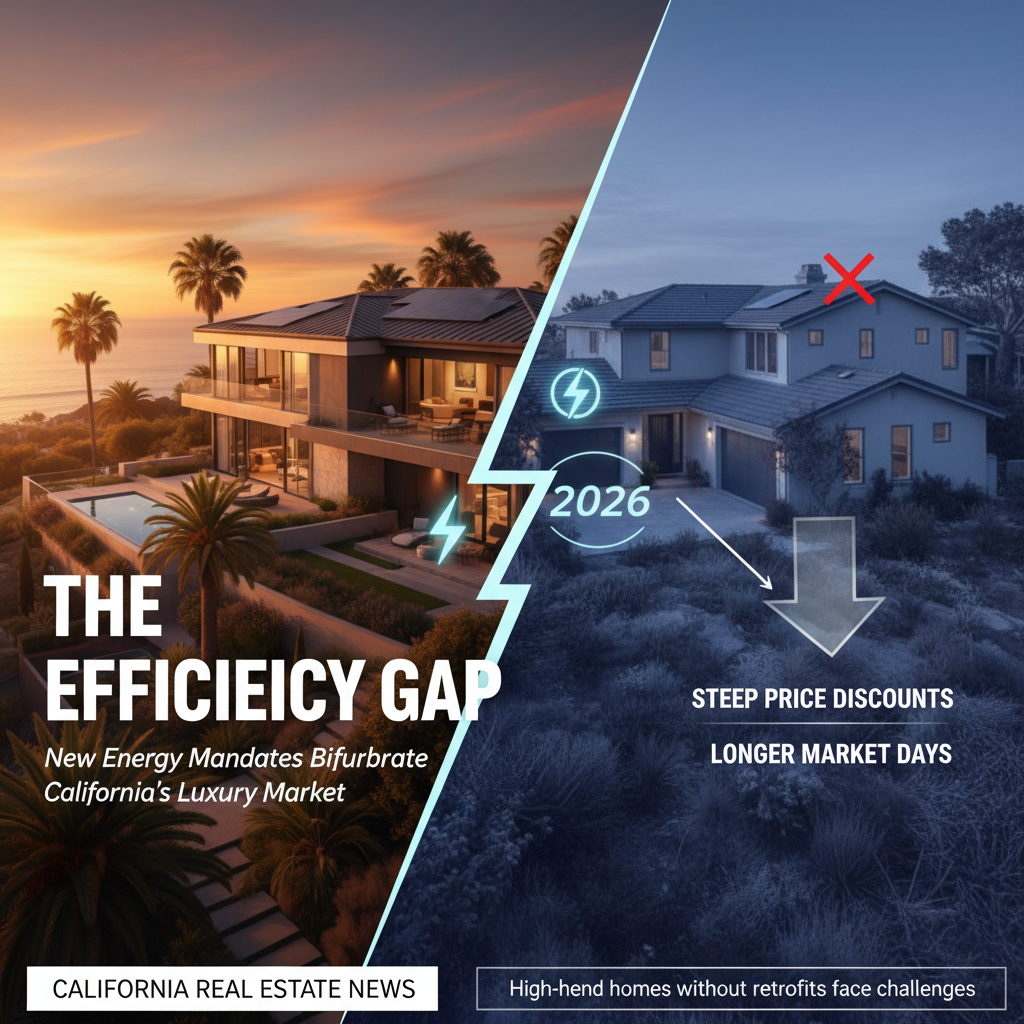
The Rise of the Carbon-Neutral Premium
As of May 2026, the California real estate landscape is grappling with the first full month of the Building Decarbonization Act (SB 1422). The regulation, which mandates point-of-sale energy efficiency certifications for residential properties exceeding 4,000 square feet, has created a distinct 'Efficiency Gap' in the luxury sector. According to the California Association of Realtors (CAR), homes meeting the new 'Tier 1' carbon-neutral standards are fetching a 14% price premium compared to non-compliant legacy estates.
Data Points: The Cost of Non-Compliance
Current MLS data from Los Angeles and Santa Clara counties reveals a diverging market. While the broader California market remains stable, luxury listings that require post-purchase retrofits—such as switching from gas-fired boilers to high-efficiency heat pumps or upgrading to solid-state battery storage—are seeing average price reductions of $185,000. Key findings include:
- Days on Market (DOM): 'Green-Certified' listings are moving in an average of 18 days, while non-compliant luxury homes are languishing for 54 days.
- Retrofit Costs: Estimates from the California Energy Commission suggest that the average 20th-century estate requires $75,000 to $120,000 in upgrades to meet 2026 compliance.
- Inventory Shift: Approximately 22% of current luxury inventory is currently flagged as 'non-compliant,' leading to a surge in 'As-Is' energy-discounted sales.
The Regulatory Ripple Effect
The impact is not limited to sales prices. Institutional lenders are now factoring 'Carbon Risk' into mortgage rates for California properties. Major banks have introduced a 25-basis-point discount for LEED-certified or Tier 1 compliant homes, further incentivizing buyers to seek out modernized assets. For investors, the play has shifted from aesthetic flips to 'energy flips'—acquiring inefficient mid-century assets and upgrading their thermal envelopes to capture the green premium.
Practical Takeaways for Market Participants
For Sellers: Avoid the 'Efficiency Discount' by conducting a pre-sale energy audit. Proactively upgrading heat pumps or induction cooktops before listing can prevent aggressive 'repair credits' during the escrow process. Documentation of energy savings is now as critical as a home inspection report.
For Buyers: Look for opportunities in the 'Energy-Laggard' segment. Buyers with the liquidity to handle retrofits post-closing can negotiate significantly lower purchase prices, effectively 'buying' their equity through efficiency improvements that are also eligible for federal tax credits under the extended Inflation Reduction Act provisions.
For Investors: Focus on the 'Missing Middle' of the luxury market—homes built between 1980 and 2005. These properties often possess the structural integrity for easy solar and HVAC integration but currently lack the smart-grid technology that 2026 buyers demand.