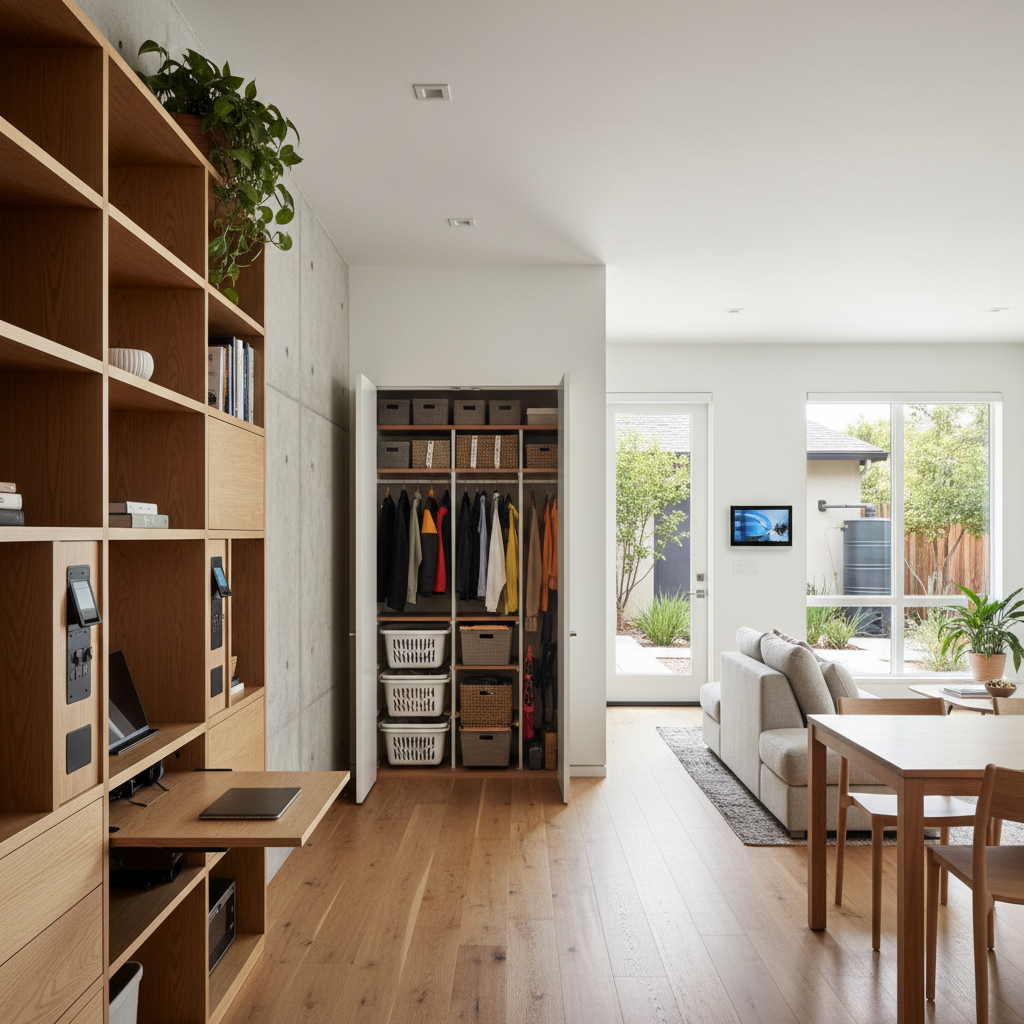
The Shift from Curb Appeal to Core Utility
In the California real estate market of May 2026, the traditional playbook of 'neutral paint and fresh mulch' is no longer enough to secure a premium. According to recent data from the California Association of Realtors (C.A.R.), 72% of buyers now prioritize 'functional infrastructure' over cosmetic upgrades. As remote work persists in the tech corridors and utility costs rise, the 2026 buyer is looking for a home that functions like a high-performance asset rather than just a residence.
The Acoustic Privacy Premium
The open-concept floor plan, once the gold standard of California living, is facing a utility crisis. With multi-generational households and remote professionals sharing space, 'acoustic privacy' has become a high-value commodity. Sellers should consider 'functional staging'—partitioning large spaces with sound-dampening architectural elements or highlighting solid-core doors. A recent NAR survey indicated that homes featuring dedicated, sound-insulated 'Zoom Rooms' or quiet zones sold 4.5% faster in high-density markets like Los Angeles and the Bay Area.
Infrastructure Documentation: The 'Digital Binder'
Today’s California buyer is increasingly tech-literate and risk-averse. To maximize value, sellers must move beyond the standard disclosure package and provide a 'Digital Infrastructure Binder.' This should include:
- Connectivity Audits: Verified speed tests for fiber-optic or 5G home internet availability.
- Smart Grid Integration: Documentation on how the home’s EV charging stations and battery storage (like the Powerwall 3) integrate with local utility 'Time-of-Use' (TOU) rates.
- Network Mapping: A schematic of in-wall Ethernet wiring and mesh network nodes.
Providing this level of transparency reduces buyer friction and positions the property as a 'turnkey' technological environment.
Leveraging the Prop 19 Advantage
For sellers aged 55 and older, the 2026 market offers a unique strategic window via Proposition 19. By selling a primary residence and utilizing the tax-basis portability, these sellers can often move into a more 'functional' or downsized home without the property tax penalty typically associated with California's high-value markets. This creates a 'seller-buyer' synergy: seniors are motivated to sell large, underutilized assets to younger families who value the square footage, while the seniors lock in historically low tax bases elsewhere.
The 'Yard-to-Office' Conversion
While previous years focused on 'outdoor kitchens,' the 2026 trend is the 'Productive Yard.' Staging outdoor spaces with weatherproof workstations, integrated power outlets, and Wi-Fi extenders can significantly boost perceived value. In markets like San Diego and Sacramento, properties that showcased 'outdoor productivity zones' saw a 12% higher engagement rate on digital listing platforms compared to those with traditional landscaping alone.
Practical Takeaways for Sellers
- Audit Your Noise: Invest in weather-stripping and solid-core interior doors for home offices to demonstrate acoustic value during open houses.
- Showcase Connectivity: Display a QR code in the kitchen that links to a digital folder containing the home’s tech specs and utility performance history.
- Prioritize Prop 19: Consult with a tax professional to see if you can port your current tax base to a new California property, potentially increasing your net purchasing power.
- Functional Staging: Replace one 'guest bedroom' setup with a fully-equipped 'wellness and work' suite to appeal to the modern buyer’s lifestyle needs.


