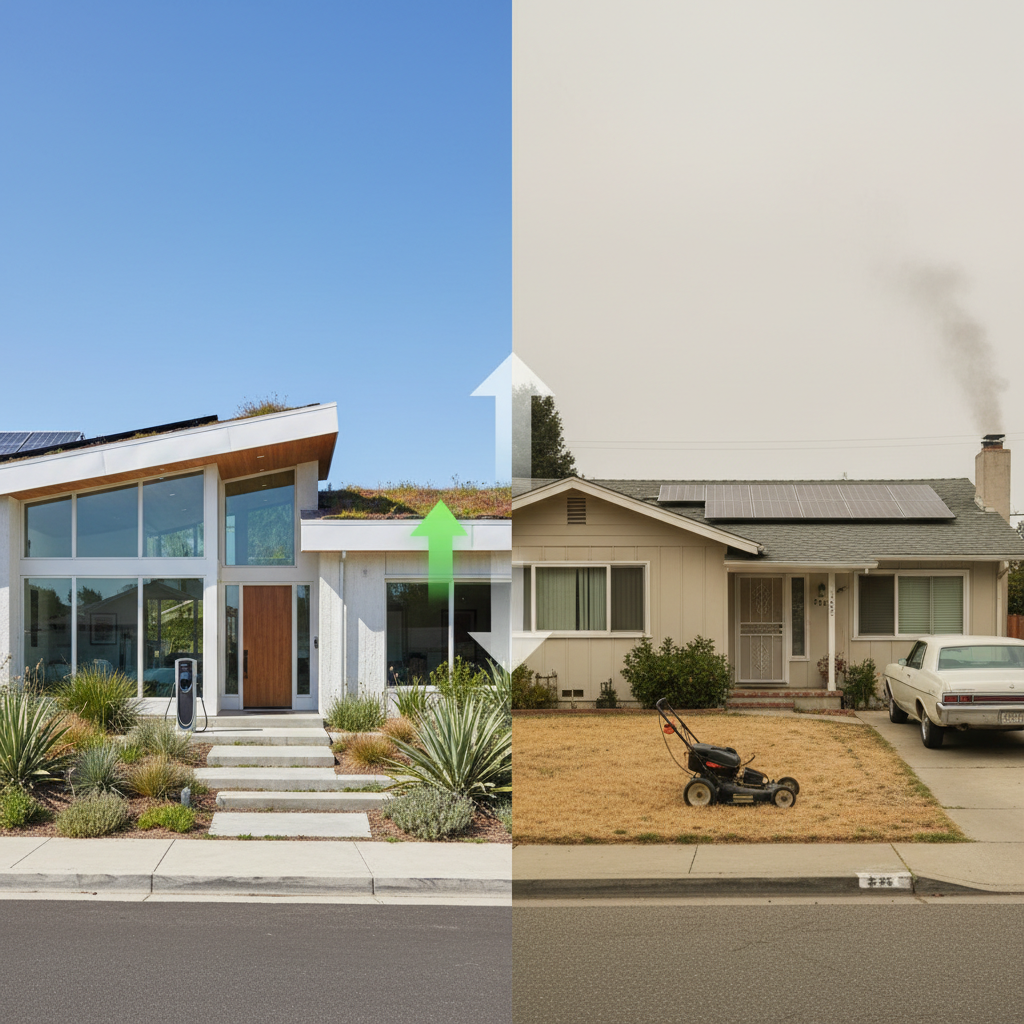
The New Metric of Value: Carbon Intensity
By mid-2026, the California residential landscape has encountered a structural shift that transcends interest rates and inventory levels. The state's aggressive push toward building electrification—codified in recent Title 24 updates and local reach codes—has birthed a Decarbonization Divide. Properties equipped with heat pump technology, induction cooking, and EV-ready infrastructure are commanding a Green Premium that is now quantifiable in MLS data.
According to recent analysis from the California Association of REALTORS® (CAR), homes with high-efficiency energy ratings and full electrification sold for an average of 5.8% more than their gas-reliant counterparts in Q1 2026. This isn't just about environmental consciousness; it is about future-proofing against rising utility costs and impending local mandates that penalize carbon-intensive residential operations.
The Cost of Compliance vs. The Luxury of Efficiency
For sellers of legacy homes, the 2026 market presents a challenge: Electrification Equity. As many California cities now require energy audits or basic electrification upgrades at the point of sale, homes with outdated gas furnaces and water heaters are seeing price adjustments similar to those with foundation issues. CBRE reports that institutional buyers are increasingly discounting non-compliant assets by 10% to 15% to account for the retrofit drag.
Conversely, the investment in deep energy retrofits is yielding high returns. Data indicates that for every $1 spent on electrification and solar integration, homeowners in coastal markets like San Diego and the Bay Area are seeing a $1.40 return in appraised value, fueled largely by the lower operational costs and the desirability of Net Zero living.
Investment Strategy: The Green Flip
A new breed of investor has emerged in 2026: the Green Flipper. Unlike traditional renovators who focus purely on aesthetic finishes, these investors target distressed gas-heavy assets. By leveraging the remaining credits from the Inflation Reduction Act (IRA) and state-specific rebates like those from the TECH Clean California initiative, they are transforming inefficient 1970s builds into high-tech, carbon-neutral gems.
This strategy addresses the Missing Middle of the market—buyers who cannot afford new construction but want the energy security and modern amenities of a 21st-century home. The focus is shifting from granite countertops to load-sharing panels and variable-speed heat pumps.
Practical Takeaways for the 2026 Market
- For Sellers: Before listing, conduct a Home Energy Rating System (HERS) audit. Identifying and correcting energy leaks or upgrading to a heat pump water heater can be more impactful than a minor kitchen refresh in the current valuation climate.
- For Buyers: Look for electrification-ready homes. Properties that already have 200-amp service panels and dedicated circuits for EVs and electric appliances save an average of $15,000 to $25,000 in immediate post-purchase upgrades.
- For Investors: Focus on ZIP codes with aggressive local decarbonization mandates. These areas often have the steepest legacy discounts on older homes, providing the highest ceiling for value-add electrification projects.