Navigating the Supply Squeeze of 2026
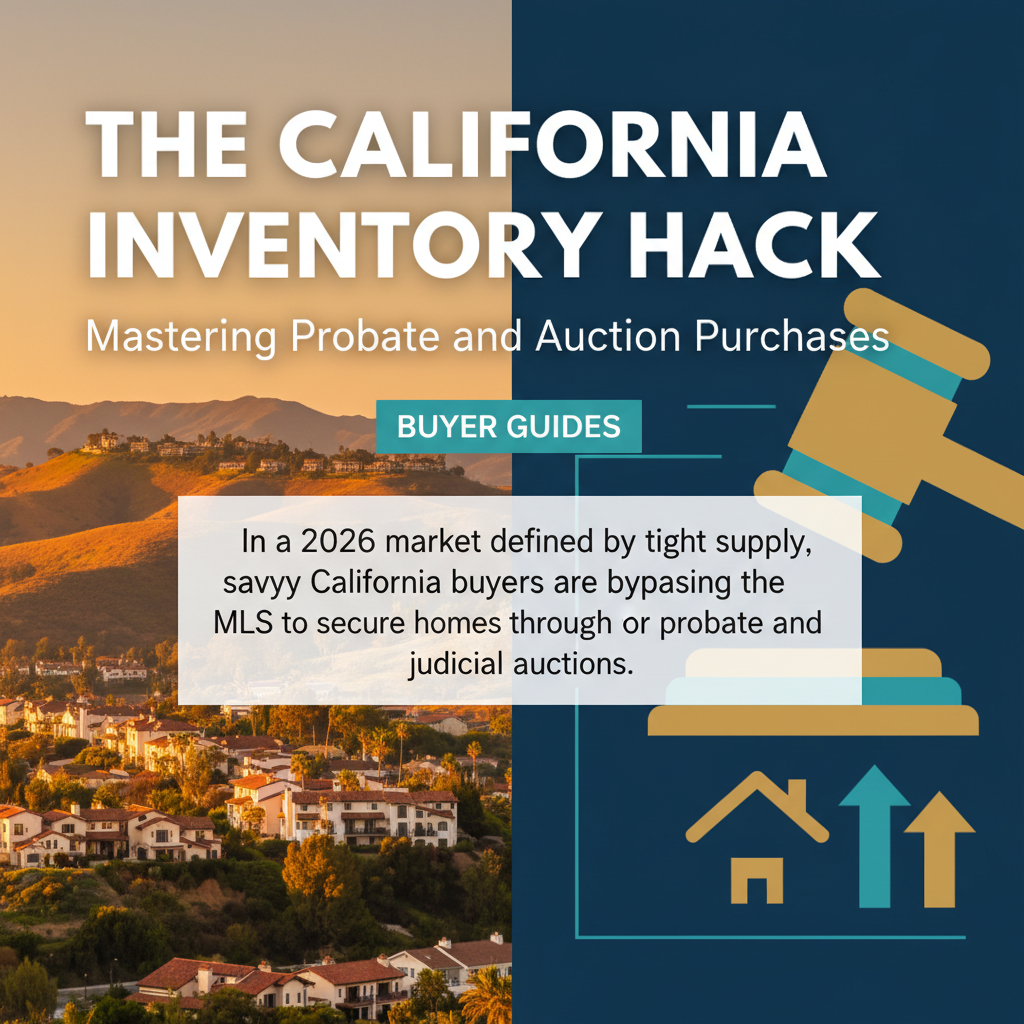
As of May 2026, the California real estate market continues to grapple with a chronic inventory shortage. Data from the California Association of Realtors (CAR) indicates that while the ‘Coastal-Inland Divergence’ has shifted some demand, the statewide housing supply remains fixed at a lean 3.1-month reserve. For the pragmatic buyer, this means traditional MLS searches often result in bidding wars. To find value, buyers are increasingly looking toward non-traditional inventory: probate sales and trustee auctions.
The Probate Opportunity: Buying from the Estate
Probate sales occur when a homeowner passes away without a living trust that transfers the property directly to heirs. In California, these sales are governed by the California Probate Code, offering a unique, albeit slower, path to homeownership. Because these properties are often sold by executors who have never lived in the home, they frequently come with a price reflects their ‘unimproved’ condition.
Understanding the Overbid Process
The most critical aspect of California probate is the court confirmation process. Even after a seller accepts your offer, the sale may be subject to a ‘court overbid’ in a public hearing. According to the standard formula, the first overbid must be at least 5% plus $500 over the original accepted offer. While this adds a layer of uncertainty, it also ensures a transparent market value that can occasionally land below retail prices in high-demand zones like the Bay Area or San Diego.
The Auction Landscape: Trustee Sales vs. Private Portals
Beyond probate, auctions represent the ‘frontier’ of the California market. Buyers should distinguish between two primary types:
- Trustee Sales: These are formal foreclosures held on courthouse steps. They require payment in full (usually via cashier's checks) immediately. There is no right of redemption in California for these sales, but they carry the highest risk as there is typically no opportunity for interior inspection.
- Private Auction Platforms: Sites like Auction.com or Hubzu have become more prevalent in 2026. These often allow for traditional financing and inspections, though they frequently carry a ‘Buyer’s Premium’—an additional fee of 3% to 5% of the purchase price paid to the auction house.
Risk Mitigation and Due Diligence
Buying non-traditional inventory requires a specialized due diligence checklist. Because many of these homes are sold 'as-is' with limited disclosures (executors are often exempt from the standard Transfer Disclosure Statement or TDS), the burden of discovery falls entirely on the buyer.
| Risk Factor | Mitigation Strategy |
|---|---|
| Title Liens | Order a preliminary title report immediately; look for unpaid property taxes or mechanic's liens. |
| Physical Condition | Conduct a 'pre-offer' inspection if possible, or budget a 15% contingency fund for structural unknowns. |
| Occupancy Status | Verify if the property is vacant; California’s 2026 tenant protection laws make evicting holdover tenants a lengthy process. |
Practical Takeaways for 2026 Buyers
- Secure 'Proof of Funds' Early: Probate judges and auction platforms prioritize liquidity. Have your bank letters and cashier's checks ready before you step into the courtroom or log onto a portal.
- Partner with a Probate Specialist: Not all agents understand the DE-111 filing or the specific contracts (C.A.R. Form PPA) required for these transactions.
- Factor in the 'Holding Cost' Buffer: Probate sales can take 60 to 90 days longer than a standard 30-day escrow. Ensure your current housing situation or rate lock can accommodate this timeline.
While the 2026 market remains competitive, the ‘Probate and Auction Playbook’ allows California buyers to step outside the frantic retail cycle and find opportunities where others fear to tread. By understanding the legal framework of the California Probate Code and the mechanics of the overbid, you can secure a foothold in one of the world's most restrictive housing markets.