The Rise of the California 'Super-Suburb'
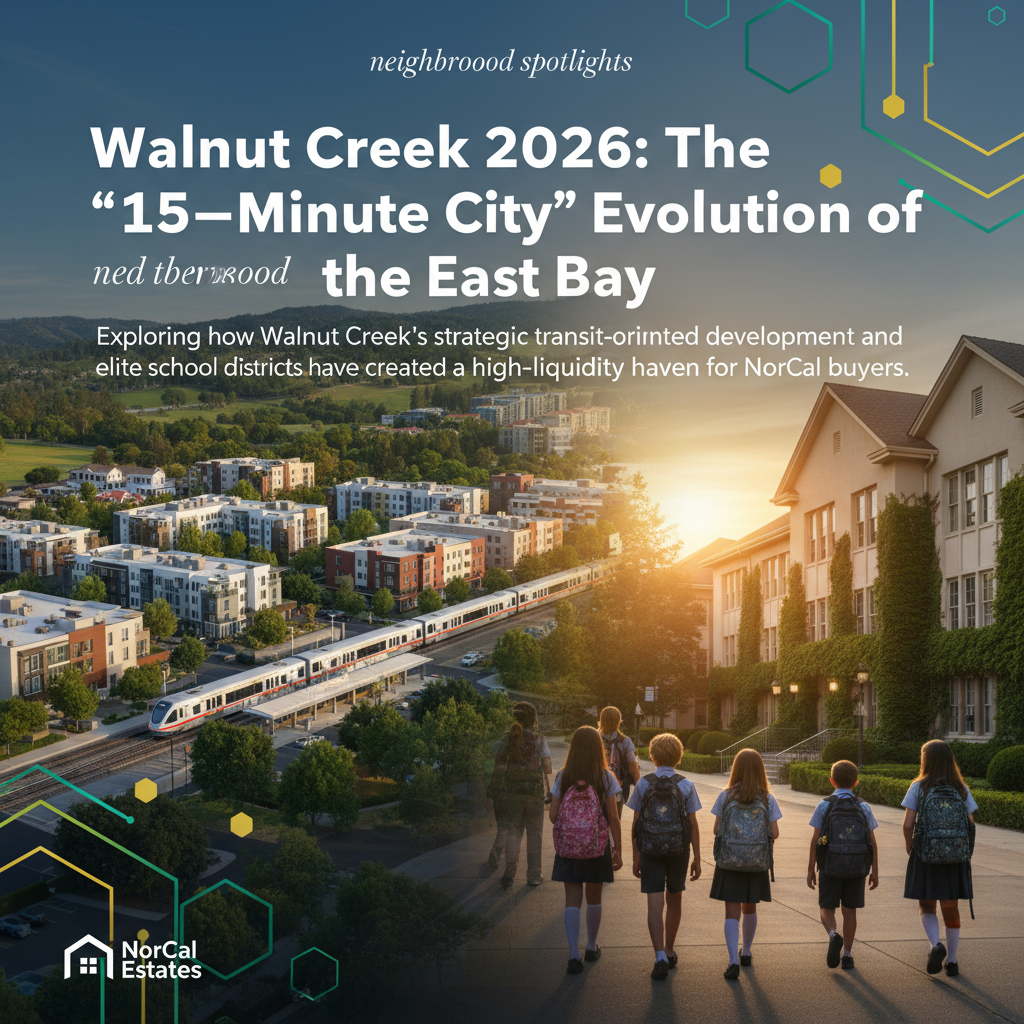
As of May 2026, the California real estate narrative has shifted from the 'urban flight' of the early 2020s to a calculated search for 'Satellite Hubs.' Leading this transition is Walnut Creek, specifically its Downtown Core. By successfully integrating high-density luxury housing with a 15-minute city framework, Walnut Creek has decoupled itself from the volatility of neighboring San Francisco and Oakland markets. According to recent MLS data, the median sales price in the 94596 zip code has seen a resilient 6.4% year-over-year increase, significantly outperforming the broader Contra Costa County average.
The Transit-Oriented Development (TOD) Advantage
Central to Walnut Creek's 2026 appeal is its seamless integration with the BART Yellow Line. Unlike many suburban communities where the train station is an isolated island of asphalt, Walnut Creek has completed its 'North Downtown' master plan. This transit-oriented corridor now features over 1,200 newly delivered residential units within a half-mile radius of the station. For the modern professional, this offers a 'car-lite' lifestyle that is rare in the East Bay, allowing for a 35-minute commute to San Francisco’s Financial District while maintaining the safety and space of a suburban environment.
The 'Education Premium' and Demographic Stability
Real estate value in Walnut Creek remains anchored by the Acalanes Union High School District and the Walnut Creek School District. In 2026, these districts continue to rank in the top 5% statewide for STEM performance and college readiness. CBRE research indicates that homes within these specific school boundaries command a 12-15% price premium over comparable properties in adjacent municipalities. This 'education moat' provides a layer of protection for investors, ensuring high liquidity even during periods of broader market correction.
Amenities: The Retail and Wellness Epicenter
The expansion of Broadway Plaza has solidified Walnut Creek as the premier shopping destination in Northern California. Beyond luxury staples like Nordstrom and Apple, the 2026 retail landscape focuses on 'experiential wellness.' This includes the recent opening of high-end athletic social clubs and boutique fitness studios that serve as the community's third spaces. Furthermore, the Iron Horse Regional Trail—a 32-mile multi-use path—runs directly through the downtown core, offering residents immediate access to outdoor recreation that connects seamlessly to neighboring Danville and Pleasanton.
Strategic Takeaways for Buyers and Investors
- For Buyers: Focus on the 'West Side' of the downtown core. Proximity to the Iron Horse Trail and the BART station offers the highest potential for long-term equity growth as walkability remains the top-tier preference for Gen Z and Millennial buyers.
- For Sellers: Highlight 'Flexible Living' upgrades. Properties featuring permitted ADUs (Accessory Dwelling Units) or integrated home offices are currently fetching 8% above asking price, as the hybrid-work model has fully stabilized in 2026.
- For Investors: The multi-family sector in Walnut Creek remains robust. With a vacancy rate hovering near 3.8%, well-managed condo conversions or townhome developments represent a high-yield opportunity with lower risk than the San Francisco core.
Walnut Creek has successfully rebranded itself from a sleepy bedroom community into a sophisticated, self-sustaining ecosystem. For those looking to place capital in a market that balances urban utility with suburban security, the 2026 outlook for this East Bay gem remains exceptionally bullish.