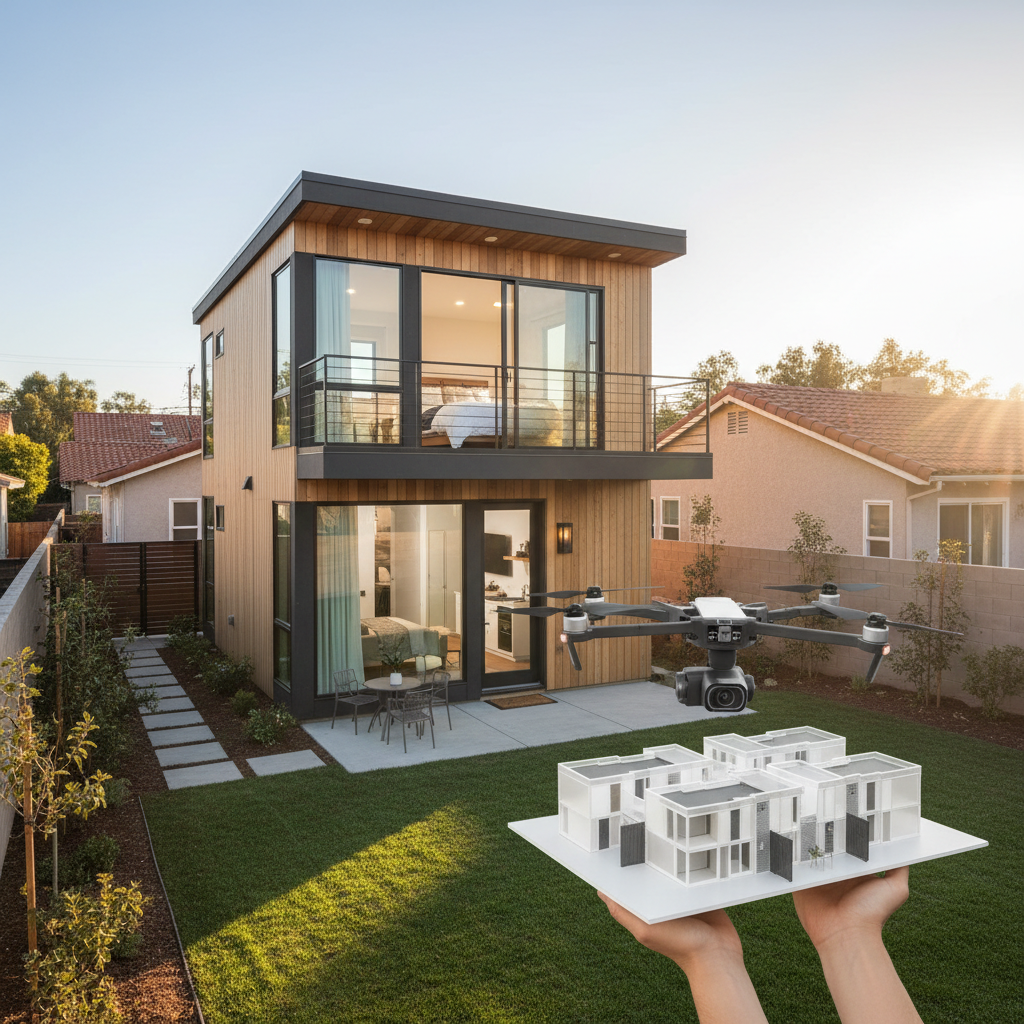
The Rise of the Detached Condo
As of late April 2026, the California real estate landscape is undergoing a structural shift that moves beyond mere density toward the financialization of the backyard. While the previous two years focused on the construction of Accessory Dwelling Units (ADUs), the current market movement is defined by their liquidation. Under the matured framework of AB 1033, which allows municipalities to opt into programs permitting homeowners to sell ADUs as condos, we are witnessing the birth of a new 'Micro-Condo' asset class.
Data from the California Association of Realtors (CAR) released this morning indicates that in the first quarter of 2026, ADU-to-condo conversions represented 12% of all new listings in the Los Angeles and San Diego metro areas. This represents a 42% year-over-year increase, signaling that the 'detached condo' is no longer a niche legal experiment but a mainstream inventory source.
The Yield Spread: Why Investors and Owners are Pivoting
The economic driver behind this trend is a stark valuation gap. According to 2026 MLS data, a primary residence with an ADU typically commands a 15-25% price premium over a single-family home. However, when that same ADU is legally converted into a condominium and sold independently, the combined sale price of the two units frequently exceeds the original single-asset valuation by as much as 40%.
Institutional appetite for these units is also growing. CBRE reports that 'micro-unit' portfolios consisting of these converted ADUs are yielding cap rates 120 basis points higher than traditional multi-family apartments, primarily due to lower maintenance overhead and the high demand for modern, detached living spaces among Gen Z buyers.
Regulatory Tailwinds and Infrastructure
The acceleration of this market is largely due to the 2025 'Clean-Up' legislation which standardized the HOA (Homeowners Association) formation process for two-unit condominiums. Previously, the legal costs of establishing an HOA for a single lot were a barrier to entry. Today, standardized templates and 'mini-HOA' frameworks have reduced legal escrow costs by nearly 60% compared to three years ago.
Furthermore, major lenders including Fannie Mae and Freddie Mac have finalized their 2026 guidelines for 'secondary-unit financing,' allowing buyers to secure traditional 30-year fixed mortgages for these converted units with as little as 3.5% down, provided the municipality has officially adopted AB 1033 protocols.
Practical Takeaways for the 2026 Market
- For Homeowners: Conduct a 'Condo-Conversion Feasibility Study.' If you are in a city like San Jose or Berkeley that has fully integrated AB 1033, your backyard unit could be worth more as a tradeable asset than as a rental property.
- For Buyers: Look for 'Detached Condos.' These units offer the privacy of a single-family home at a price point often 30% below the median for a traditional house in the same ZIP code.
- For Investors: Focus on 'Entitlement Arbitrage.' Purchasing older homes with large lots in AB 1033-compliant cities, building an ADU, and exit-selling both as separate condos is currently one of the highest-margin strategies in the CA market.
As the spring buying season reaches its peak, the ability to decouple the backyard from the main house is proving to be the most significant liquidity event for California homeowners since the post-pandemic price surge. The 'ADU Arbitrage' is effectively creating a new entry-level rung on the housing ladder that didn't exist five years ago.