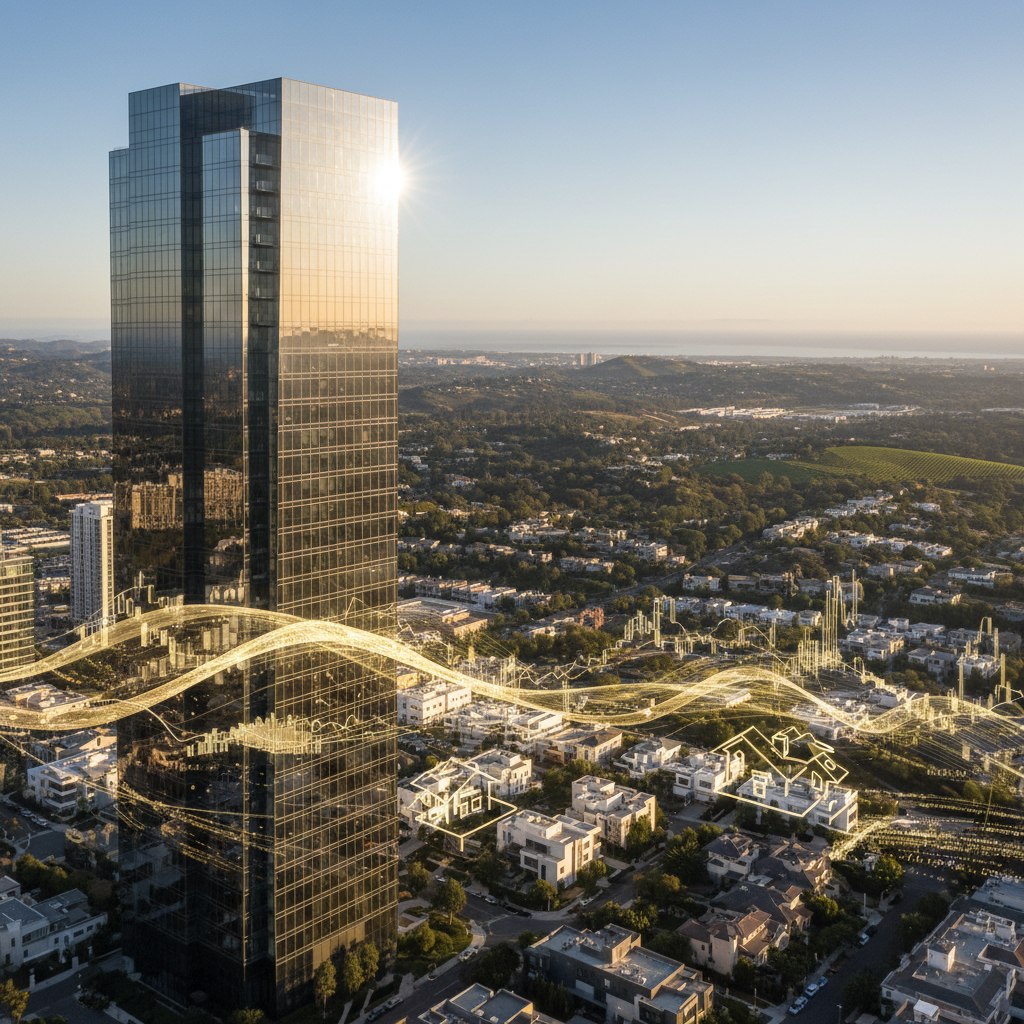
For the past three years, the California real estate market was defined by the 'Golden Handcuff' effect—homeowners anchored to 3% mortgage rates, unwilling to trade up or down into a 6% environment. However, as of April 2026, the narrative has shifted fundamentally. We are no longer waiting for interest rates to drop to 2021 levels; instead, the market is being unlocked by the sheer gravity of home equity.
The Equity Threshold: Breaking the Rate Barrier
According to recent data from the California Association of Realtors (CAR), the median home price in California has stabilized near $915,000, but the more telling metric is the average equity position. California homeowners now hold an estimated $9.2 trillion in collective home equity. For the typical homeowner who purchased before 2020, their paper wealth has increased by nearly 45%.
In 2026, we are seeing the 'Equity-Rich Pivot.' This occurs when a homeowner’s equity becomes so substantial that they can transition to a new property with a 50% to 70% down payment. By porting that massive equity stake, the monthly carrying cost of a 5.8% mortgage (the current market average) becomes secondary to the lifestyle utility of the move. Data from the MLS shows a 14% year-over-year increase in 'lateral moves'—sellers who are staying within the state but moving for school districts or downsizing.
The Institutional Exit and the Private Syndicate Rise
While the 2021-2023 era was dominated by institutional buying, 2026 is seeing a strategic retrenchment. Large-scale SFR (Single-Family Rental) operators have slowed acquisitions in high-cost California coastal basins due to compressed cap rates and increased regulatory compliance costs. This has created a vacuum being filled by private syndicates and 'family office' investors.
CBRE’s Q1 2026 report indicates that mid-market private investors are targeting Tier 2 coastal cities—Oxnard, Oceanside, and Richmond—where the rental demand remains inelastic but entry prices are 20% lower than the adjacent Tier 1 hubs. These investors are leveraging 'Equity-Share' models, partnering with first-time buyers who have high incomes but lack the massive down payments required to compete with all-cash equity rollers.
The Regional Ripple: Coastal Wealth Floods the Foothills
The economic trend of 2026 is the 'Second-Tier Surge.' As homeowners in Silicon Valley and Orange County cash out, we are seeing a record influx of capital into the Sierra Foothills and the Central Coast. This isn't the 'Zoom Town' boom of the pandemic era; it is a calculated wealth transfer. These buyers are often all-cash, insulating these secondary markets from mortgage rate volatility.
- Placer County: Has seen a 9% increase in luxury sales (over $1.5M) as Bay Area retirees liquidate high-value assets.
- San Luis Obispo: Inventory levels have risen 18% as long-term owners capitalize on peak valuations to fund out-of-state or inland transitions.
Practical Takeaways for the 2026 Market
For Sellers: The 'lock-in' effect is officially over for those with 40% or more equity. To maximize value, sellers should focus on 'Turn-Key' certifications. With renovation costs remaining high due to labor shortages, buyers are paying a 12% premium for homes that require zero immediate capital expenditure.
For Buyers: Competition remains fierce despite higher rates because you are competing against equity, not just income. Consider 'Bridge Financing' or 'Equity-Release' products that allow you to make non-contingent offers before selling your current residence.
For Investors: The opportunity lies in 'High-Equity Distressed' assets—properties owned free and clear by aging boomers that have fallen into disrepair. The spread between 'As-Is' value and 'Renovated' value in California’s core metros is currently at a five-year high, providing a fertile ground for value-add plays.
The Bottom Line
The California market in 2026 has matured past the shock of high interest rates. It is now a market driven by the strategic deployment of historic wealth. For those sitting on significant equity, the cost of debt is no longer the primary hurdle; the challenge is now identifying the right asset to capture the next cycle of California’s resilient growth.


