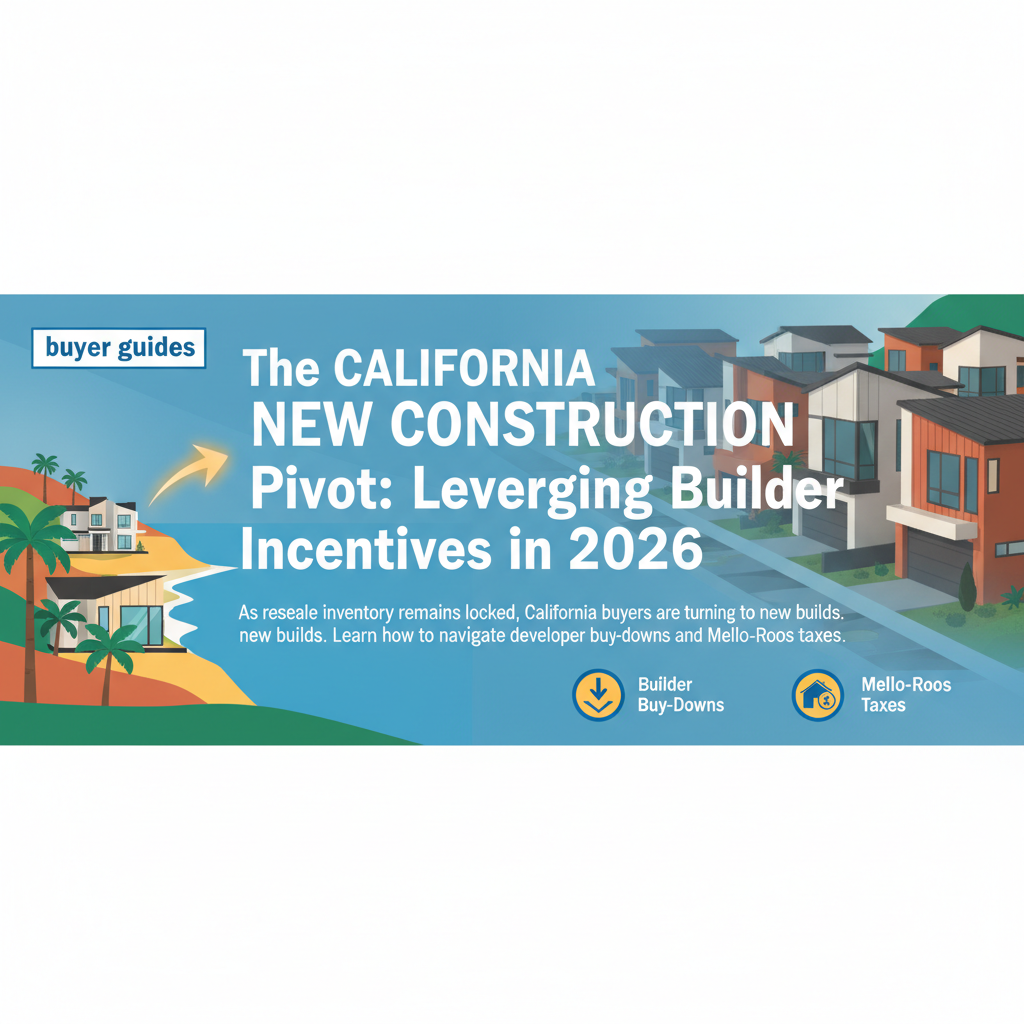
The Shift Toward the 'New' California Home
As of April 2026, the California real estate market continues to grapple with the 'locked-in' effect, where homeowners with sub-4% mortgage rates are reluctant to sell. This has pushed a significant portion of the buyer pool toward new construction developments. According to recent data from the California Association of Realtors (CAR), new home starts in the Inland Empire and Central Valley have seen a 14% year-over-year increase, representing a vital release valve for the state's inventory crisis.
Unlike the resale market, where buyers often face 'as-is' conditions and competitive bidding wars, the 2026 new construction landscape offers a different set of strategic advantages—and unique financial pitfalls.
The Power of the Builder-Funded Buy-Down
The most compelling reason California buyers are pivoting to new builds is the aggressive financing offered by national developers. While traditional mortgage rates hover near 7% in early 2026, many builders are utilizing their 'forward commitments' to offer temporary or permanent rate buy-downs. It is not uncommon to find builder-subsidized rates as low as 5.25% for the first two years of a loan.
For a median-priced California home of $840,000, a 1.5% reduction in the interest rate can save a buyer approximately $800 per month. This 'financing-as-an-incentive' model has become the primary tool for builders to maintain sales velocity without slashing the nominal base price of the homes, which helps preserve the appraisal values of the entire community.
Navigating the Mello-Roos Reality
California buyers must look beyond the sticker price and the subsidized rate to understand the long-term tax implications of new developments. Most new master-planned communities are subject to Mello-Roos, a Community Facilities District (CFD) tax used to fund infrastructure like schools, roads, and parks.
- Check the Tax Rate: While a standard California property tax is roughly 1.25%, Mello-Roos can push the effective rate to 1.8% or even 2.2% in high-growth areas like Placer County or Riverside.
- Duration: These bonds typically last 20 to 40 years. Buyers should request the 'Notice of Special Tax' to see exactly when the assessment expires.
The Phase-Release Strategy
In 2026, builders are releasing homes in smaller 'phases' to manage construction costs and demand. For the savvy buyer, timing the phase is critical. Purchasing in 'Phase 1' of a new community often yields the highest equity growth by the time the final phase is completed. However, 'Phase 1' buyers must endure years of ongoing construction noise and dust. Conversely, buying in the final phase often means paying a premium for a finished neighborhood with established amenities.
Practical Takeaways for 2026 Buyers
- Retain Your Own Representation: The sales agent in the model home represents the builder's interests. To protect your earnest money and ensure a neutral inspection process, bring your own buyer's agent on your first visit to the site.
- Audit the 'Standard' Features: In 2026, California's Title 24 energy requirements mean most new homes come with solar and EV charging readiness. Verify if the solar panels are owned or leased, as a lease can complicate your debt-to-income (DTI) ratio during underwriting.
- Independent Inspections: Never skip a third-party inspection on a new build. Common issues in 2026's fast-paced construction environment include improperly sealed HVAC ducts and foundation settlement that occurs shortly after the 'pour.'
- The Upgrade Budget: Builders often price the 'base model' to attract interest, but the 'as-seen' model home usually contains $50,000 to $100,000 in upgrades. Ask for a 'Standard Features List' early to see what you are actually getting for the base price.