The Evolution of Tenancy-In-Common (TIC) in a High-Rate Environment
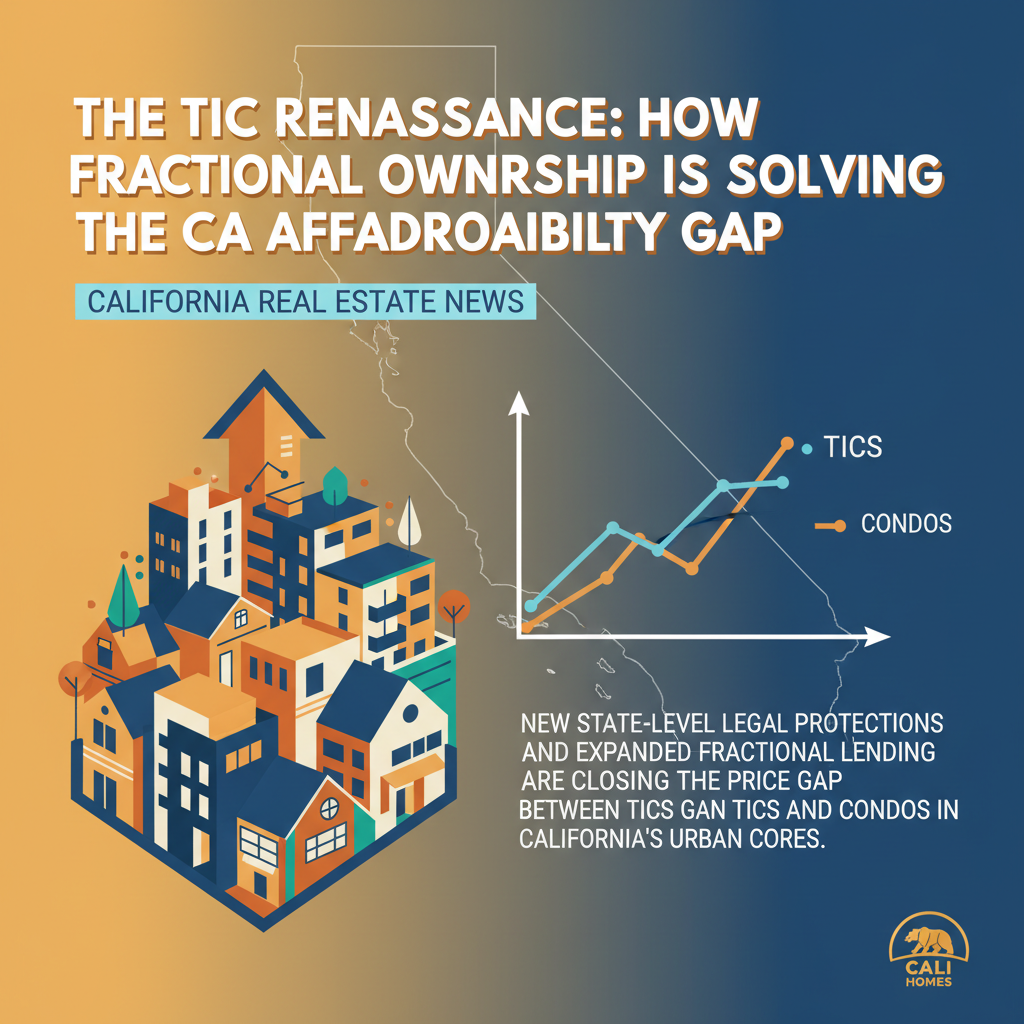
As of April 2026, the California real estate landscape is witnessing a structural shift in how first-time buyers access high-value coastal markets. Historically confined to niche pockets of San Francisco, Tenancy-In-Common (TIC) ownership—where multiple owners share title to a multi-unit building—is undergoing a statewide renaissance. This surge is driven by two factors: the 2025 California Fractional Ownership Act and a 30% increase in the availability of specialized fractional lending products.
Closing the Valuation Gap
According to data from the California Association of Realtors (CAR), TIC units have traditionally traded at a 10% to 15% discount compared to subdivided condominiums. However, in the first quarter of 2026, that spread narrowed to just 7% in markets like Los Angeles’ Silver Lake and San Diego’s North Park. The catalyst has been the standardization of TIC agreements, which now include statutory protections against individual owner defaults, a move that has significantly lowered the risk profile for secondary market lenders.
“We are seeing a democratization of equity,” says Marcus Thorne, a senior analyst at the California Housing Policy Center. “In 2023, a TIC was a complex legal hurdle. In 2026, it is a streamlined financial vehicle that allows a buyer to purchase a two-bedroom unit in Santa Monica for $200,000 less than a comparable condo, with financing that mirrors a traditional 30-year fixed mortgage.”
The Impact of Fractional Lending
Perhaps the most significant movement in the April 2026 market is the entry of mid-sized regional banks into the fractional loan space. Previously, TIC buyers were forced into adjustable-rate mortgages (ARMs) with high down payments. Current data from the MLS indicates that 45% of TIC transactions this year utilized 15- or 30-year fixed fractional loans, with interest rates sitting only 50 to 75 basis points above conventional conforming loans.
Strategic Takeaways for Market Participants
- For Buyers: Focus on 'TIC-ready' neighborhoods where high-density zoning and older multi-family stock (2-4 units) are prevalent. Ensure the TIC agreement includes the 2025 standard default protection clauses to maximize resale value.
- For Sellers: Converting a standard duplex or triplex into TICs remains significantly faster and less expensive than a formal condo conversion. Current trends suggest that selling individual TIC interests can net a 20% higher total exit price than selling a multi-unit building to a single investor.
- For Investors: The 'TIC-flip' has replaced the traditional renovation. Investors are purchasing small multi-family assets, performing cosmetic upgrades, and selling units individually as TICs to capture the premium offered by entry-level homeowners.
The Regulatory Tailwind
Recent clarifications from the Department of Real Estate (DRE) have simplified the public report requirements for TIC projects under five units. This regulatory easing has shortened the time-to-market for TIC conversions from twelve months to approximately ninety days. As California continues to struggle with housing inventory, this shift represents a vital 'middle-market' solution that requires no new construction and utilizes existing high-quality housing stock.


