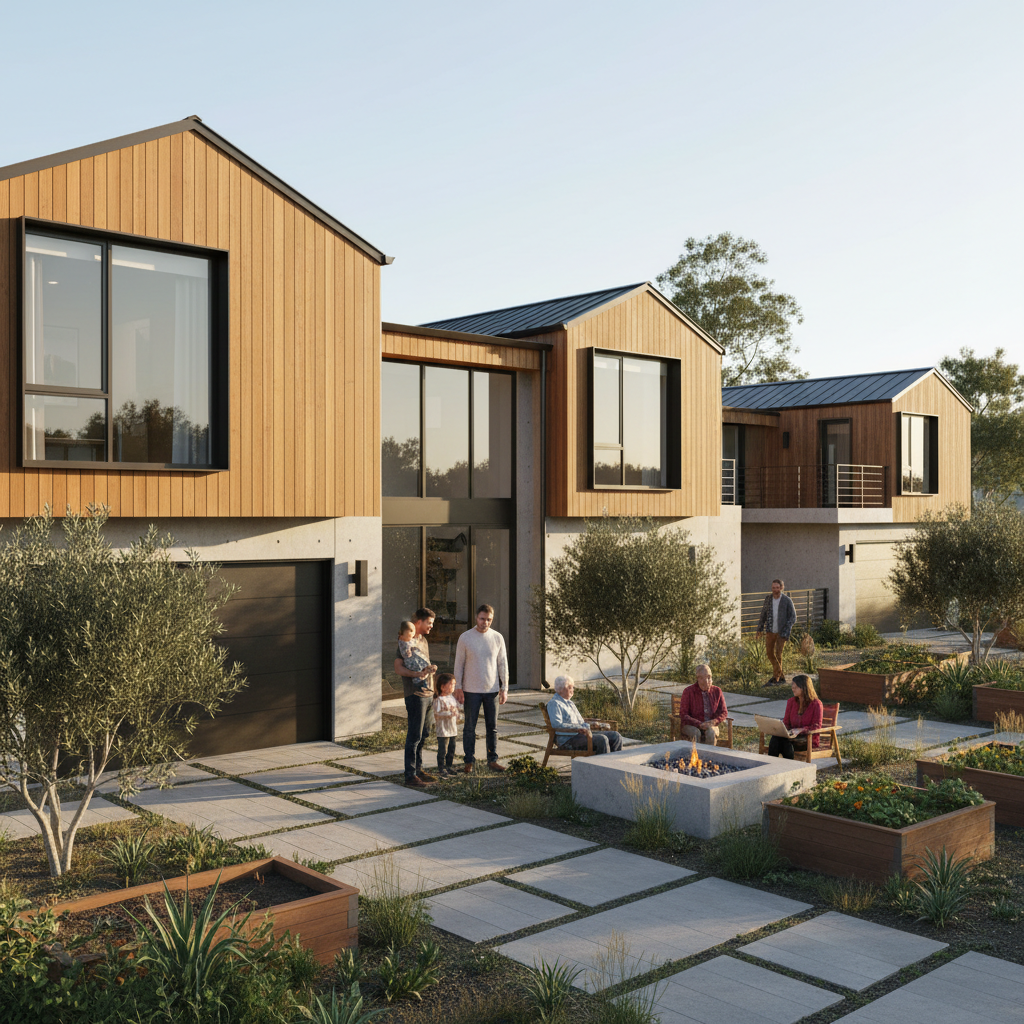
The Shift from Single-Family to Multi-Unit Compounds
As we move through the second quarter of 2026, the California real estate landscape is witnessing a fundamental structural shift. The traditional dream of the isolated single-family home is being replaced by the 'Residential Compound.' Driven by a combination of high legacy mortgage rates and the full maturation of state-wide zoning reforms, property owners are increasingly leveraging Senate Bill 9 (SB 9) and expanded Accessory Dwelling Unit (ADU) allowances to densify existing lots. This isn't just a response to the housing shortage; it is a calculated investment strategy designed to manufacture equity in a high-cost environment.
Data-Backed Growth in Densification
According to the 2025 Year-End Report from the California Department of Housing and Community Development (HCD), ADU permits now account for nearly 22% of all residential permits issued statewide, a significant jump from 14% in 2022. Furthermore, the UCLA Anderson Forecast’s spring update indicates that 'missing middle' housing—structures with 2 to 4 units—saw a 15% increase in capital allocation compared to traditional single-family fix-and-flips.
For investors, the math is compelling. In markets like San Jose and San Diego, where land costs remain astronomical, the ability to split a lot or add a junior ADU (JADU) and a detached ADU allows for a 'triple-stream' income model on a single parcel. This diversification mitigates vacancy risk and significantly lowers the per-unit cost of acquisition.
The Multi-Generational Catalyst
Beyond the investment spreadsheets, a demographic shift is fueling this trend. Data from the National Association of Realtors (NAR) suggests that 18% of California home purchases in the last 12 months were intended for multi-generational living. With California’s median home price hovering near $840,000, families are pooling resources. The 'Compound Economy' allows aging parents to downsize into an on-site ADU while younger family members occupy the primary residence, preserving the family’s real estate footprint while maximizing tax-base advantages.
Strategic Takeaways for the 2026 Market
- Focus on 'Splittable' Assets: Investors should prioritize properties with R1 zoning that meet the specific setbacks and ingress/egress requirements of SB 9. The true value is no longer in the structure itself, but in the 'unlocked' entitlement potential of the lot.
- Utility Infrastructure Audits: Before acquiring a densification candidate, perform a deep dive into local utility capacity. Many 1950s-era suburban grids are reaching their limits; properties with recently upgraded electrical panels and sewer laterals carry a significant 'readiness premium.'
- The Design-Build Alpha: Pre-approved 'Standard Plans' offered by cities like Los Angeles and Sacramento are shaving 4 to 6 months off the development cycle. Investors using these plans see a faster path to cash flow and lower architectural overhead.
As California continues to lead the nation in land-use deregulation, the most successful market participants in 2026 will be those who stop viewing residential real estate as a single-unit asset and start viewing it as a platform for incremental development.