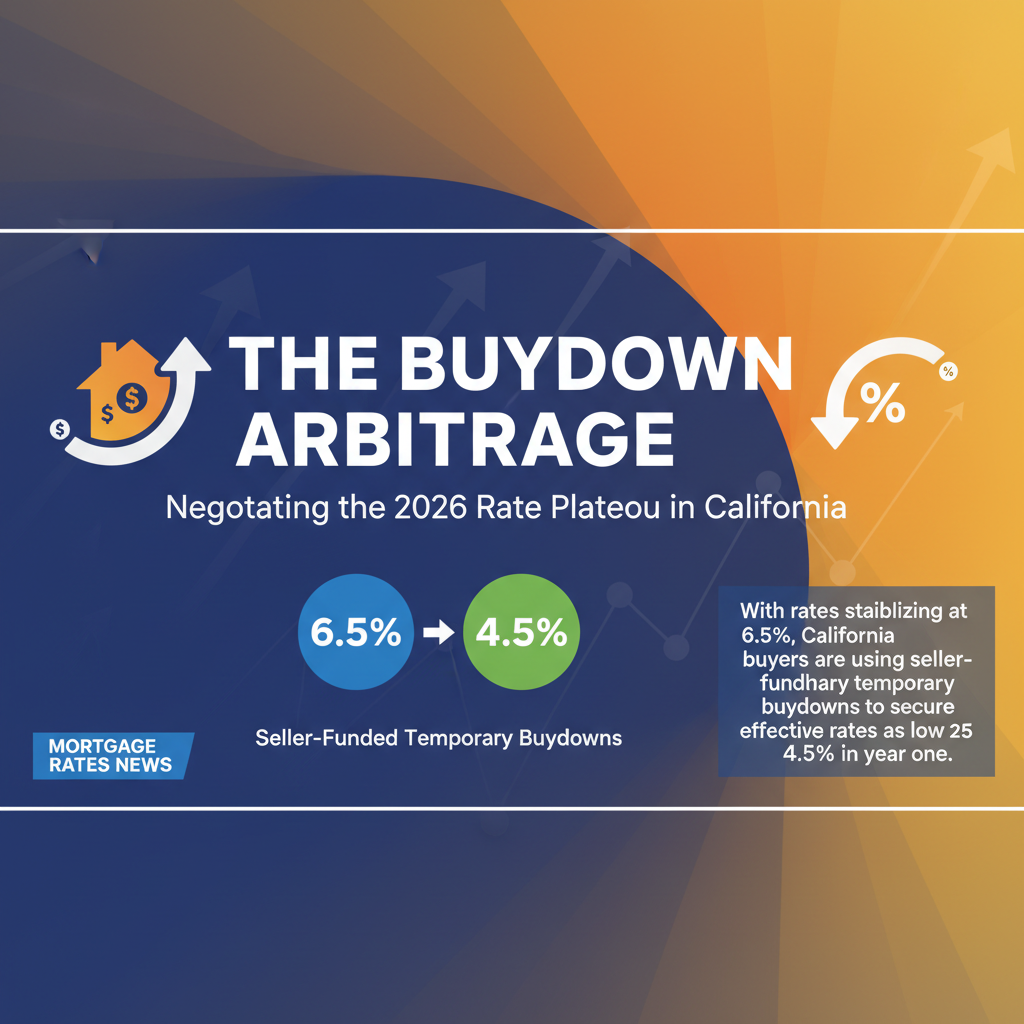
The Spring 2026 Equilibrium
As of late April 2026, the mortgage market has entered a period of relative stability, albeit at a level that remains a challenge for many California households. The average 30-year fixed rate currently hovers near 6.55%, a figure the Federal Reserve has signaled may be the 'new neutral' for the foreseeable future. While the volatility of 2024 and 2025 has subsided, the affordability gap in the Golden State remains stark. However, a new trend is emerging in the spring market: the resurgence of the temporary rate buydown as a primary negotiation tool.
The Mechanics of the 2-1 Buydown in 2026
Unlike permanent discount points, which require a significant upfront cost for a relatively small reduction in the life-of-loan interest rate, the 2-1 temporary buydown is gaining traction in high-cost California markets like the Bay Area and San Diego. Under this structure, the seller pays a lump sum into an escrow account that subsidizes the buyer’s mortgage payments for the first two years.
- Year 1: The buyer pays 2% below the note rate (approx. 4.55%).
- Year 2: The buyer pays 1% below the note rate (approx. 5.55%).
- Years 3-30: The rate reverts to the full note rate.
Data from the California Association of Realtors (CAR) suggests that seller concessions are now appearing in nearly 32% of closed escrows statewide, up from just 18% a year ago. This 'buydown arbitrage' allows sellers to maintain their asking price—preserving local comparable values—while providing buyers with immediate monthly cash flow relief during the most expensive phase of homeownership.
Why California Sellers are Paying Up
Inventory levels in California have increased by 12% year-over-year as the 'lock-in effect' finally begins to thaw. With more choices available, buyers are regaining leverage. For a seller in a market like Orange County with a median home price of $1.2 million, a 2-1 buydown typically costs roughly 2.3% of the purchase price ($27,600). Sellers are finding that offering this credit is often more effective at attracting qualified buyers than a simple $30,000 price reduction, as the lower initial payment qualifies more borrowers under debt-to-income (DTI) requirements.
Strategic Takeaways for Today’s Market
For those navigating the California market this spring, the following strategies are proving essential:
- Focus on Net Effective Rate: Don’t just look at the 6.5% headline. Ask your lender for a side-by-side comparison of a price reduction versus a seller-funded buydown. In most cases, the buydown offers superior short-term liquidity.
- The Refinance Optionality: Most 2-1 buydowns are structured so that if rates drop and the buyer refinances in month 13, the remaining funds in the subsidy account are applied to the principal balance of the loan. It is a 'no-lose' scenario for the borrower.
- Tax Considerations: Seller-paid points and buydown subsidies are generally considered a reduction in the purchase price for the seller but do not diminish the buyer’s ability to deduct mortgage interest (up to the $750,000 cap). Consult with a tax professional regarding the specific treatment of subsidy accounts.
The 2026 market is no longer about waiting for rates to return to 3%; it is about using sophisticated financial structuring to make 6.5% feel like 4.5% while the California appreciation engine restarts.


