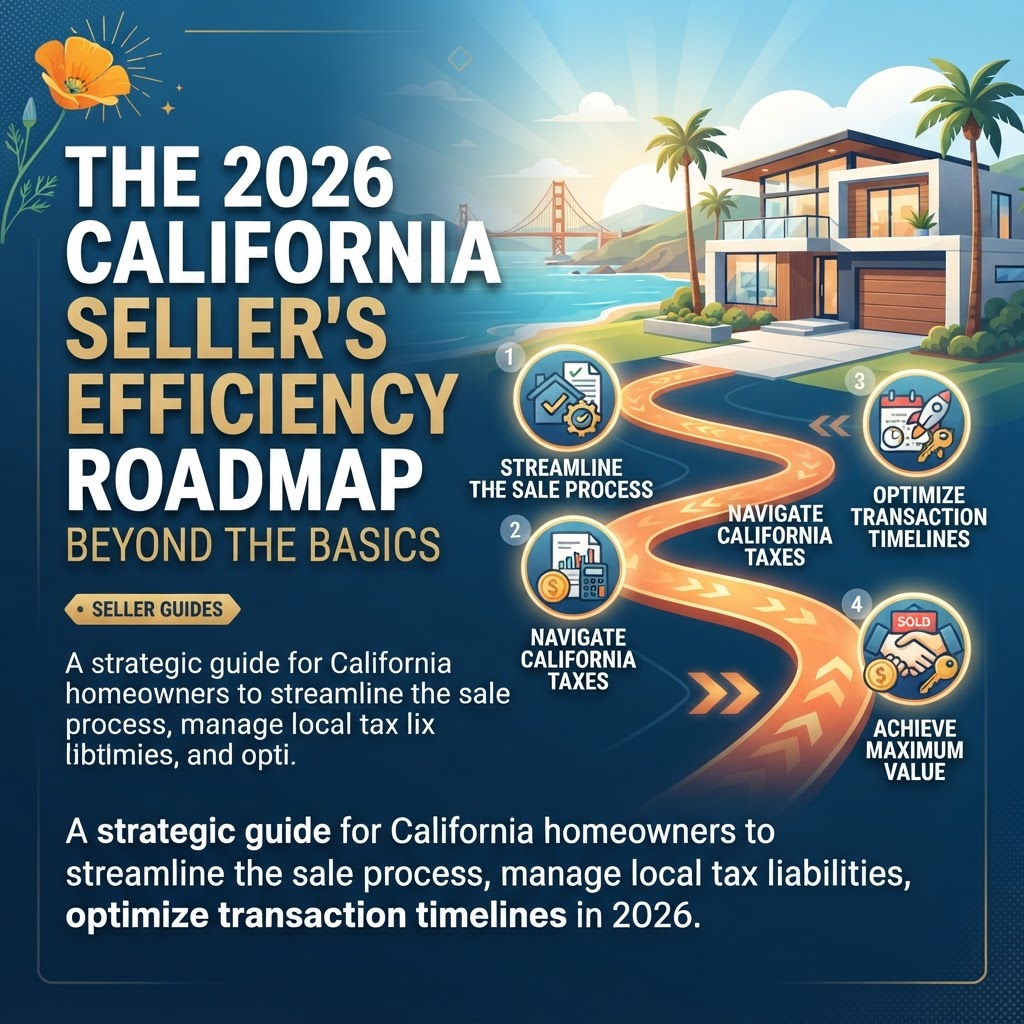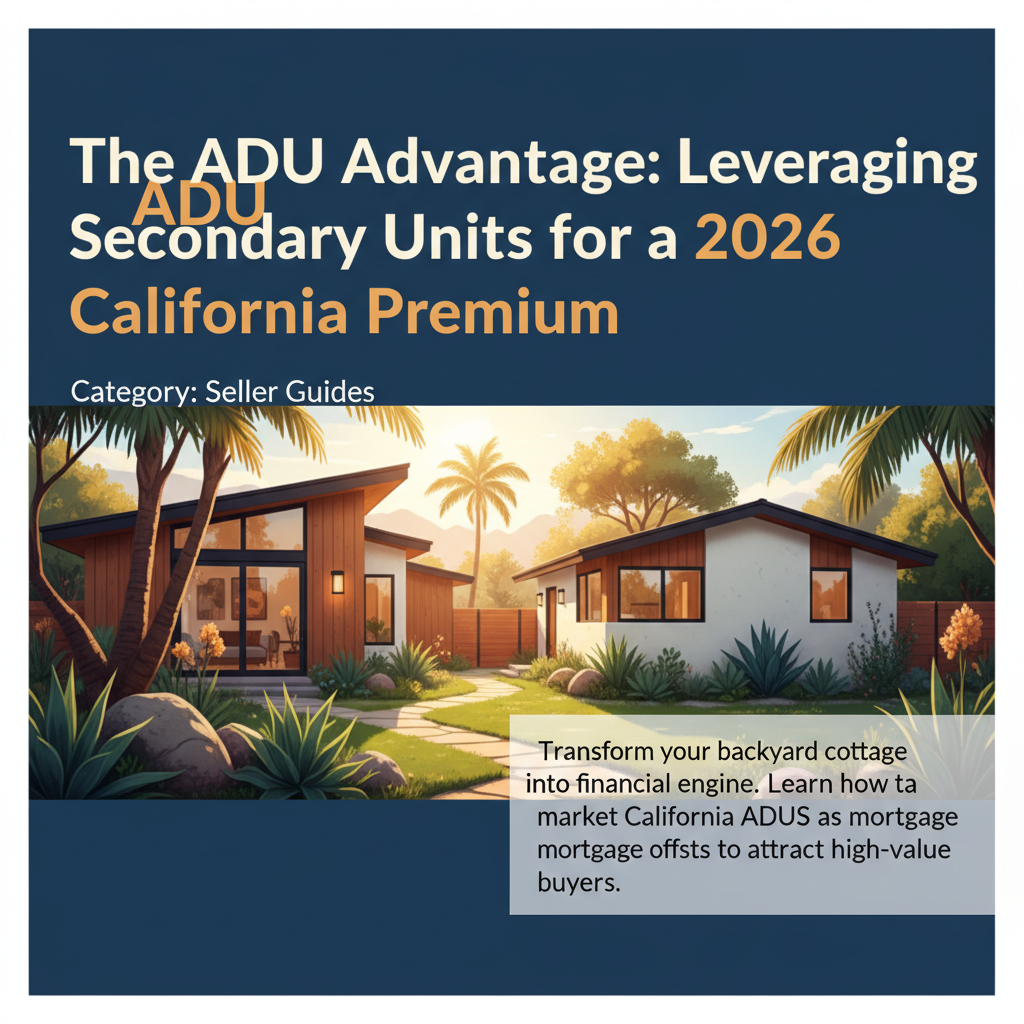
The ADU Advantage: Leveraging Secondary Units for a 2026 California Premium
As we navigate the California real estate landscape in April 2026, a distinct trend has emerged: the Accessory Dwelling Unit (ADU) is no longer just a luxury addition—it is a primary driver of home valuation. With California’s housing shortage persisting and interest rates remaining stubbornly above 6%, buyers are increasingly prioritizing properties that offer income-generating potential or multi-generational flexibility. For sellers, an ADU isn't just extra square footage; it is a financial instrument that can significantly broaden your pool of prospective buyers.
The 'Mortgage Offset' Marketing Strategy
In today's market, the most effective way to sell a home with an ADU is to market it as a 'mortgage offset.' According to recent data from the California Association of REALTORS® (C.A.R.), homes with permitted ADUs in metropolitan areas like Los Angeles and the Bay Area are fetching premiums of 15% to 25% over comparable single-family homes.
Instead of merely listing the ADU in the description, provide potential buyers with a Pro Forma. Show the projected rental income based on current market rates. In 2026, a well-appointed 500-square-foot ADU in a coastal county can command between $2,200 and $3,100 per month. Presenting this as a direct reduction of the buyer's monthly debt service makes your property vastly more affordable to a wider range of income brackets.
Staging for Versatility and Value
While an ADU's primary value may be rental income, sellers should stage the space to highlight its versatility. In the post-pandemic, hybrid-work era of 2026, buyers look for 'flex space.' Your staging strategy should demonstrate that the ADU can function as:
- A High-End Remote Workspace: Outfitted with high-speed fiber-optic connections and ergonomic layouts.
- Multi-Generational Living: Highlighting ADA-compliant features that cater to California’s aging population.
- Short-Term Rental: If local zoning allows, showcase the space as a turnkey hospitality suite.
The Compliance Audit: Ensuring a Seamless Escrow
The 2026 regulatory environment in California is stricter than ever regarding unpermitted structures. To maximize your home’s value, you must proactively address the 'Permit Gap.' Buyers are increasingly wary of 'recreational rooms' that look like kitchens but lack the proper HCD (Housing and Community Development) certifications.
Before listing, conduct a pre-sale compliance check. Ensure your ADU complies with the latest state laws, including SB 9 and AB 1033, the latter of which allows for the separate sale of ADUs as condos in participating jurisdictions. Providing a 'Transparency Binder' that includes final permit sign-offs and utility connection certifications can prevent appraisal devaluations and eliminate buyer friction during the due diligence period.
Practical Takeaways for 2026 Sellers
- Quantify the Income: Include a localized rental market analysis specifically for the ADU in your disclosure package.
- Verify Utility Separation: Properties with separate electrical or water meters for the ADU command a higher premium as they simplify the rental process for future owners.
- Highlight Green Upgrades: In line with California’s 2026 energy mandates, emphasize any solar arrays or heat-pump systems dedicated to the ADU, as these lower the 'carrying cost' for the tenant or owner.
- Address Access: Ensure the path to the ADU is well-lit and private. Privacy is the number one concern for buyers looking to live in the main house while renting the secondary unit.
By positioning your ADU as a strategic asset rather than an auxiliary building, you tap into the 2026 buyer’s need for financial resilience. In a high-cost environment, the property that pays for itself is the property that sells first.