The Evolution of the Master-Planned Mega-Community
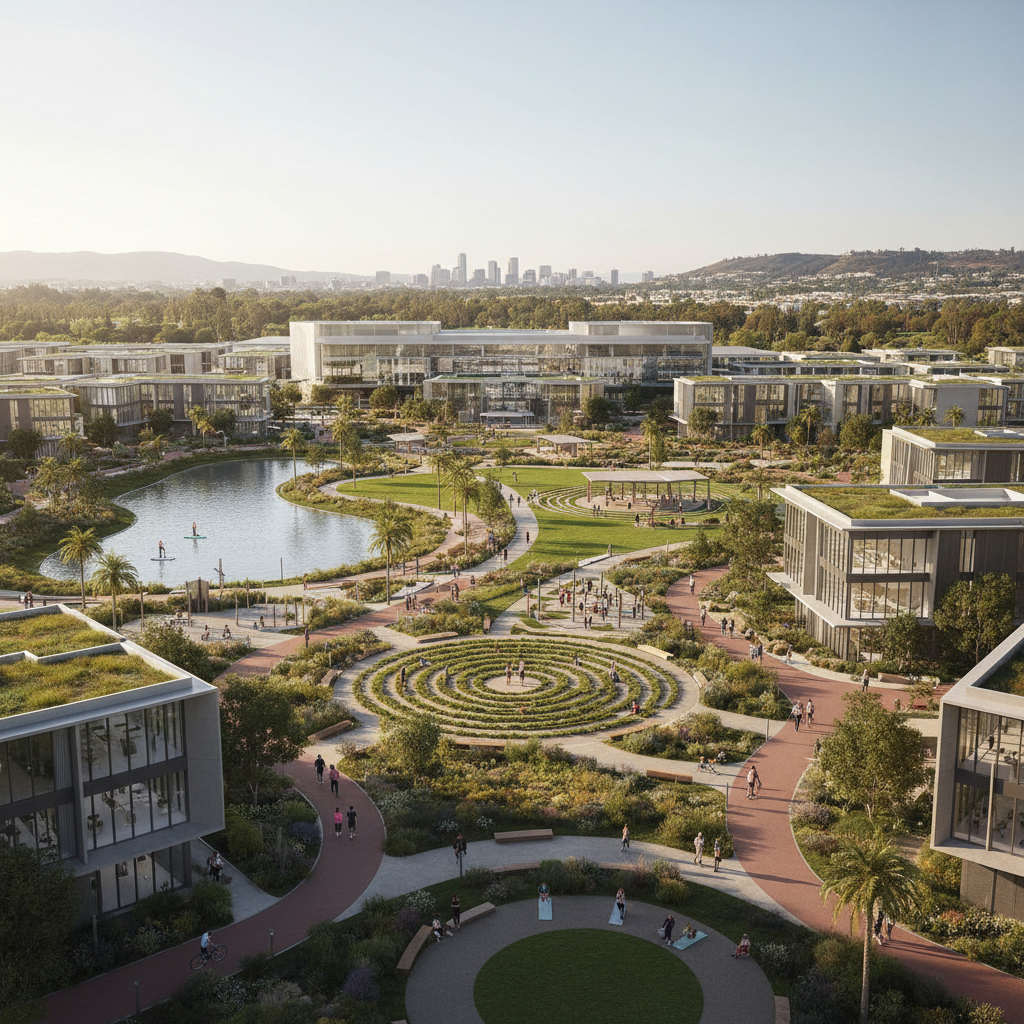
As of April 2026, the transformation of the former Marine Corps Air Station El Toro into the Great Park Neighborhoods (GPN) in Irvine has reached a critical maturity point. Unlike the traditional sprawl of 20th-century suburbs, GPN represents a pivot toward 'Wellness-Centric Urbanism.' With over 1,300 acres of parkland serving as the backyard for thousands of residents, this neighborhood has become California’s premier case study in balancing high-density residential growth with ecological preservation.
Community Features and the ‘Wellness’ Premium
The appeal of the Great Park in 2026 lies in its unique 'Life Path' infrastructure. Recent MLS data indicates that homes within 500 meters of the primary trail systems command a 12% premium over similar models in North Irvine. The community is built around 'districts'—such as Novel Park, Rise, and Solis Park—each anchored by a unique amenity, ranging from Olympic-sized pools and Zen gardens to the iconic Orange Balloon. In 2026, the completion of the Great Park ‘Cultural Terrace’ has added a regional draw, featuring a new botanical garden and an expanded sports complex that attracts national tournaments, bolstering local short-term rental demand.
Academic Excellence as an Economic Engine
Education remains the primary driver of property values in Irvine. The neighborhood is served by the Irvine Unified School District (IUSD), consistently ranked in the top 1% nationally by Niche and GreatSchools. Portola High School, with its state-of-the-art labs and proximity to the Great Park, has become a focal point for families. According to 2025 Census Bureau estimates, nearly 70% of GPN residents hold a bachelor’s degree or higher, creating a high-income demographic that supports a robust local economy. For investors, the 'school district moat' provides a level of downside protection rarely seen in other California markets.
Transportation and Connectivity
While Irvine is historically car-dependent, 2026 marks a shift in mobility. The iShuttle system has expanded, providing seamless loops between GPN residential clusters and the Irvine Station, a major hub for Metrolink and Amtrak’s Pacific Surfliner. This connectivity allows residents to commute to tech hubs in Santa Ana or the Silicon Beach corridor without the 405 freeway fatigue. Additionally, the neighborhood’s 'Green Spine'—a network of dedicated bike and pedestrian paths—allows children to commute to schools like Cadence Park (K-8) without ever crossing a major arterial road.
The 2026 Market Outlook and Investor Strategy
Despite the broader California housing shortage, GPN has maintained a steady pipeline of luxury townhomes and single-family residences. CBRE reports suggest that Irvine’s vacancy rate for premium rentals remains under 3.5%, driven by an influx of professional relocation from the biotech and aerospace sectors.
Practical Takeaways for Stakeholders:
- For Buyers: Focus on the 'Solis Park' and 'Luna Park' phases. These newer builds incorporate the latest 2025 Title 24 energy standards, significantly lowering utility overhead via integrated solar and battery storage.
- For Sellers: The 'wellness' angle is your strongest marketing tool. Highlighting proximity to the newly opened 2026 fitness annexes and organic community gardens can attract premium offers from out-of-state buyers.
- For Investors: Target the 3-bedroom townhome segment. These units are seeing the highest velocity in the rental market, primarily catering to young families waiting for larger detached homes to become available.
In 2026, Irvine’s Great Park is no longer just a development; it is a global destination for those seeking a highly curated, safe, and education-first lifestyle. Its success serves as a blueprint for how California can modernize the suburban dream for a new generation.