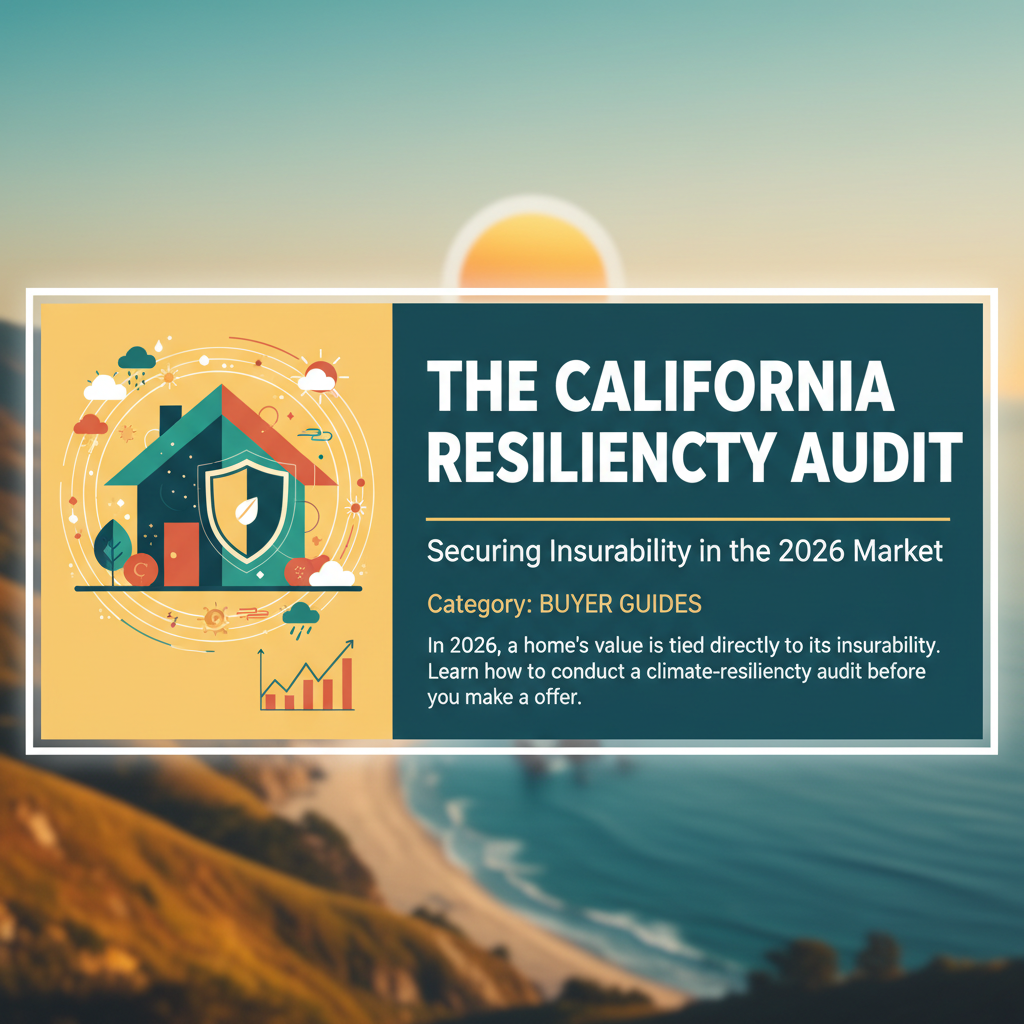
The New Vital Sign: Insurability as a Closing Condition
As of April 2026, the California real estate landscape has shifted. While interest rates and inventory remain primary concerns, a new hurdle has taken center stage: the Insurance Contingency. With major carriers like State Farm and Allstate having restricted new policies over the last three years, and the California FAIR Plan reaching record enrollment, savvy buyers must look beyond the aesthetic and even the structural. You must now audit a property’s climate resiliency to ensure it remains a bankable asset.
The Data Behind the Shift
According to the California Department of Insurance, non-renewals in high-risk wildfire zones increased by 31% between 2023 and 2025. Furthermore, the 2026 National Association of Realtors (NAR) State of the Industry report indicates that 1 in 4 California transactions now face delays or cancellations due to insurance premium shocks or lack of coverage availability. Buying a home in California today requires a proactive approach to risk mitigation that begins before the first tour.
Conducting Your Resiliency Audit
A standard home inspection is no longer sufficient. To protect your investment in 2026, your due diligence should include a specific Resiliency Audit focusing on three key pillars:
1. The Wildfire Hardening Assessment
California Assembly Bill 38 requires sellers of properties in high fire hazard severity zones to provide documentation that the property is in compliance with wildfire mitigation laws. However, buyers should go further. Look for:
- Class A Roofing: Ensure the roof is constructed of non-combustible materials like tile, slate, or metal.
- Ember-Resistant Venting: Check for 1/16th-inch mesh screening on all attic and crawlspace vents to prevent ember intrusion.
- Defensible Space Zones: Verify the five-foot ‘non-combustible zone’ immediately surrounding the perimeter of the home is free of mulch and woody vegetation.
2. The Flood and Sea-Level Projection
Even if a property is not in a designated FEMA flood zone today, 2026 buyers must look at 30-year projections. Utilize the California Coastal Commission’s updated 2025 sea-level rise maps and the First Street Foundation risk scores. A property currently in ‘Zone X’ may be uninsurable by the mid-point of your mortgage if it sits near an expanding flood plain or a rising coastline.
3. The Power Independence Factor
With utility rates from IOUs (Investor-Owned Utilities) rising 12% annually in some California regions, a home’s energy resilience is a financial necessity. Evaluate the age of the solar array and, more importantly, the presence of battery storage (BESS). Under NEM 3.0 regulations, a home without battery storage loses significant value compared to one that can arbitrage peak-pricing hours and provide backup during Public Safety Power Shutoffs (PSPS).
Practical Takeaways for 2026 Buyers
- Quote Before You Offer: Never submit a non-contingent offer without an insurance binder quote in hand. Work with an independent broker who specializes in California’s ‘surplus lines’ market if traditional carriers decline.
- Leverage the C.A.R. Wildfire Disaster Disclosure: Use the findings from the Fire Hardening and Defensible Space Disclosure (FHDS) to negotiate credits. If a property requires $15,000 in brush clearance and vent retrofitting to become insurable, that is a direct hit to the seller's proceeds.
- Review the FAIR Plan Transition: If a property is currently on the FAIR Plan, investigate the 'Difference in Conditions' (DIC) policy options to fill the gaps in liability and water damage that the state's insurer of last resort does not cover.
In 2026, the most beautiful home in the world is a liability if it cannot be insured. By integrating a resiliency audit into your buying process, you ensure that your California dream remains a sustainable financial reality.