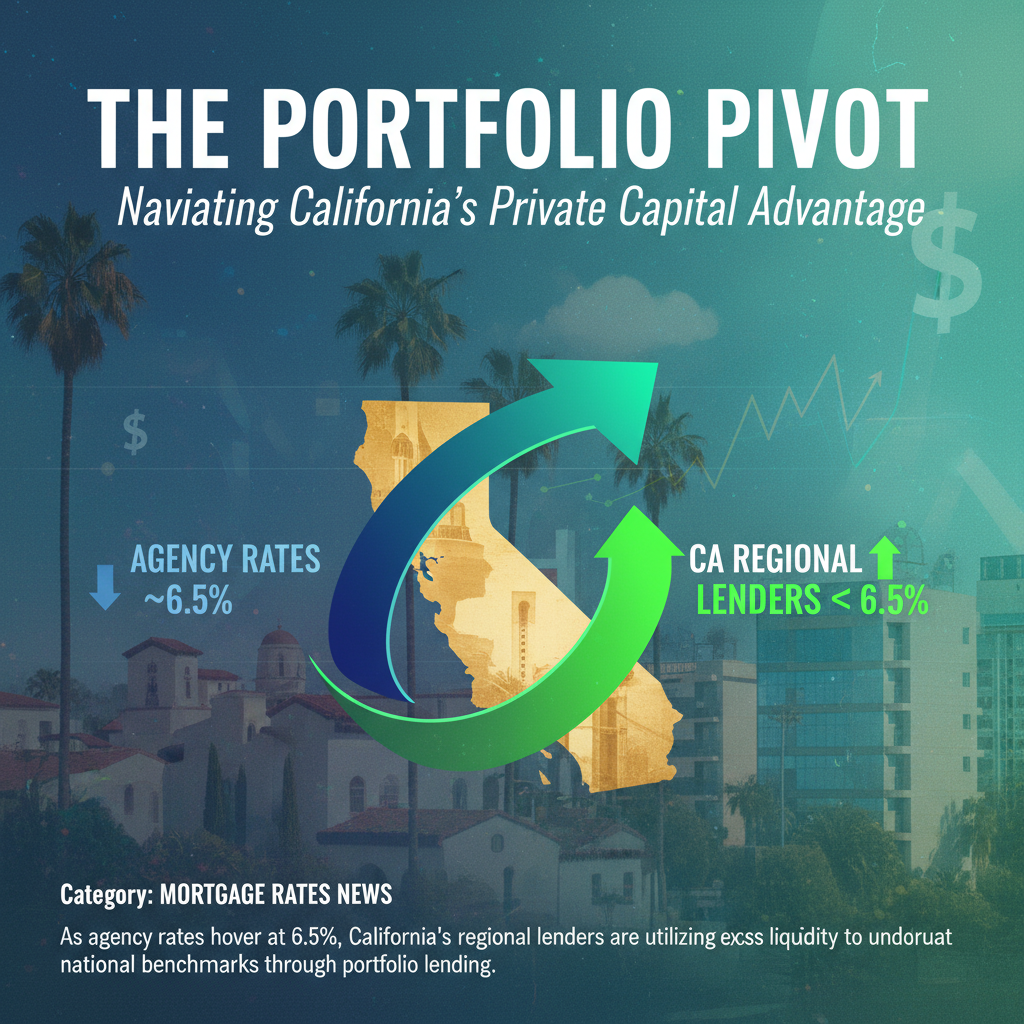
The 6.5% Ceiling and the Agency Fatigue
As of late April 2026, the national mortgage landscape has remained stubbornly anchored. Freddie Mac’s Primary Mortgage Market Survey (PMMS) reflects a 30-year fixed-rate average of 6.48%, marking the fourth consecutive month of the '6.5% plateau.' For many California home buyers, this stagnation has created a sense of fatigue with traditional agency products (Fannie Mae and Freddie Mac), which are currently hamstrung by high secondary market yields and persistent volatility in the 10-year Treasury note.
However, a significant shift is occurring beneath the surface. While national aggregates suggest a flat market, California’s localized lending environment is seeing a resurgence in portfolio lending. Driven by a need to deploy excess liquidity following the stabilization of the regional banking sector in late 2025, several California-based credit unions and community banks are now offering rates 35 to 50 basis points below the agency average.
Why the 'California Discount' is Reappearing
The divergence between agency rates and portfolio rates is a direct result of capital allocation strategies unique to the West Coast. According to recent data from the California Department of Financial Protection and Innovation (DFPI), mid-tier institutions in the state have seen a 12% year-over-year increase in deposit growth. To offset the cost of these deposits, these institutions are increasingly keeping loans 'in-house' rather than selling them into the securitized market.
For a buyer in high-cost counties like Santa Clara, Orange, or Marin, the math is compelling. On a $1.2 million loan, the difference between a 6.5% agency rate and a 6.125% portfolio rate amounts to approximately $300 per month in savings. More importantly, because these lenders hold the risk themselves, they are often more flexible with debt-to-income (DTI) ratios, provided the borrower maintains significant 'skin in the game' through high down payments.
The Rise of the Relationship-Based Rate
A hallmark of the 2026 lending market is the 'Relationship Tier.' Unlike the rigid pricing engines of national retail lenders, California’s portfolio lenders are aggressively discounting rates for borrowers who move assets. Data from the California Association of Realtors (CAR) suggests that nearly 22% of successful Q1 2026 transactions involved some form of relationship-based pricing, where the borrower received a 0.125% to 0.25% rate reduction in exchange for moving $100,000 or more in liquid assets to the lending institution.
Practical Takeaways for the 2026 Spring Market
- Audit Local Credit Unions First: Before seeking a pre-approval from a national aggregator, check the portfolio products of regional credit unions. In California, these institutions are currently the primary source of sub-6.25% financing.
- Leverage the 'Cross-Collateral' Option: If you are selling a home in a lower-cost area (like the Central Valley) to buy in a high-cost area (like the Bay Area), ask portfolio lenders about cross-collateralization. This can sometimes bypass the need for a high-interest bridge loan.
- Mind the Reserve Requirements: Portfolio lenders offer better rates because they are risk-averse. Expect to show 12 to 24 months of PITI (Principal, Interest, Taxes, and Insurance) reserves to qualify for the most aggressive private capital rates.
- Negotiate the 'Floor': When discussing portfolio ARMs—which are gaining popularity again in 2026—pay close attention to the lifetime floor. Many lenders are setting floors at 5%, which may limit the benefits if the Fed aggressively cuts rates in late 2027.
As we move toward the May peak of the spring buying season, the successful California buyer is no longer the one waiting for a national rate drop. Instead, they are the ones navigating the nuances of local capital stacks and private balance sheets to find the pricing that the national headlines are missing.