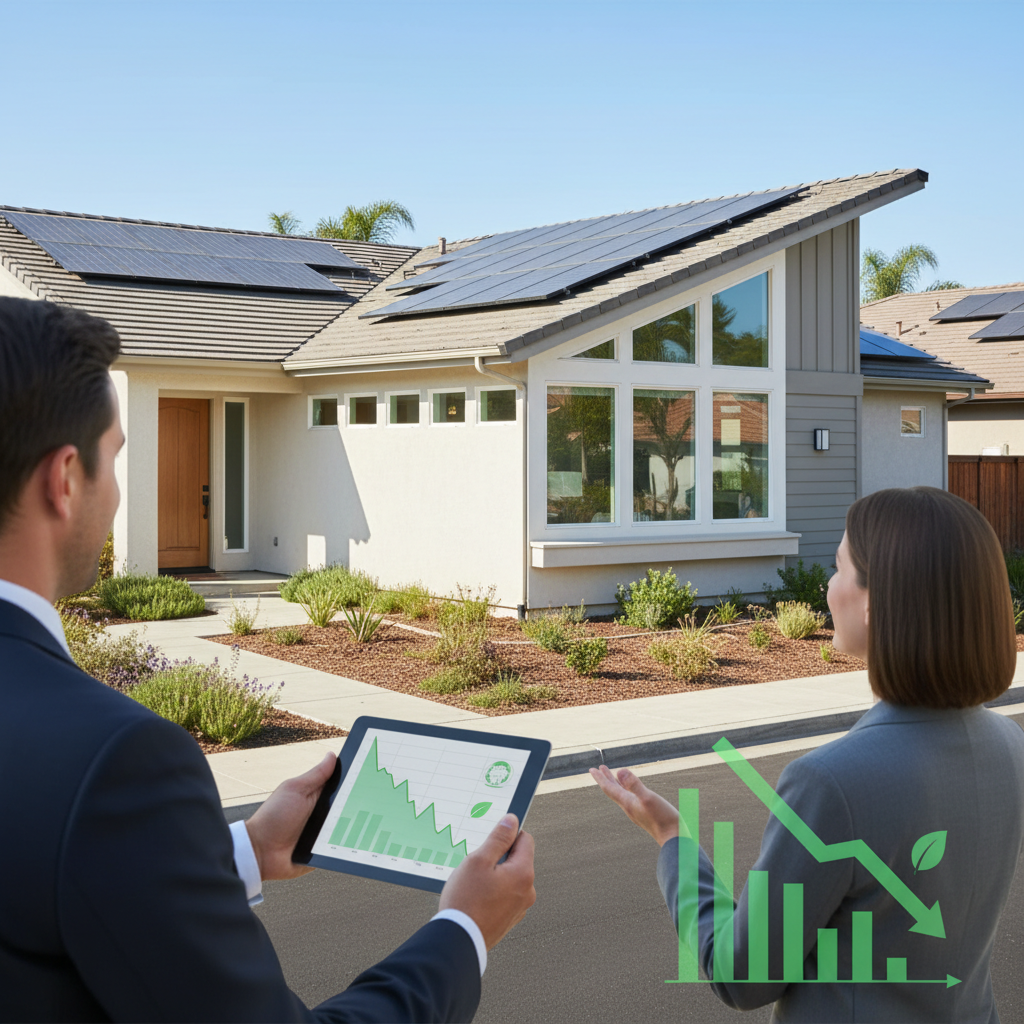
The Convergence of Climate Policy and Capital Markets
As of April 20, 2026, the national average for a 30-year fixed-rate mortgage has stabilized at approximately 6.42%, according to Freddie Mac’s Primary Mortgage Market Survey. While this is a significant improvement from the volatility of previous years, California’s median home price—now exceeding $860,000—continues to demand creative financing solutions. A new trend has emerged this spring: the 'Green Discount.' This lending shift is directly tied to California’s aggressive Title 24 energy standards and the secondary market's increasing appetite for ESG-compliant (Environmental, Social, and Governance) mortgage-backed securities.
Why Efficiency Equals Equity in 2026
Lenders are increasingly viewing energy-efficient homes as lower-risk assets. Data from the California Energy Commission (CEC) suggests that homes built under the 2022 and 2025 code updates carry significantly lower utility-to-income ratios. In response, several major wholesale lenders and credit unions operating in the Golden State have introduced 'Preferred Energy Pricing' tiers. For buyers of homes with certified solar arrays, battery storage, or LEED Platinum ratings, these programs offer rate reductions of 12.5 to 25 basis points (0.125% to 0.25%) compared to standard conforming rates.
The Data Behind the Trend
- Secondary Market Demand: According to recent CBRE reporting, institutional investors are paying a premium for 'Green Bonds' backed by energy-efficient residential loans, allowing lenders to pass savings to the consumer.
- Default Correlation: Internal data from major West Coast lenders indicates a 15% lower delinquency rate among borrowers in high-efficiency homes, attributed to lower total cost of ownership.
- Inventory Shift: Nearly 22% of new California listings in Q1 2026 featured some form of energy-efficient certification, making this incentive applicable to a growing segment of the market.
Practical Takeaways for California Buyers
In a market where a 0.25% rate difference can mean $150 to $200 in monthly savings on a typical California mortgage, buyers should prioritize the following strategies:
- Seek 'Green-Preferred' Lenders: Before locking a rate, ask your loan officer if they have access to ESG-driven pricing buckets specifically for homes meeting Title 24 standards.
- Audit the Appraisal: Ensure your appraiser uses the 'Green and Energy Addendum' (Fannie Mae Form 1004G). If the energy improvements aren't properly documented, you may miss out on both the value bump and the interest rate discount.
- Factor in Net Monthly Outlay: When comparing a 6.5% rate on an older home versus a 6.25% rate on a high-efficiency home, the 'real' savings are often doubled once the reduced utility costs are factored into the DTI (Debt-to-Income) calculation.
The Long-Term Outlook
As California moves toward its goal of carbon neutrality, the integration of home performance and mortgage pricing is expected to become standard. For now, early adopters in the 2026 spring market are finding that 'buying green' is no longer just an ethical choice—it is a sophisticated financial strategy to mitigate the impact of the 6% rate environment.


