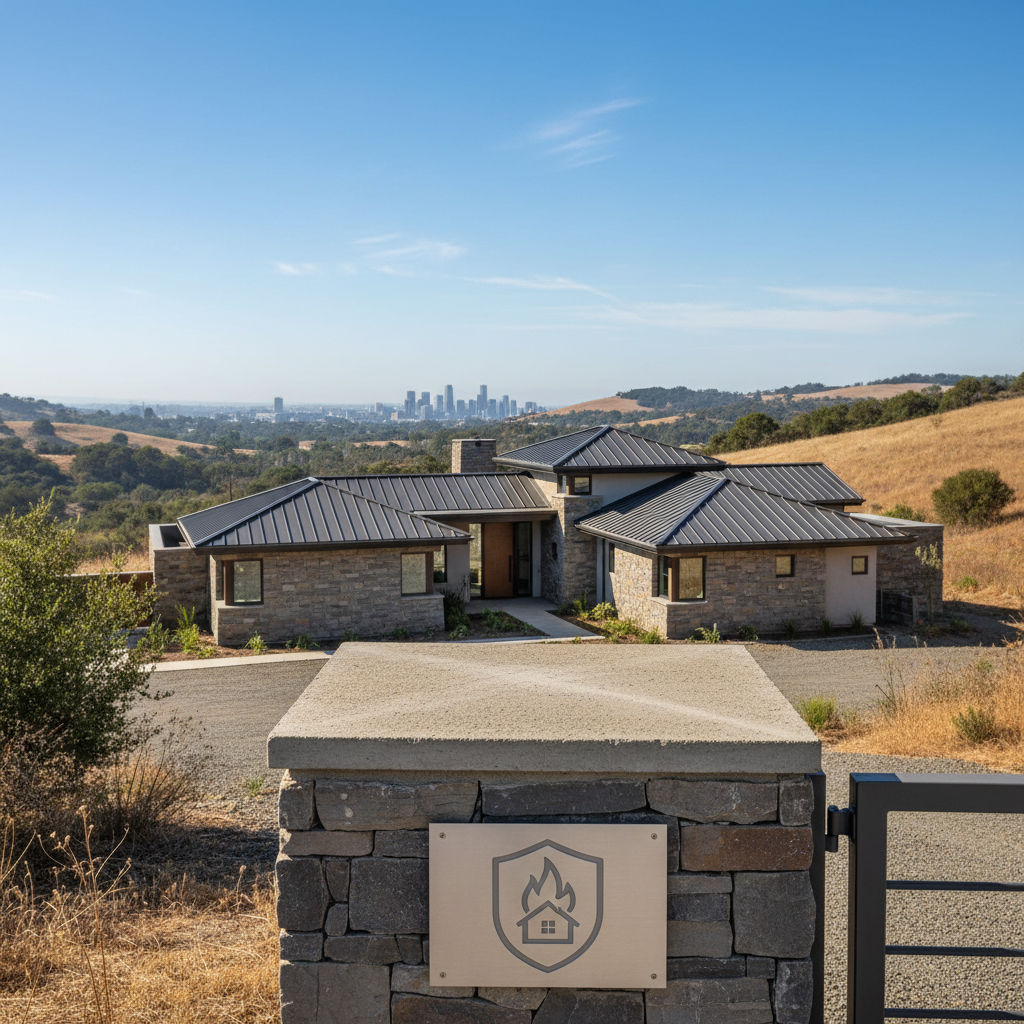
The Shift from Curb Appeal to Climate Resilience
As of April 20, 2026, a new metric has overtaken granite countertops and open floor plans as the primary driver of home valuations in California: the Resilience Rating. Following the full implementation of the 2025 'Safer from Wildfires' framework, properties with a 'Hardened Home' certification are now commanding a significant premium, while non-certified homes face lengthening days on market and narrowing buyer pools.
The 18% Value Gap: Data from the Field
According to the California Association of Realtors (CAR) Q1 2026 report, residential properties in State Responsibility Areas (SRAs) that carry a Class A Resilience Certification are selling for an average of 18.2% more than comparable non-certified homes. This isn't just a preference; it is a financial necessity. Data from the California Department of Insurance (CDI) shows that certified homes qualify for 'Preferred Resilience Credits,' reducing annual premiums by an average of $2,400—a savings that buyers are increasingly baking into their mortgage math.
"In 2024, a hardened roof was a nice-to-have," says Marcus Thorne, a senior analyst at the California Real Estate Institute. "In 2026, without a verifiable Hardened Home certificate, many lenders are requiring a 5% to 10% higher down payment to offset the volatility of non-admitted insurance carriers."
Regulatory Drivers: Beyond AB 38
While AB 38 (2019) established the groundwork for wildfire disclosure, the 2026 market is being shaped by the 2025 Resilience Disclosure Act. This regulation requires all sellers in Very High Fire Hazard Severity Zones (VHFHSZ) to provide a 'Resilience Audit' alongside standard natural hazard disclosures. Much like the HERS ratings for energy efficiency, these audits provide a score from 1 to 100 based on ember-resistant venting, defensible space depth, and structural ignition resistance.
Institutional lenders have responded in kind. As of this month, three of the state’s largest credit unions have introduced 'Resilience-Linked Mortgages,' offering a 0.25% rate discount for properties scoring above 85 on the state’s hardening scale.
Practical Takeaways for the 2026 Market
- For Sellers: Before listing, invest in a pre-sale Resilience Audit. Closing the gap on 'low-hanging fruit'—such as replacing 1/16th inch mesh vents with ember-resistant alternatives—can yield a 4x return on investment by unlocking 'Certified' status.
- For Buyers: Look for 'Resilience-Laggards'—homes with solid bones but low ratings. In the current market, these properties are frequently sitting for 60+ days, providing a window to negotiate 'Hardening Credits' at closing to fund retrofits post-purchase.
- For Investors: Focus on the 'Green-to-Hardened' pipeline. Retrofitting older multi-family units to meet 2026 hardening standards is currently one of the highest-alpha strategies in the Inland Empire and Sierra Foothills, as it drastically lowers the building's cap rate by stabilizing insurance overhead.
The New Standard of Due Diligence
The 2026 spring homebuying season has made one thing clear: California real estate has bifurcated. We are no longer looking at a single market, but a two-tiered system divided by physical survivability. For the California homeowner, the 'Resilience Certificate' is no longer a badge of environmental pride—it is the essential key to liquidity.