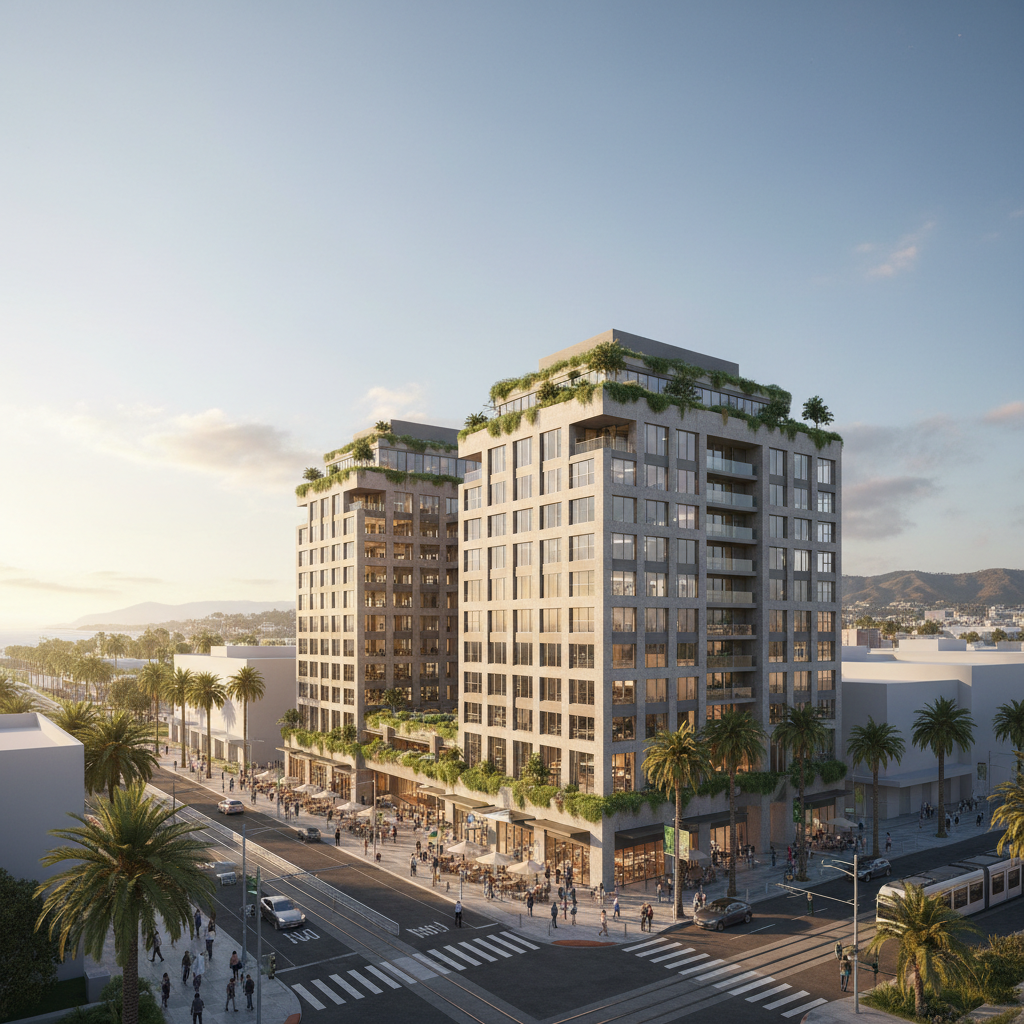
The Post-Office Era: 2026’s Conversion Catalyst
As of mid-April 2026, the California real estate landscape is witnessing a structural pivot. While residential inventory has stabilized following the 'rate thaw' of 2025, a deeper opportunity has emerged in the commercial sector's prolonged distress. With office vacancy rates in San Francisco and Los Angeles holding at 34% and 26% respectively, according to current CBRE data, the most significant arbitrage opportunity in the current market lies in adaptive reuse.
The Legislative Unlock: SB 4 and AB 2011 Maturity
The regulatory friction that once made commercial-to-residential conversions a niche endeavor has largely dissolved. Under the fully matured frameworks of Senate Bill 4 and Assembly Bill 2011, developers are now bypassing local discretionary reviews for residential projects on land previously zoned for office, retail, or parking. This ministerial approval process has shortened project timelines by an average of 16 months, according to the California Department of Housing and Community Development, significantly reducing carrying costs in a still-elevated cost-of-capital environment.
Economics of the Conversion Play
The financial viability of these projects is driven by a widening gap between distressed commercial valuations and the sustained demand for 'attainable luxury' housing. Analysis from the California Legislative Analyst’s Office suggests a 14% to 18% lower per-unit cost for conversions compared to ground-up construction in urban infill zones. This is primarily due to the preservation of existing structural shells and utility connections. For investors, this translates to a yield premium of 140-200 basis points over traditional multifamily acquisitions, which are currently facing compressed caps due to high competition.
Practical Takeaways for 2026 Investors
- Target Class B and C Office Stock: Focus on 1970s and 1980s assets with smaller floor plates (under 15,000 square feet), which allow for the easier distribution of natural light and ventilation required for residential code compliance.
- Identify Retail Strip Underperformance: Use the streamlined AB 2011 process to convert underutilized commercial strips into mixed-use 'village' concepts, focusing on the Inland Empire and Central Valley where population growth remains robust.
- Capitalize on Local Incentives: Monitor the 2026 'Downtown Revitalization Grants' offered by municipalities like San Jose and San Diego, which provide tax abatements and fee waivers specifically for adaptive reuse projects that include at least 20% workforce housing.
By shifting focus from ground-up development to the strategic repurposing of existing urban density, investors in 2026 can bypass the supply-chain volatility and labor shortages still affecting the new construction sector while revitalizing California's core urban centers.