The 2026 Mortgage Spread Correction
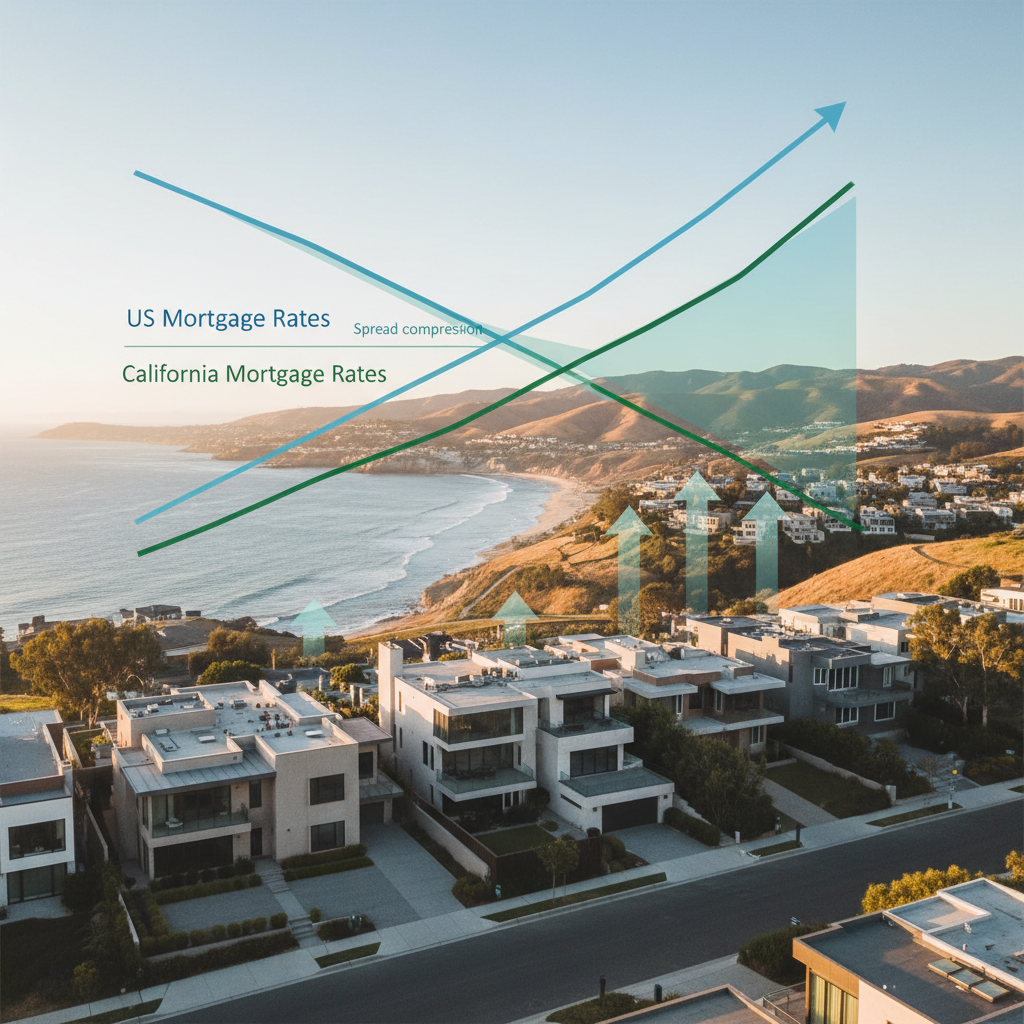
For the past three years, California homebuyers have been squeezed not just by high base interest rates, but by an abnormally wide 'spread'—the gap between the 10-Year Treasury yield and the 30-year fixed mortgage rate. Historically, this spread sits around 170 to 200 basis points. In the volatility of 2024 and 2025, it frequently ballooned to 300 basis points. As of April 18, 2026, market data indicates a significant shift: the spread is finally compressing toward 210 basis points.
Why the Gap is Closing
The narrowing of this spread is driven by two primary factors: stabilized inflation expectations and a resurgence in the secondary market for Mortgage-Backed Securities (MBS). According to recent reports from the Mortgage Bankers Association (MBA), investor appetite for MBS has increased as the Federal Reserve’s terminal rate has become more predictable. When investors feel less risk regarding future rate movements, they require a lower 'risk premium' to hold mortgage debt.
With the 10-Year Treasury currently hovering near 4.2%, a 210-basis point spread puts the average 30-year fixed rate at approximately 6.3%. This is a notable improvement from the 6.8% rates seen earlier this year, even without a corresponding drop in the federal funds rate.
The California Impact: High Balances, Higher Savings
In California’s high-cost markets—spanning from the Bay Area to San Diego—the compression of the spread is amplified by the sheer size of the loans. On a standard high-balance conforming loan of $1,149,825 (the 2026 limit for many CA counties), a 50-basis point reduction in the spread translates to a monthly savings of nearly $400.
Furthermore, as the spread narrows, the 'secondary market liquidity' for California-specific jumbo products has improved. Local lenders who had previously padded their margins to protect against volatility are now competing aggressively, leading to a 'rate war' among regional banks looking to capture the 2026 spring buying season.
Data Points to Watch
- 10-Year Treasury Yield: Currently 4.21%. If this breaks below 4.0%, we could see 5.99% rates return to the California market by summer.
- MBS Volatility Index: Down 18% year-over-year, signaling a return to a more 'boring' and therefore cheaper lending environment.
- Inventory Levels: California MLS data shows a 12% increase in new listings since March, putting the onus on lenders to provide competitive financing to keep pace with supply.
Practical Takeaways for April 2026 Buyers
For those navigating the current California market, the strategy has shifted from 'surviving' to 'optimizing':
- Benchmark Against the Treasury: When quoting lenders, ask what their current margin over the 10-Year Treasury is. If it’s significantly higher than 220 basis points, shop around; they are likely padding their profit margin at your expense.
- Target 'Thin-Margin' Lenders: Look for non-bank retail lenders or credit unions that are currently aggressive in their secondary market execution to take advantage of the narrowing spread.
- Re-Evaluate the 15-Year Fixed: The spread on 15-year products has compressed even further, often sitting at just 140 basis points over the Treasury, making it an attractive option for those prioritizing equity over monthly cash flow.
As we move deeper into the second quarter of 2026, the decoupling of mortgage rates from the Fed’s direct actions provides a unique window for California buyers to lock in rates that are finally beginning to reflect historical norms rather than crisis-era volatility.


