The Rise of the California Transit Priority Area
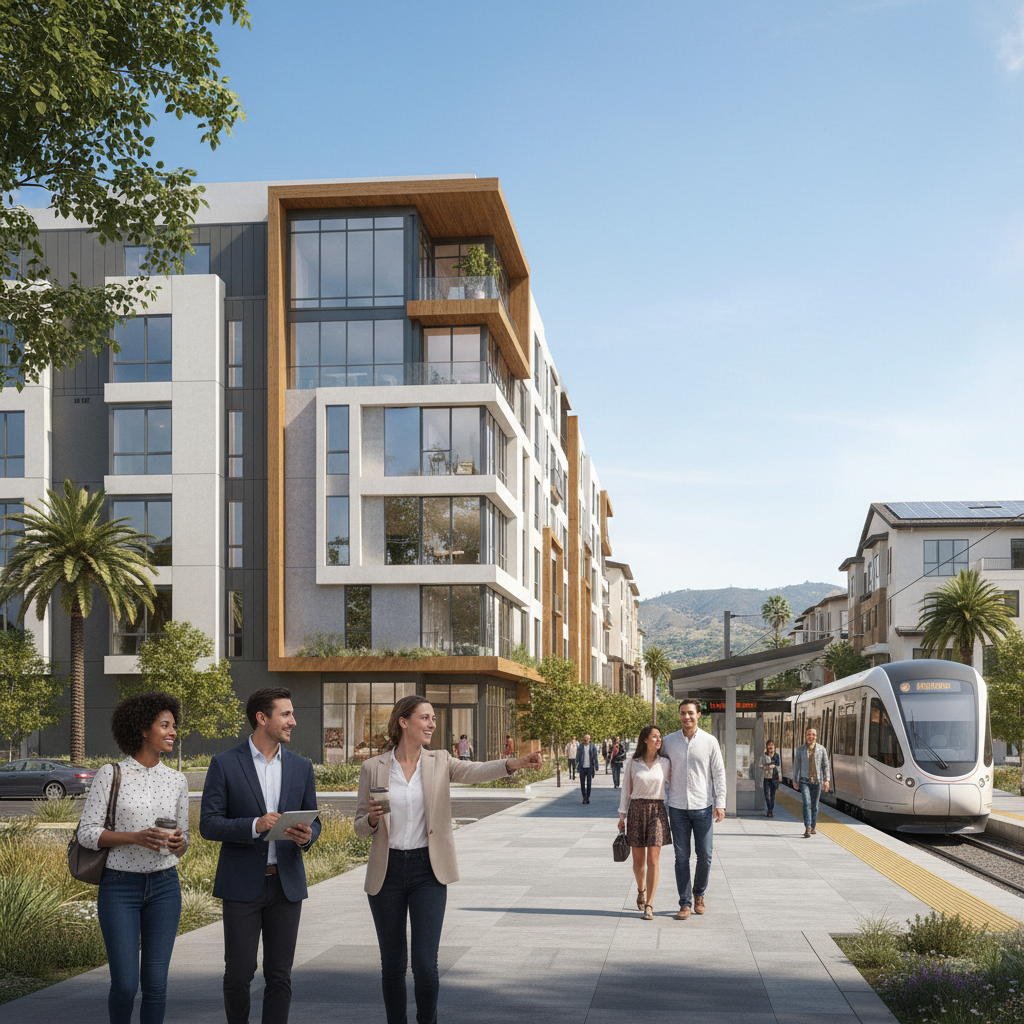
In 2026, the California real estate market is no longer defined solely by suburban sprawl. A significant shift in state housing policy, bolstered by the 2024–2025 expansion of Transit Priority Areas (TPAs), has redirected buyer interest toward high-density zones near major transit hubs. For buyers, navigating these Transit-Oriented Development (TOD) zones requires a different set of evaluation tools than traditional residential purchases.
According to the California Department of Housing and Community Development (HCD), over 40% of the state’s new housing permits in 2025 were issued within a half-mile of high-quality transit. This trend is driven by state mandates that eliminate minimum parking requirements and allow for increased floor-area ratios (FAR), making these properties uniquely resilient to the supply shortages affecting broader markets.
The Value Proposition of TOD Properties
Data from the National Association of Realtors (NAR) indicates that properties located within walking distance of reliable public transit in California (such as BART, LA Metro, or the emerging High-Speed Rail segments) have seen a 7.4% higher appreciation rate over the last 24 months compared to car-dependent suburbs. This "transit premium" is driven by three primary factors:
- Reduced Cost of Living: Buyers in TOD zones often eliminate the need for a second vehicle, saving an average of $12,000 annually in maintenance, fuel, and insurance costs.
- Zoning Flexibility: Many TOD zones allow for Accessory Dwelling Units (ADUs) or small-lot developments with fewer regulatory hurdles, providing a built-in path for equity growth.
- Infrastructure Investment: With the 2026 completion of key transit extensions in the Bay Area and Los Angeles, these neighborhoods are receiving the lion's share of municipal beautification and safety funding.
Identifying High-Opportunity Transit Hubs
To capitalize on this trend, buyers must look beyond current maps and analyze the 2026–2030 transit master plans. Focus on areas where "Major Transit Stops" are established or funded. Under California law, a major transit stop includes a site containing an existing rail station, a ferry terminal served by either a bus or rail transit service, or the intersection of two or more major bus routes with a frequency of service interval of 15 minutes or less during peak commute periods.
Key regions showing 2026 growth include the Central Valley’s HSR corridor (specifically Fresno and Bakersfield), where station-adjacent housing is being fast-tracked, and the areas surrounding the LA Metro’s D Line extension. Buying in these zones today offers a first-mover advantage before the full utility of the transit line is reflected in local comps.
Practical Takeaways for TOD Buyers
When evaluating a property within a California TOD zone, buyers should perform the following due diligence:
- Verify Parking Exemptions: Under AB 2097, many TOD properties are not required to provide on-site parking. Ensure you understand the parking situation if you intend to keep a vehicle, as street parking in these zones is increasingly restricted.
- Assess Walk Scores and Micro-Mobility: High-value TOD units aren't just near trains; they are supported by bike lanes and scooter infrastructure. Check the municipal "active transportation plan" for the neighborhood.
- Look for 'By-Right' Entitlements: Properties in these zones often benefit from streamlined CEQA (California Environmental Quality Act) exemptions. This makes it easier to renovate or expand, which is a massive advantage for long-term appreciation.
- Analyze Utility Capacity: Increased density can strain local grids. During your inspection period, confirm that the local utility infrastructure has been upgraded to support the densification of the block.
As California continues its pivot toward a more sustainable, transit-linked future, the TOD buyer is positioned to benefit from both lifestyle efficiency and superior capital appreciation.