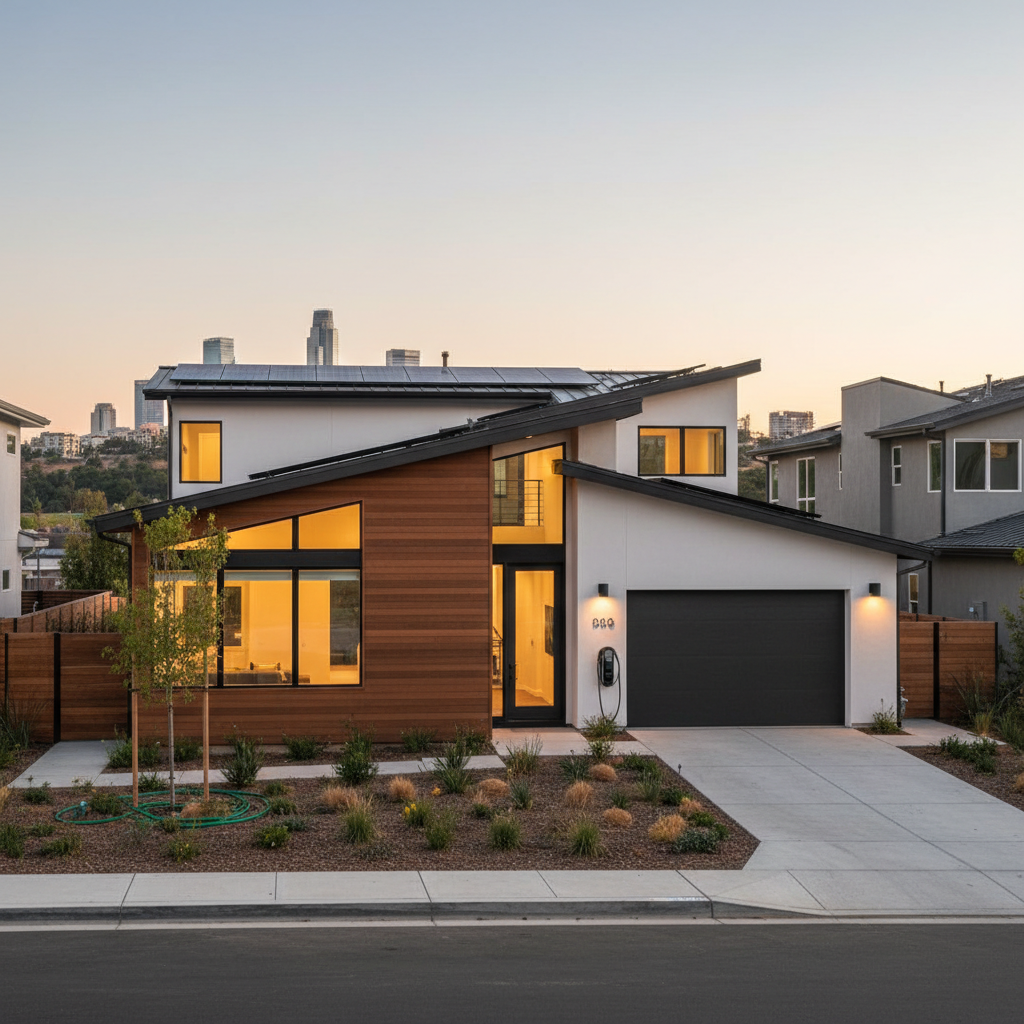
The Emergence of the 'Brown Discount' in California Real Estate
As of April 2026, the California real estate landscape is witnessing a profound structural shift. While previous years focused on interest rate fluctuations and inventory shortages, the primary driver of valuation divergence this spring is the implementation of aggressive municipal decarbonization mandates. From Los Angeles’s 'Clean Up, Green Up' extensions to San Francisco’s updated Climate Action Plan requirements, buildings are no longer being appraised solely on location and square footage, but on their carbon footprint and energy efficiency metrics.
Data-Driven Valuation: The Cost of Non-Compliance
Recent data from the California Energy Commission (CEC) and CBRE indicates a widening 'Green Premium.' In the first quarter of 2026, multi-family and commercial assets that meet or exceed the state’s 2026 electrification standards have commanded a 12-15% price-per-square-foot premium over non-compliant properties. Conversely, assets requiring immediate HVAC and water-heating retrofits are experiencing a 'Brown Discount,' with sale prices often docked by 1.5 times the estimated cost of remediation.
According to MLS data from the first half of April 2026, residential listings featuring solar-plus-storage systems and heat pump technology are spending an average of 18 days fewer on the market compared to those relying on legacy natural gas infrastructure. In the luxury sector, zero-net-energy (ZNE) certification has become a baseline expectation for high-net-worth buyers, rather than a niche amenity.
Investment Perspectives: The Value-Add Retrofit Play
For the sophisticated investor, the 2026 market presents a unique 'arbitrage' opportunity. Institutional capital is increasingly targeting B-class and C-class multi-family units that are being offloaded by smaller landlords overwhelmed by the new compliance costs. By leveraging the Inflation Reduction Act (IRA) tax credits and California’s TECH Clean California incentives, investors are acquiring these 'energy-inefficient' assets at a discount and performing rapid electrification retrofits.
Economic trends suggest this is a race against time. As the state moves closer to its 2030 goals, the labor cost for certified electric heat pump installers and specialized electricians is projected to rise by 20% annually. Early movers who secured contracts in 2025 are now seeing immediate equity gains as their modernized buildings attract higher-tier tenants and lower insurance premiums—the latter being a critical factor in California’s volatile risk-assessment environment.
Practical Takeaways for Stakeholders
- For Sellers: Conduct a comprehensive energy audit before listing. In the 2026 market, transparency regarding a building’s 'Energy Star Score' can prevent late-stage price negotiations and escrow fallouts.
- For Buyers: Scrutinize the 'Capital Improvement' section of any disclosure. Ensure that any purported 'upgrades' comply with the latest 2026 Title 24 Building Standards, particularly regarding electric vehicle (EV) charging readiness.
- For Investors: Focus on 'Electrification Arbitrage.' The highest yields are currently found in properties where the 'Brown Discount' exceeds the actual cost of a green retrofit, provided the investor has an established supply chain for materials.
Conclusion: The New Baseline for Value
The California market has reached a tipping point where sustainability is no longer an ethical choice but a financial imperative. As we navigate the remainder of 2026, the delta between 'resilient' and 'obsolete' inventory will only widen. For participants in the Golden State’s real estate market, the ability to quantify carbon risk is now just as important as the ability to project rental growth.