The Shift from Aesthetic to Systemic Value
In the 2026 California real estate market, the definition of a 'turn-key' home has evolved. While granite countertops and open floor plans remain attractive, savvy buyers are increasingly prioritizing systemic efficiency. Driven by rising utility costs and the state’s aggressive decarbonization mandates, the 'Electrification Premium' has become a measurable factor in home valuations. According to data from the California Energy Commission (CEC), homes featuring integrated smart-energy systems and high-efficiency electric appliances are selling for 3.5% to 5.2% more than their gas-dependent counterparts.
The EV Charger: The New 'Standard' Amenity
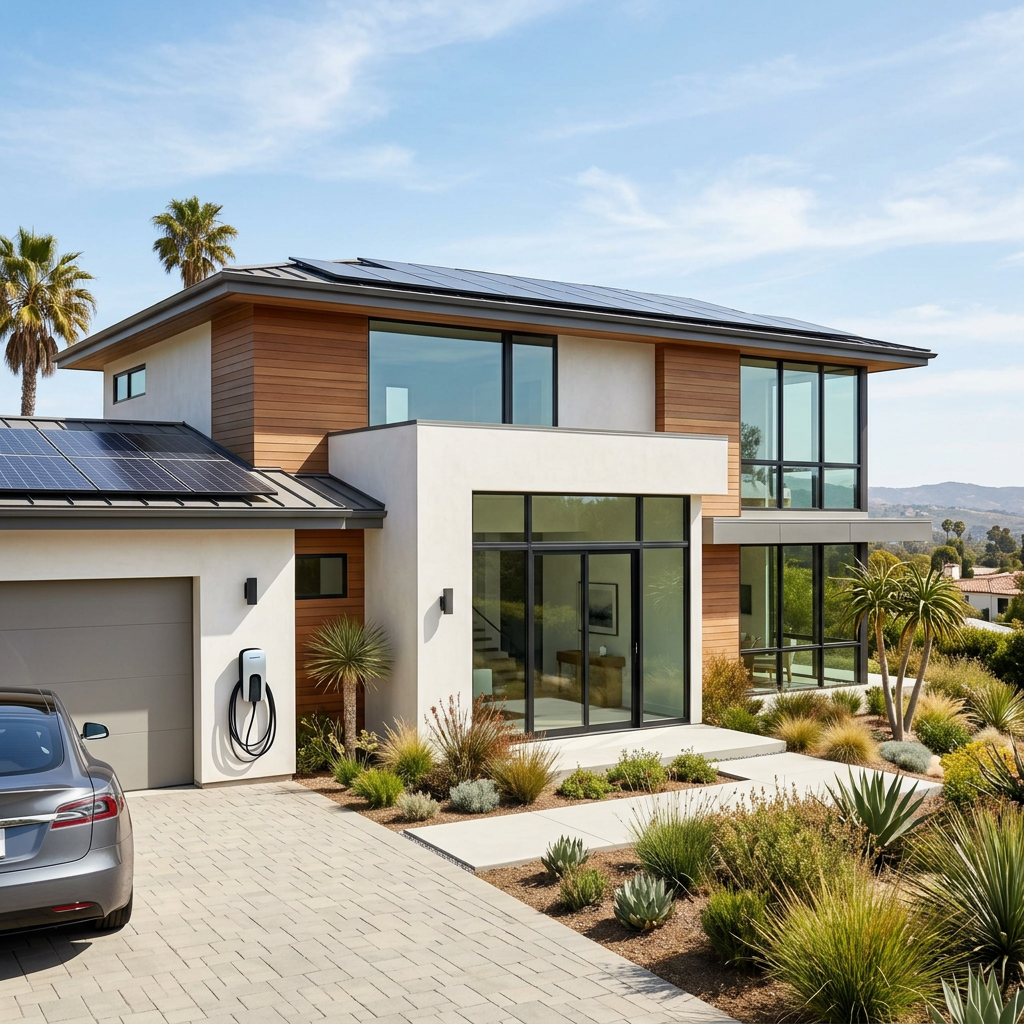
With California’s mandate to phase out new gas-powered vehicle sales by 2035, the presence of a Level 2 EV charging station is no longer an upgrade—it is a baseline expectation. For sellers, installing a dedicated 240V circuit in the garage is one of the highest ROI improvements available. NAR’s 2025 Sustainability Report indicated that homes with pre-installed EV infrastructure spend an average of 12 days fewer on the market in metropolitan hubs like San Jose, San Diego, and Los Angeles.
Title 24 Compliance as a Marketing Asset
California’s Building Energy Efficiency Standards (Title 24) are some of the strictest in the nation. Sellers who have proactively upgraded to R-38 attic insulation, dual-pane low-E windows, or heat pump water heaters should not just list these as features—they should be framed as 'Future-Proofing.' In 2026, buyers are wary of the 'hidden' costs of ownership. By providing a 'Green Audit' or an Energy Upgrade California certificate during the open house, sellers can effectively de-risk the purchase for the buyer, justifying a higher asking price.
The Induction Advantage in the Kitchen
The kitchen remains the heart of the home, but the preference is shifting. Professional-grade induction cooktops are outpacing high-end gas ranges in buyer preference surveys. Beyond the health benefits of improved indoor air quality, induction cooking is seen as a modern, high-tech alternative that aligns with the aesthetic of California’s luxury market. Data from regional MLS sets shows that listings mentioning 'induction cooking' and 'energy-efficient appliances' see a 15% increase in 'saves' and 'favorites' on digital platforms.
Practical Takeaways for 2026 Sellers
- Audit Before You List: Hire a certified energy auditor to identify low-cost, high-impact efficiency gaps. Often, sealing ductwork or upgrading a thermostat can yield a 2x return on investment.
- Market the Monthly Savings: Work with your agent to calculate the projected utility savings of your energy-efficient features. Presenting a 'Utility Comparison' sheet alongside the standard disclosures can be a powerful psychological tool for price justification.
- Prioritize the Panel: If you are renovating, ensure your electrical panel is upgraded to at least 200 amps. As buyers look toward a fully electric future, a limited electrical capacity can be a major deal-breaker during the inspection period.
Ultimately, maximizing value in 2026 requires a shift in perspective. By aligning a property with California’s systemic shift toward electrification, sellers can capture a demographic that values long-term sustainability as much as immediate curb appeal.