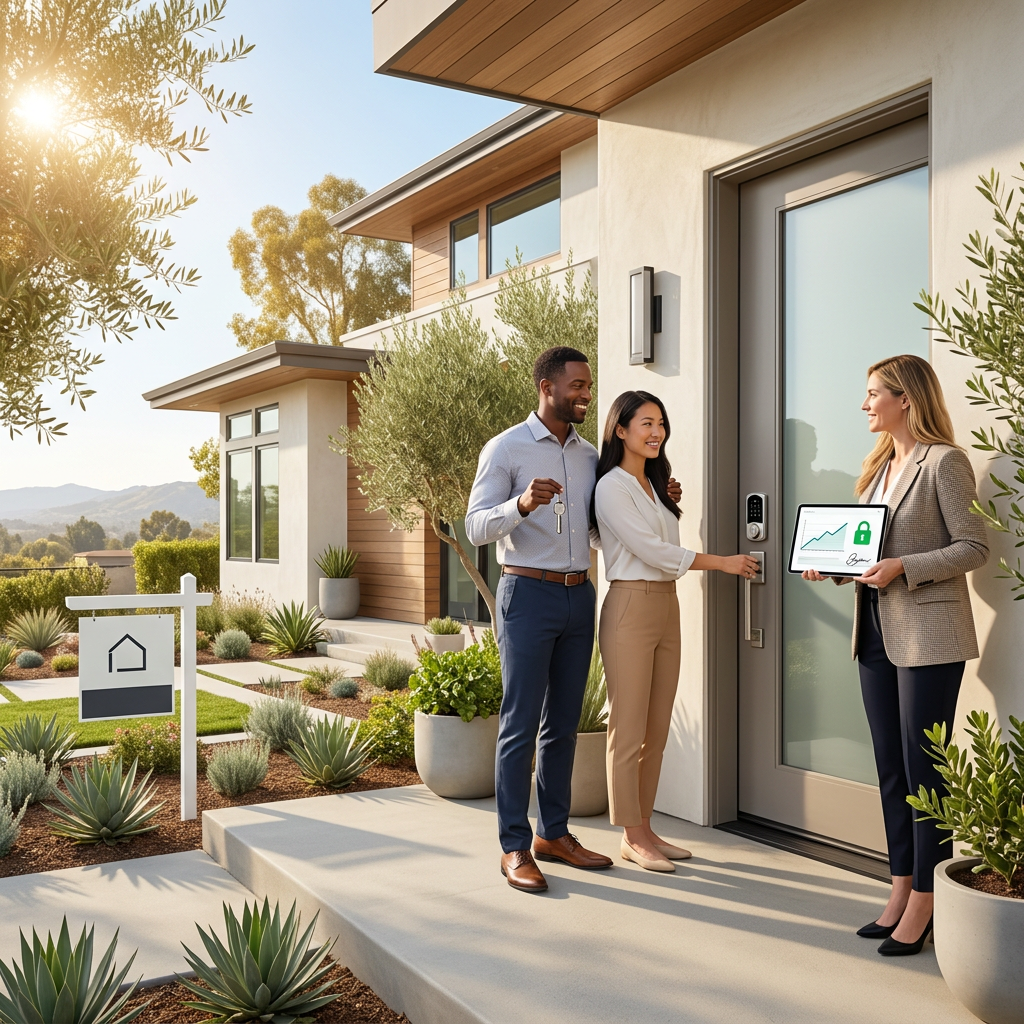
Navigating Rate Volatility in the 2026 Spring Market
As of mid-April 2026, the California housing market finds itself at a unique crossroads. Following the 'un-inversion' of the yield curve earlier this month, the 30-year fixed-rate mortgage has settled into what analysts are calling a '6.5% plateau.' While this is a significant improvement from the peaks of previous years, the California Association of Realtors (CAR) recently reported that housing affordability remains a primary hurdle, with only 16% of households able to comfortably afford a median-priced home at current levels.
However, the narrative for the 2026 Spring buying season is no longer just about the rate itself, but the strategy used to secure it. A new trend has emerged among Golden State borrowers: the 'Lock and Shop' program. Unlike traditional rate locks that require a signed purchase agreement, these programs allow buyers to freeze their interest rate for 60 to 90 days before they even find a property.
Why 'Lock and Shop' is Dominating California
In high-velocity markets like the Bay Area and Orange County, the time between a pre-approval and an accepted offer can span months. Data from the MLS suggests that while inventory has increased by 12% year-over-year, the 'days on market' for turn-key homes remains under 20 days. This creates a high-pressure environment where a 25-basis-point jump in rates during a search can disqualify a buyer from their desired neighborhood.
Current Freddie Mac data shows the 30-year fixed rate at 6.48%, but daily volatility remains high due to fluctuating inflation prints. For a California buyer looking at a $850,000 mortgage, a move from 6.5% to 6.75% adds roughly $140 to the monthly payment—a shift that can break a tight Debt-to-Income (DTI) ratio in a state where many buyers are already pushing the 43% limit.
The Strategic Advantage for Buyers
Lenders are increasingly offering these programs with a 'float-down' provision. This means that if rates drop after the buyer locks but before they close, they can exercise a one-time option to take the lower rate. This effectively eliminates the 'opportunity cost' of locking early.
- Budget Certainty: Buyers can shop with a fixed monthly payment in mind, knowing their purchasing power won't evaporate overnight.
- Competitive Edge: Sellers in competitive markets like San Diego view 'locked' buyers as more secure, as the financing risk associated with sudden rate spikes is mitigated.
- Inventory Hedge: With California's supply still lagging behind demand, 'Lock and Shop' provides the patience needed to wait for the right home rather than settling for a suboptimal property out of fear of rising rates.
Practical Takeaways for 2026 Borrowers
For those entering the market this month, several tactical moves are recommended to navigate the 6.5% plateau:
- Compare Lock Fees: Some lenders offer 'Lock and Shop' for free, while others charge an upfront fee that is credited back at closing. Ensure you understand the net cost if you fail to find a home within the lock period.
- Monitor the 'Float-Down' Clause: Not all float-down options are created equal. Some require rates to drop at least 0.25% before the option can be exercised. Read the fine print to understand the threshold.
- Verify Lock Extensions: In California’s competitive environment, escrow can sometimes be delayed. Ensure your lender offers affordable 15-day extensions in case of appraisal or inspection hurdles.
As we move toward the May FOMC meeting, the consensus among economists is that the 'plateau' will hold, but the risk remains weighted to the upside. For California buyers, the peace of mind provided by a locked rate is becoming as essential as the home inspection itself.


