The Inventory Shift: Why Infill is the 2026 Buyer's Best Bet
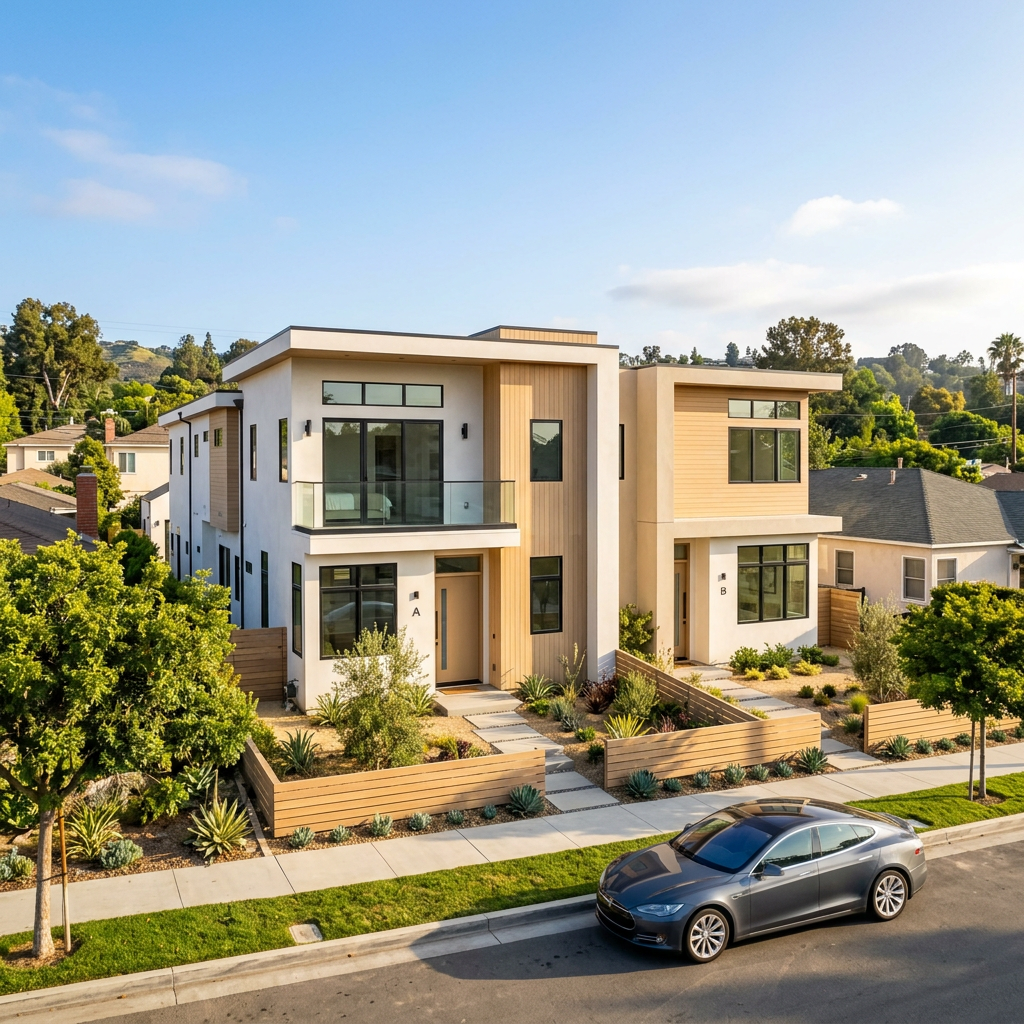
As of April 2026, the California housing market remains defined by a persistent supply-demand imbalance. According to recent data from the California Association of Realtors (C.A.R.), housing affordability has hovered near 16%, making traditional single-family homes in coastal metros inaccessible for many. However, the maturation of Senate Bill 9 (SB 9) and Senate Bill 10 has ushered in a new era of ‘missing middle’ housing: townhomes, duplexes, and lot-split developments. For the 2026 buyer, these infill projects represent the most viable path to equity in high-demand zip codes.
Deciphering the Builder Contract vs. the C.A.R. RPA
Most California buyers are accustomed to the standard California Association of Realtors Residential Purchase Agreement (RPA). However, when purchasing a new build or a recently completed SB 9 development, buyers often encounter proprietary builder contracts. These documents are significantly different from the standard RPA and require a distinct approach to due diligence.
- Deposit Structures: Unlike the typical 3% earnest money deposit capped by liquidated damages in standard resales, builder contracts may require tiered deposits that can be less flexible if the buyer defaults.
- Closing Timelines: New builds are often subject to delays in Certificates of Occupancy. Ensure your contract includes a ‘drop-dead date’ to protect your interest rate lock.
- Warranty Specifics: In California, the Right to Repair Act (SB 800) provides a statutory framework for construction defects, but many builders include specific arbitration clauses that supersede standard court proceedings.
Evaluating Construction Quality in 'Missing Middle' Housing
Infill developments often occupy smaller footprints, which changes the risk profile of the property. When inspecting an SB 9 lot-split or a high-density infill project, focus on three critical areas that differ from traditional suburban homes:
1. Utility Separation and Easements
Ensure that water, sewer, and electrical lines are independently metered and do not rely on shared private lines with the neighboring lot unless a formal maintenance agreement is recorded. In 2026, poorly documented easements are a leading cause of title disputes in split-lot properties.
2. Sound Mitigation and Fire Walls
With homes built closer together, the quality of fire-rated assemblies and STC (Sound Transmission Class) ratings is paramount. Ask for the builder’s specifications on party walls and acoustic dampening between units.
3. The 'Public Report' Requirement
For developments of five or more units, the California Department of Real Estate (DRE) requires a Public Report. This document discloses vital information about HOA budgets, common area maintenance, and potential environmental hazards. For smaller SB 9 projects, this may not be required, putting the burden of investigation entirely on the buyer.
Practical Takeaways for the 2026 Infill Buyer
Buying into California's densification movement requires a specialized strategy. Follow these steps to secure a high-value asset:
- Verify Title for Lot Splits: Before entering escrow on an SB 9 property, confirm that the parcel map or tract map has been officially recorded with the county. Unrecorded splits can lead to indefinite closing delays.
- Audit the HOA Reserve Study: If the infill project includes a Homeowners Association, ensure the developer has adequately funded the initial reserves. The 2026 market has seen an uptick in 'special assessments' on new builds where initial dues were set artificially low to attract buyers.
- Consult a Local Land-Use Expert: Zoning in California is fluid. Ensure that the surrounding lots are not slated for massive height increases that could eliminate your property's natural light or privacy within the next 24 months.
By focusing on infill developments, California buyers can bypass the bidding wars of the stagnant resale market while benefiting from the energy efficiency and modern compliance standards of 2026 new construction.