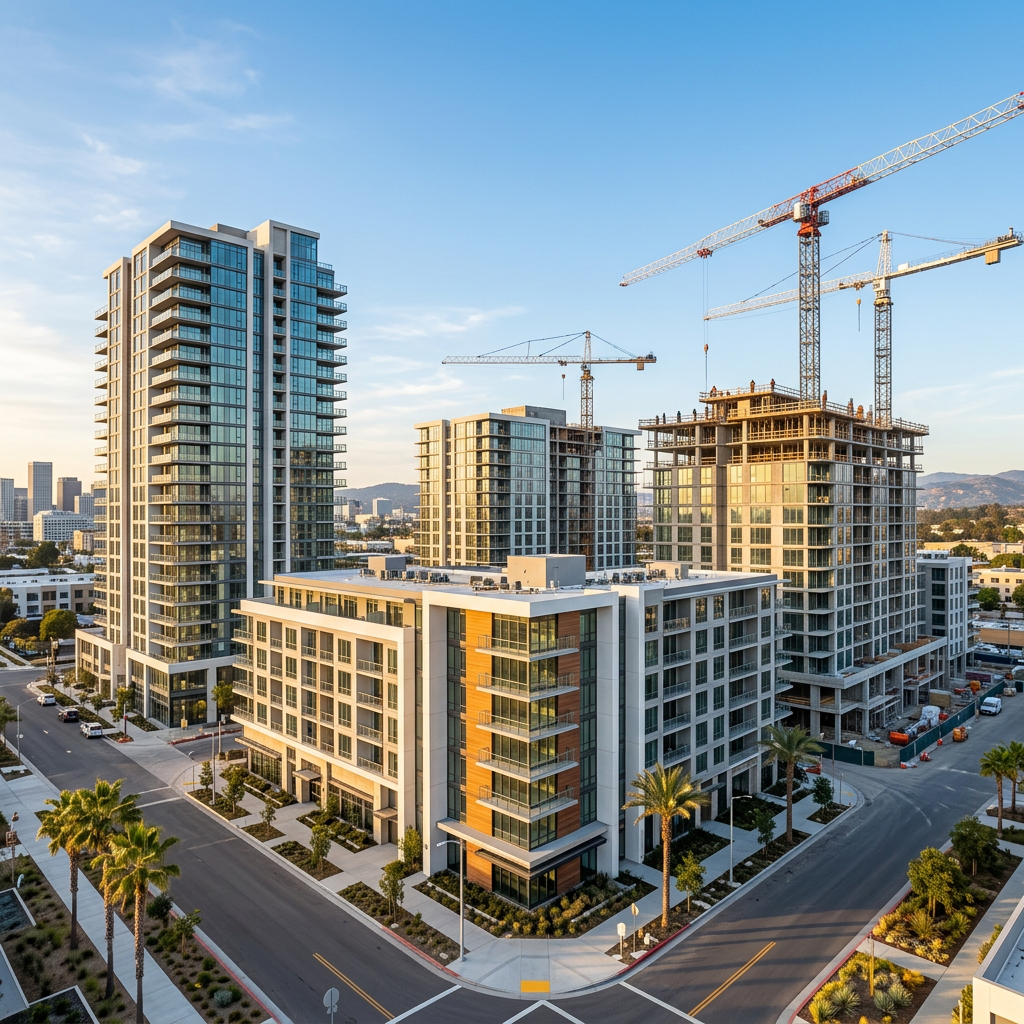
The Death of the Discretionary Delay
For decades, California’s real estate market was defined by the 'entitlement risk'—a grueling gauntlet of public hearings, environmental challenges, and local vetoes that could mothball a project for years. As of April 2026, the landscape has fundamentally shifted. The full implementation of SB 423, which expanded ministerial (streamlined) approvals, has created a new 'Ministerial Alpha' for investors and developers who can navigate the state’s objective design standards.
Data-Driven Shift in the Development Pipeline
According to the California Department of Housing and Community Development (HCD) 2026 Q1 report, the state has seen a 22% year-over-year increase in multifamily permit applications that bypass traditional discretionary review. In high-cost coastal counties like Los Angeles and San Diego, 'By Right' projects—those meeting strict objective criteria—are moving from application to shovel-ready status in an average of six months, compared to the 18-to-24-month cycles seen in 2022.
This acceleration is reflected in the 2026 California Association of Realtors (CAR) data, which shows that while existing home sales remain tight due to historical rate locks, the 'new construction premium' is stabilizing as supply finally meets the 'missing middle' demand. Real estate investment trusts (REITs) are increasingly pivoting toward these streamlined infill projects, where the predictability of the timeline outweighs the higher cost of labor and materials.
The Commercial-to-Residential Conversion Play
A significant driver of this 2026 trend is the maturation of AB 2011 and SB 6, which allow for residential development on land previously zoned for office, retail, or parking. With office vacancies in San Francisco and Los Angeles hovering near 24% as of early 2026, the conversion of underutilized commercial corridors into transit-oriented housing has become the primary engine for urban growth.
Practical Takeaways for Investors and Buyers
- Identify 'Objective Standard' Jurisdictions: Investors should prioritize cities that have finalized their Housing Element updates. These municipalities are now legally mandated to provide a clear, non-discretionary path for projects that meet pre-defined density and design criteria.
- Valuation Shift for Non-Entitled Land: The valuation of land is no longer tied solely to current zoning but to its 'By Right' potential under state density bonus laws. Appraisals are increasingly reflecting the value of 'guaranteed' density over 'speculative' entitlements.
- Focus on Transit-Rich Infill: The most significant streamlining benefits apply to projects within one-half mile of major transit stops. These parcels command a premium because they often bypass CEQA (California Environmental Quality Act) litigation risks that previously derailed high-density builds.
- The ADU 2.0 Strategy: For individual homeowners, the 2026 trend has moved beyond simple backyard units to 'ADU-plexes.' Recent legislation allows for more flexible lot splits, turning a single-family lot into a four-unit income generator with ministerial oversight.
Looking Ahead: The 2027 Supply Horizon
The economic trend for the remainder of 2026 suggests that the 'NIMBY' veto is largely a relic of the past for projects that play by the state’s new rules. As the first massive wave of SB 423-approved projects hits the market in late 2026 and early 2027, we expect a moderation in rent growth across coastal hubs, providing a much-needed reprieve for the workforce while offering a predictable, high-velocity model for institutional capital.


