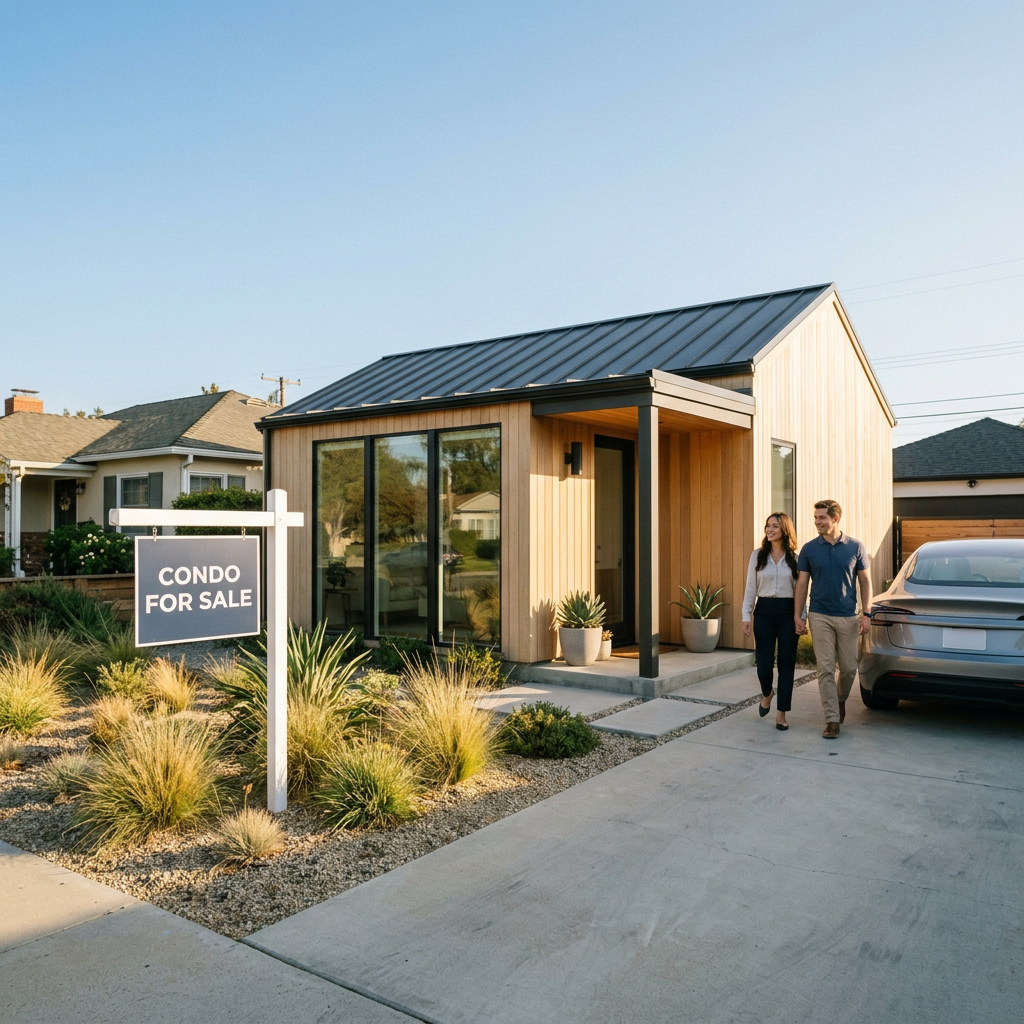
California’s Decoupled Housing Market
For decades, the California housing dream was tethered to a single-family lot. However, as of April 2026, a structural shift in property ownership is fundamentally altering the state’s real estate landscape. The implementation of Assembly Bill 1033, which allows local governments to permit homeowners to sell Accessory Dwelling Units (ADUs) as separate condominiums, has finally reached a critical mass of adoption across major metropolitan hubs.
According to recent data from the California Association of Realtors (CAR), 'detached ADU condos' now account for nearly 8% of all new listings in the Los Angeles and San Diego markets. This represents a significant pivot from 2024, when ADUs were primarily viewed as rental income streams rather than sellable assets.
Breaking the $600,000 Barrier
The primary driver of this trend is a desperate need for entry-level inventory. In San Jose and Orange County, where the median price for a traditional detached home remains well above $1.4 million, these newly partitioned ADU condos are hitting the market at price points between $550,000 and $725,000. Data from MLS listings in Q1 2026 suggests these units are selling 15% faster than traditional condos, driven by first-time buyers seeking the privacy of a detached structure without the seven-figure price tag of a full lot.
The Logistics of the Split
While AB 1033 provided the state-level framework, the 2025 adoption by major municipalities like San Francisco and Sacramento has been the real catalyst. To sell an ADU as a condo, homeowners must:
- Comply with the Davis-Stirling Common Interest Development Act, requiring the creation of a Homeowners Association (HOA).
- Pay off or refinance existing primary mortgages to ensure the new condo title is clear.
- Establish separate utility metering for the unit, a requirement that has fueled a localized boom in electrical and plumbing contracting.
Investor and Seller Takeaways
For existing homeowners, the financial math is compelling. A homeowner in a high-demand neighborhood like Silver Lake or North Park can now liquidate a portion of their equity by selling their backyard cottage. This 'land-lite' strategy allows sellers to retain their primary residence while reaping a windfall that often exceeds $400,000 in net profit after construction and conversion costs.
The 'Condo-Lite' Risk Profile
Potential buyers and investors should remain cautious regarding the unique complexities of this sub-sector. Lending remains the primary hurdle; while FHA and VA loans have begun adjusting their guidelines for these 'split-lot' condos, many conventional lenders still require a 20-25% down payment due to the lack of long-term historical comps. Furthermore, the creation of a 'two-unit HOA' between a primary homeowner and a new neighbor can lead to governance friction if maintenance agreements are not meticulously drafted.
Market Outlook
As we move into the 2026 summer buying season, expect the 'ADU-as-condo' model to be the primary buffer against California's chronic inventory shortage. With an estimated 120,000 ADUs built statewide over the last five years, the potential for these units to convert into for-sale inventory represents the largest injection of affordable homeownership opportunities in California’s modern history.


