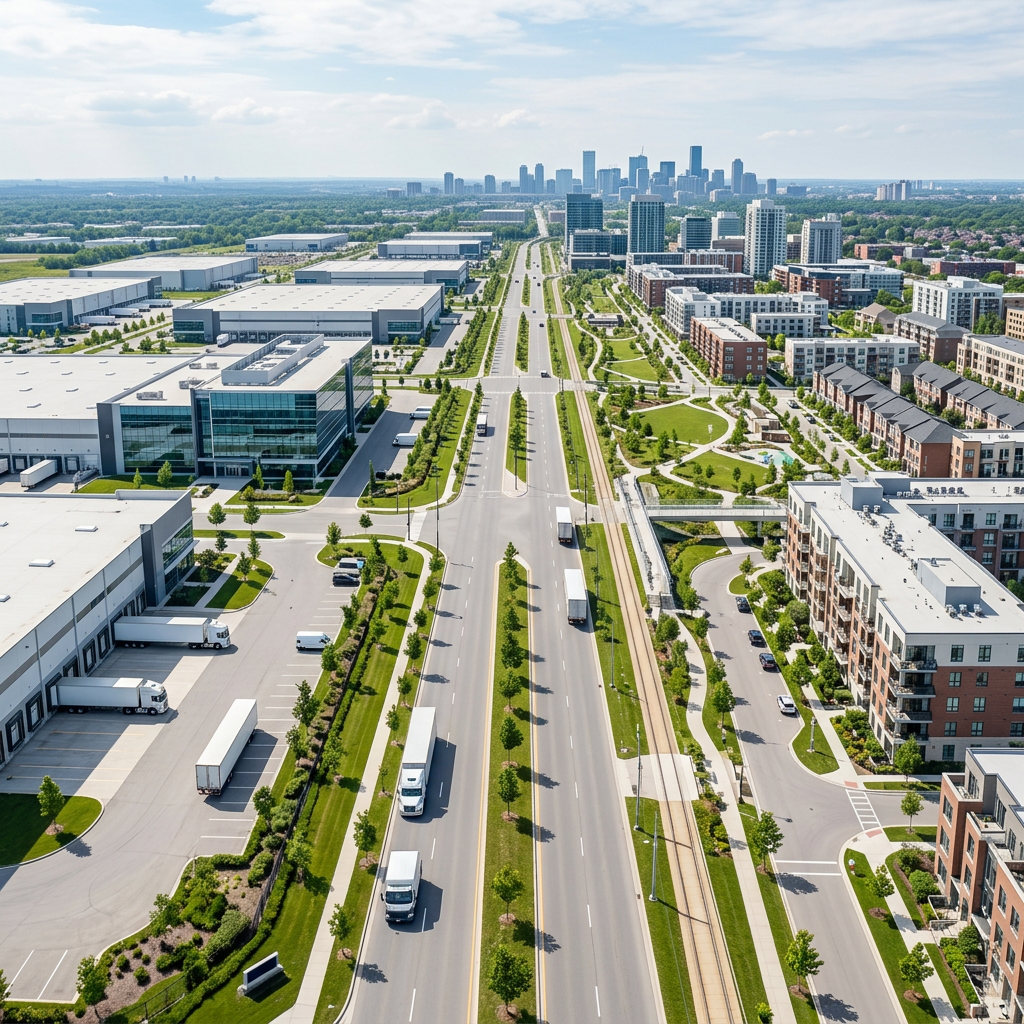
Beyond the Coast: The Rise of the Logistics Hub
As of April 2026, the California real estate narrative has shifted from coastal scarcity to the infrastructure-driven appreciation of the state’s interior. While San Francisco and Santa Monica have stabilized following the 'return-to-cluster' trends of 2025, the real alpha for investors is currently found in the Logistics Corridors—specifically the Inland Empire, San Joaquin County, and the High Desert. These regions are no longer just 'affordable alternatives'; they are primary economic engines where industrial growth is directly dictating residential valuations.
The Employment Multiplier: Why Capital is Tracking Industrial Permits
Data from the California Association of Realtors (CAR) and recent CBRE Industrial Outlook reports indicate a profound correlation between last-mile distribution expansion and residential rent growth. In Q1 2026, submarkets within 15 miles of major logistics hubs in Ontario and Stockton saw a 7.4% year-over-year increase in multi-family rents, nearly double the 3.8% state average. This 'Employment Multiplier' is driven by the 2026 automation boom, which has replaced low-skill labor with high-income technical roles required to maintain autonomous supply chains.
Key data points defining this trend include:
- Vacancy Compression: Residential vacancy in logistics-adjacent submarkets has plummeted to a record low of 1.9%, as housing supply fails to keep pace with the 12% increase in industrial-sector employment since 2024.
- Yield Spreads: The cap rate spread between coastal luxury assets (averaging 4.2%) and logistics-hub residential assets (averaging 6.1%) has widened, attracting institutional 'Build-to-Rent' developers.
- Infrastructure Spending: Over $4.2 billion in state transit grants allocated in late 2025 are now breaking ground, specifically targeting connectivity between the Central Valley logistics nodes and coastal ports.
The 'Permit-Ready' Premium
For the sophisticated investor, 2026 is the year of 'Entitlement Liquidity.' With the state’s housing mandates (RHNA) putting immense pressure on local municipalities, land that is already entitled for high-density residential use near industrial zones is commanding a 25% premium over unentitled parcels. According to MLS data, the time-to-sale for entitlement-ready land in these corridors has dropped from 180 days in 2024 to just 45 days in the current market.
Practical Takeaways for 2026 Stakeholders
To capitalize on this structural shift, market participants should consider the following strategies:
- For Investors: Focus on 'Secondary-Tier' logistics hubs like Victorville or Lathrop. These areas are seeing the highest percentage of high-income migration from coastal workers who are following the tech-logistics job shift. Look for properties with ADU potential to maximize yield in high-demand rental zones.
- For Sellers: If you own property in the Inland Empire or San Joaquin County, your equity position is likely at an all-time high. Highlight proximity to major distribution employers and recent infrastructure upgrades in your marketing materials to attract institutional-backed buyers.
- For Buyers: The 'commute-to-logistics' lifestyle is the new suburban norm. Prioritize properties near planned transit expansions that connect the Central Valley to the Bay Area or Greater Los Angeles, as these will likely see the highest appreciation over the next five-year cycle.
As we move through the second quarter of 2026, the California market is proving that its resilience lies in its adaptability. By aligning residential portfolios with the state’s industrial and logistical backbone, investors are finding stable, high-yield opportunities that are insulated from the volatility of the tech sector and the insurance challenges of the coastal hills.


