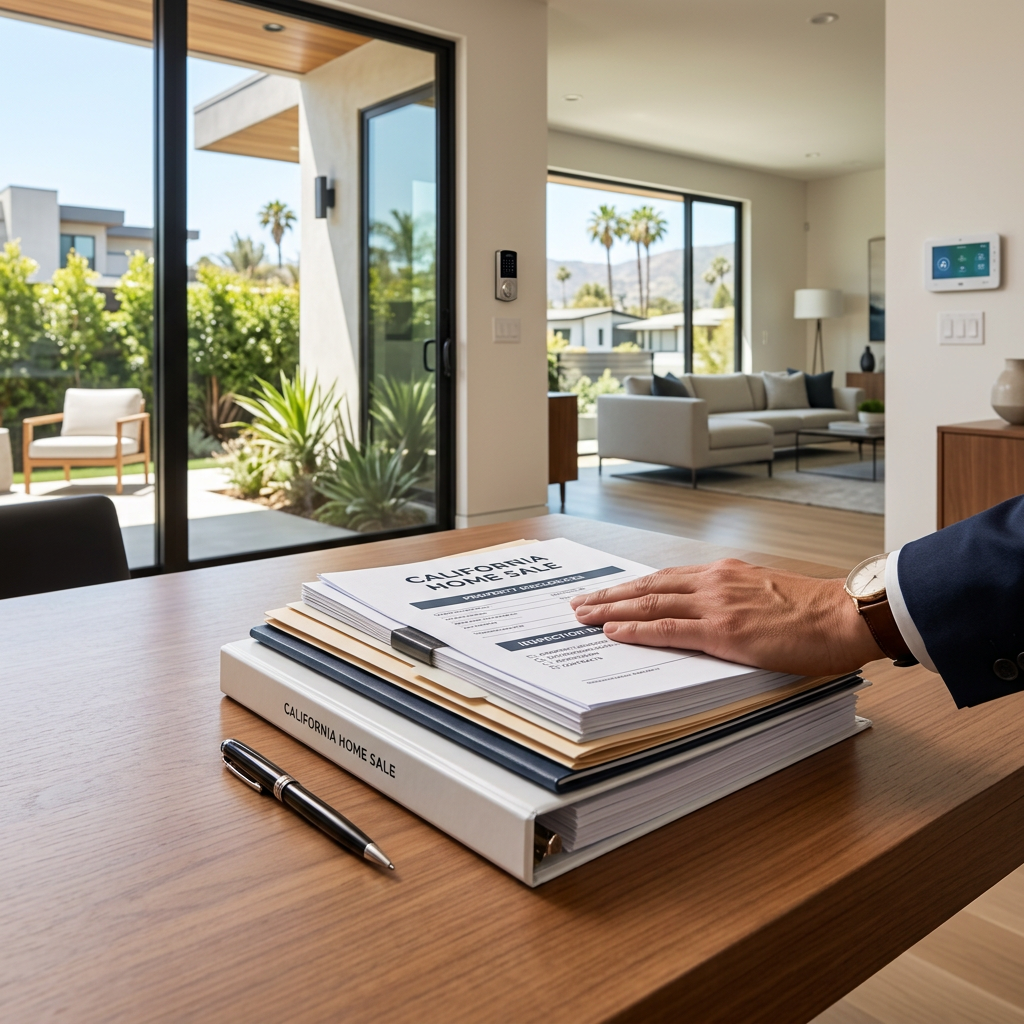
Navigating the Compliance-Heavy Landscape of 2026
In California’s 2026 real estate market, a successful sale is measured not just by the final price, but by the permanence of the close. With legal disputes involving non-disclosure rising by 14% over the last two years according to recent California Association of Realtors (CAR) legal tracking, the ability to provide a comprehensive, bulletproof disclosure package has become a seller's most potent defense against post-closing litigation and deal fallout.
The Statutory Foundation: Beyond the TDS
California law remains the most rigorous in the nation regarding seller transparency. Every seller must complete the Transfer Disclosure Statement (TDS) and the Seller Property Questionnaire (SPQ). However, in 2026, savvy sellers are going beyond the bare minimum. A 'defensive disclosure' strategy involves documenting not just active issues, but past repairs with corresponding receipts and warranties.
- The 10-Year Rule: While legal requirements vary, disclosing any major structural or water-intrusion event within the last 10 years significantly reduces the 'failure to disclose' risk profile.
- Neighborhood Nuisances: Under recent 2025 case law clarifications, sellers are increasingly expected to disclose known recurring neighborhood issues, such as specific noise patterns or local development projects that have reached the public planning stage.
The Natural Hazard Disclosure (NHD) and Fire Mandates
As of April 2026, the Natural Hazard Disclosure (NHD) report is more than a formality; it is a critical pricing tool. With the expansion of Very High Fire Hazard Severity Zones (VHFHSZ), sellers in these regions must provide evidence of compliance with AB-38 (wildfire defensible space and home hardening).
Data from recent MLS filings suggests that homes with pre-certified defensible space compliance close, on average, 12 days faster than those requiring buyer-led inspections. To maximize value, sellers should proactively obtain a 'Compliance Inspection Report' from their local fire department before hitting the market.
The Pre-Listing Inspection Strategy
While buyers traditionally pay for inspections, the 2026 California 'Power Seller' flips this script. By commissioning a General Home Inspection, Pest Inspection, and Roof Certification prior to listing, you achieve three strategic goals:
- Eliminating the 'Repair Buffer': Buyers often overestimate repair costs. Providing a quote for a $500 electrical fix prevents a buyer from asking for a $2,000 credit.
- Encouraging Non-Contingent Offers: In high-demand markets like the Bay Area and Southern California, providing a full inspection suite allows buyers to waive inspection contingencies with confidence, placing your offer at the top of the stack.
- As-Is Clarity: It reinforces the 'As-Is' nature of the sale by ensuring the buyer is fully aware of the property's condition at the moment of the offer.
Mandatory Local Disclosures: The Hidden Hurdles
California sellers often overlook municipality-specific requirements. In 2026, several key regions have implemented new mandates:
- Los Angeles/San Francisco: Stricter seismic retrofitting disclosures and 'soft-story' notices for specific residential structures.
- Water Conservation: Ensuring all toilets and showerheads meet the current high-efficiency standards set by the California Energy Commission is now a standard point of friction during the escrow process.
- Solar Contract Transparency: With nearly 30% of California homes featuring solar arrays, providing the full lease or PPA (Power Purchase Agreement) within the first 48 hours of a contract is vital to prevent financing delays.
Practical Takeaways for 2026 Sellers
To ensure a frictionless transition, sellers should follow this compliance checklist: Order your NHD report early to identify if you are in a high-risk zone; digitize all home improvement records from the past five years; and complete all statutory disclosures before the first open house. In a market where information is the primary currency, transparency isn't just a legal obligation—it is a competitive advantage that protects your equity long after the keys have changed hands.