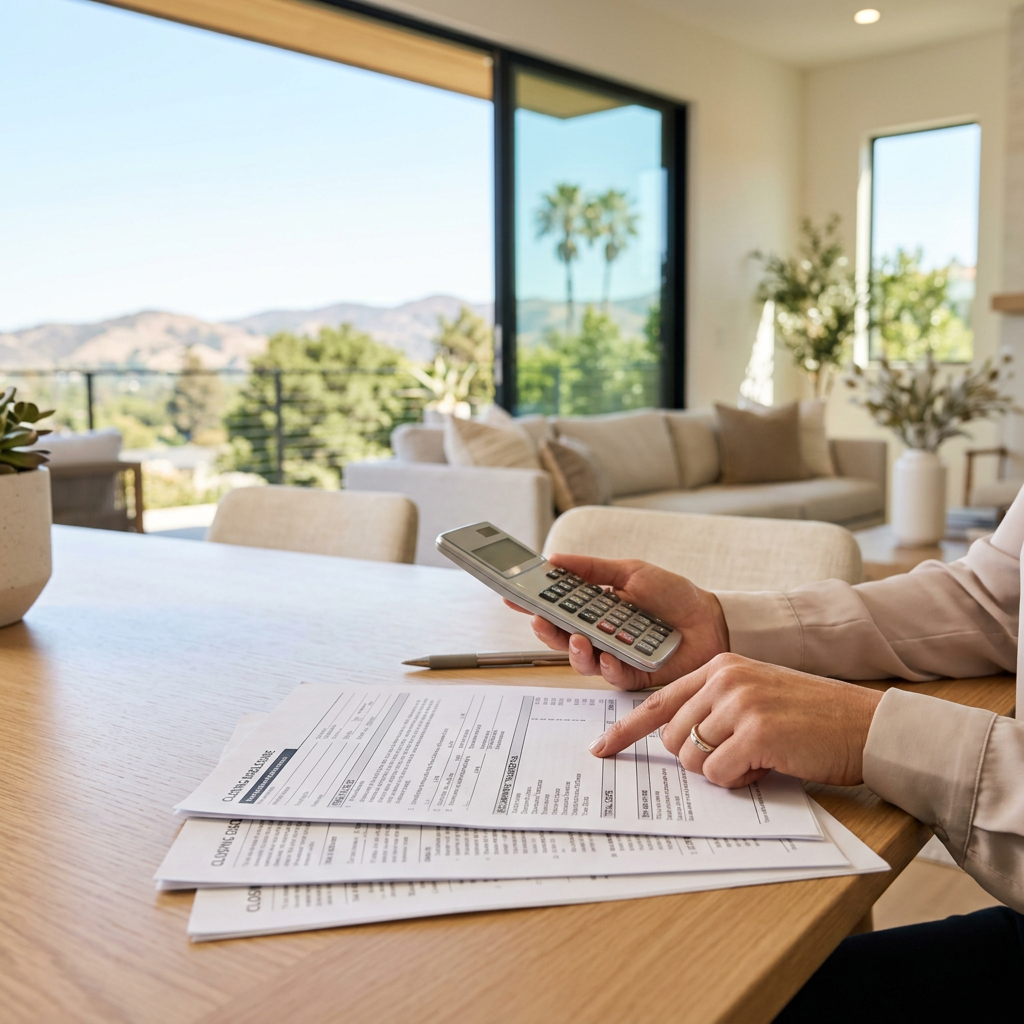
The Hidden Layer of California Closing Costs
In the 2026 California real estate market, where the median home price has stabilized at approximately $892,000 according to recent California Association of Realtors (C.A.R.) data, buyers are increasingly focused on monthly payments and interest rates. However, a significant financial hurdle often catches buyers off guard in the final days of escrow: the Documentary Transfer Tax. Unlike standard inspection fees or loan points, these taxes vary wildly by municipality and can add tens of thousands of dollars to the acquisition cost.
Understanding the Two-Tiered Tax System
In California, transfer taxes are generally divided into two categories: County and City. While the county rate is standardized across the state, the city rate is where the 'trap' lies for the uninitiated.
- The County Standard: Most California counties charge a base rate of $1.10 per $1,000 of the sale price. On a $1 million home, this is a predictable $1,100.
- The City Variable: This is where the 2026 buyer must be vigilant. In 'Charter Cities' like Berkeley, Santa Monica, or San Francisco, the rates are significantly higher and often progressive.
The Rise of 'Mansion Taxes' and Progressive Tiers
Entering the second quarter of 2026, we are seeing the full impact of progressive transfer tax structures. For instance, Los Angeles’s 'Measure ULA' continues to impact the higher end of the market, but even mid-tier buyers in cities like Culver City or San Jose face local rates that are five to ten times the county standard. In San Francisco, the tiered system can reach as high as 6% for ultra-luxury properties, but even at the $1 million to $5 million range, the rate sits at 0.75%—a $7,500 cost that many buyers fail to include in their initial cash-to-close estimates.
Who Pays? The Art of the 2026 Negotiation
While 'customary' practices exist, it is vital to remember that who pays the transfer tax is entirely negotiable. Historically, in Southern California, the seller typically paid the county transfer tax, while in Northern California, the buyer often shouldered the burden. In the balanced 2026 market, these lines have blurred.
Practical Takeaway: If you are purchasing in a high-tax city like Oakland (where the total tax is approximately $16.10 per $1,000), use this as a leverage point in your Request for Repairs. If a seller is unwilling to budge on price, ask them to cover the City Transfer Tax to preserve your liquid cash for immediate post-closing expenses.
Strategies for the 2026 Home Buyer
- Review the Preliminary Title Report Early: Do not wait for the final closing disclosure. Your title officer can provide a precise estimate of both city and county transfer taxes within 72 hours of opening escrow.
- Factor Taxes into Your 'Cash-to-Close' Buffer: Ensure your liquid reserves are not just covering the 20% down payment but also a 3% 'closing cost cushion' specifically for non-loan related fees.
- Verify 'Transfer-Exempt' Status: In some California jurisdictions, first-time homebuyer programs or transfers between family members may be exempt from the city-specific portion of the tax. Consult with a tax professional to see if your specific entity structure (such as a Living Trust) qualifies for any local relief.
The Bottom Line
As California continues to leverage real estate transactions to fund local infrastructure and affordable housing initiatives, the transfer tax remains a moving target. By identifying these costs during the 'discovery' phase of your search rather than the 'closing' phase, you can navigate the 2026 market with a realistic view of your total investment.