The Realization of the Great Park Vision
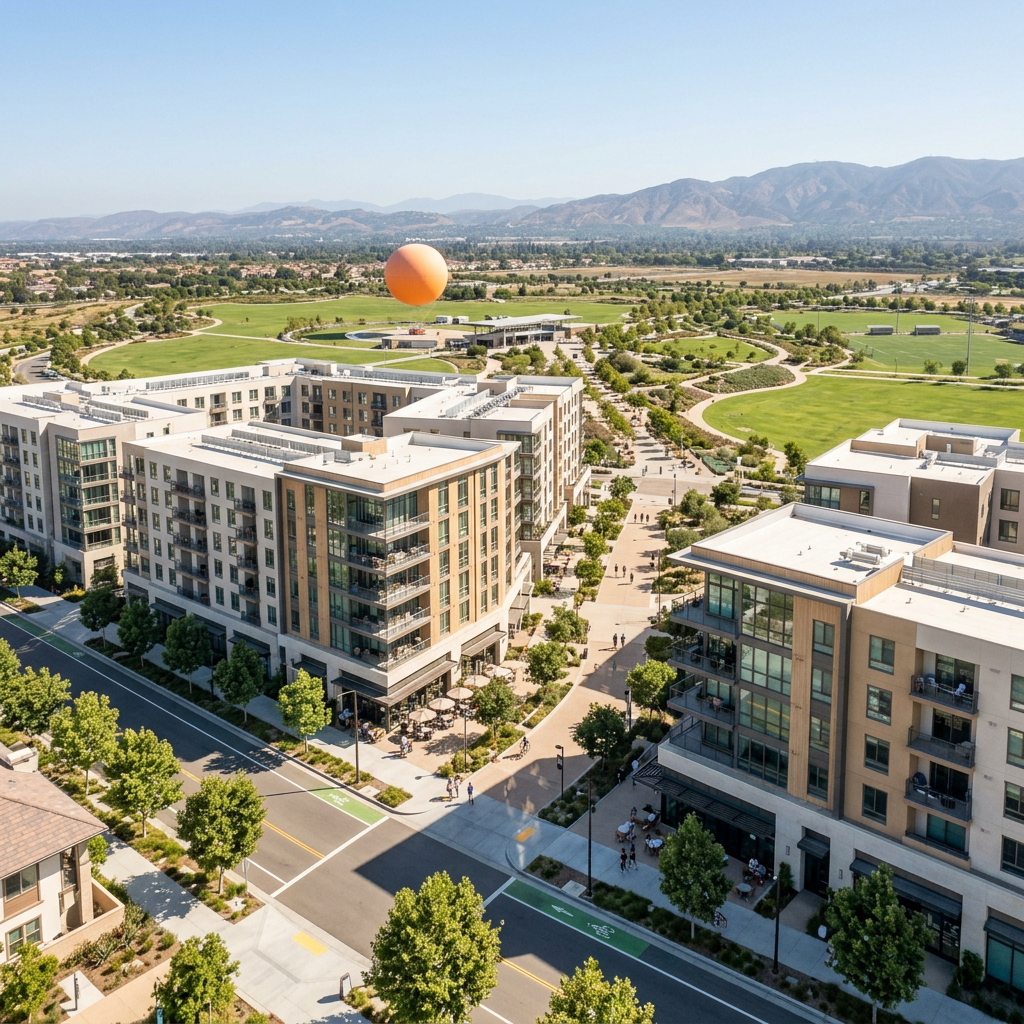
As of April 2026, the transition of the former Marine Corps Air Station El Toro into the Great Park Neighborhoods (GPN) has reached a critical inflection point. While early phases were often criticized for being 'islands' of development, the completion of the 2025-2026 infrastructure phase—including the full opening of the Botanical Gardens and the finalization of the perimeter trail loops—has unified the district into a cohesive, high-density urban forest. This neighborhood now serves as the primary case study for the 'Mega-Amenity' model of residential development.
Real Estate Metrics: Premium Valuation through Infrastructure
Data from the Orange County MLS and recent CBRE residential reports indicate that the Great Park Neighborhoods have outperformed broader Irvine price appreciation by 4.2% over the last 24 months. As of Q1 2026, the median price per square foot in neighborhoods like Solis Park and Rise has stabilized at approximately $1,150, a reflection of the 'amenity premium' buyers are willing to pay for direct access to 1,300 acres of managed parkland.
Unlike the sprawling single-family tracts of 1990s Irvine, the 2026 landscape of GPN is defined by 'missing middle' housing: luxury townhomes, tri-level detached condos, and multi-generational suites. Census data for the area shows a 15% increase in dual-income, remote-capable households since 2022, drawn by the high-speed fiber infrastructure integrated into the district’s foundation.
Education and Employment: The Double-Anchor Strategy
The neighborhood’s appeal remains anchored by the Irvine Unified School District (IUSD). Cadence Park and Portola High School continue to rank in the top 2% statewide, but the 2026 narrative has shifted toward the neighborhood’s proximity to the Irvine Spectrum tech corridor. With the expansion of the 'Silicon Beach South' tech hub, major employers in medical technology and EV manufacturing are now less than a 10-minute e-bike ride via the dedicated Great Park trails. This connectivity has reduced the traditional car-dependency of South County life, aligning with California’s broader VMT (Vehicle Miles Traveled) reduction goals.
Transportation and Accessibility
The Irvine Station serves as a strategic asset for the neighborhood, providing Metrolink and Amtrak Pacific Surfliner access. In 2026, the local 'iShuttle' expansion now provides autonomous, frequent loops between the residential pockets and the station, facilitating a seamless commute to San Diego or Los Angeles. This transit-rich environment has made the area particularly attractive to 'super-commuters' who value the safety and recreational assets of Irvine but work in high-intensity hubs elsewhere.
Practical Takeaways for 2026 Stakeholders
- For Buyers: Focus on 'Phase 1' resale properties. While newer builds offer modern finishes, the established landscaping and closer proximity to the Bosque trail system in older collections like Pavilion Park are currently commanding the highest rental yields and resale stability.
- For Investors: Monitor the commercial build-out of the Great Park’s retail core. The transition from 'food trucks' to permanent, high-end culinary anchors is expected to drive a second wave of appreciation for adjacent condos.
- For Sellers: Highlight the 'wellness' infrastructure. In the 2026 market, proximity to the Sports Park and the new wellness centers is a stronger selling point than square footage alone.
Irvine’s Great Park Neighborhoods represent more than just a housing development; they are a blueprint for how California can reconcile the demand for high-density housing with the desire for expansive, high-quality public space.