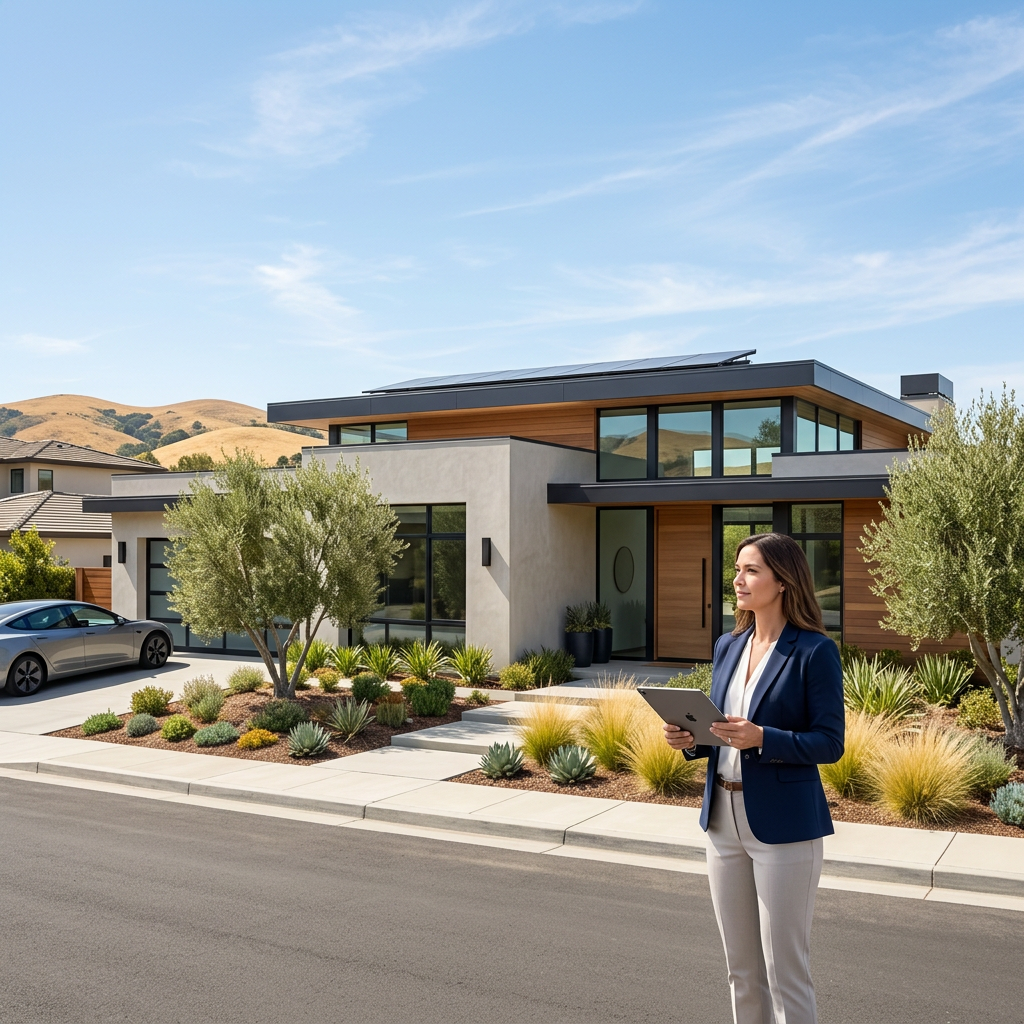
The Emergence of the Insurability Premium
In the spring of 2026, the California real estate landscape has moved beyond the 'Great Re-Rate' of 2024-2025. While previous years were defined by panic over policy cancellations, the current market has institutionalized risk. We are now seeing the emergence of the 'Insurability Premium'—a distinct valuation gap between properties in 'Blue Zone' (low-risk) areas and those reliant on the FAIR Plan. According to recent data from the California Department of Insurance (CDI), the stabilization of private carrier participation has created a bifurcated market where total cost of ownership (TCO) is now the primary metric for savvy investors.
The Data Behind the Shift
Analysis of MLS data from Q1 2026 reveals that homes with 'Preferred' insurance tiering are selling at a 7-9% premium compared to similar assets in high-hazard zones, even when accounting for traditional factors like square footage and school districts. A CBRE research brief indicates that institutional buyers have shifted their 'buy-box' parameters to exclude any asset where the insurance-to-rent ratio exceeds 12%, a move that has compressed cap rates in low-risk coastal and valley basins.
Lending and the 'Pre-Approval Binder'
By April 2026, the lending environment has adapted. Most major lenders now require an 'Insurance Binder Pre-Approval' alongside the standard mortgage pre-approval. This shift ensures that the debt-to-income (DTI) ratio accounts for the finalized premium early in the escrow process. For investors, this has made the 'CLUE' (Comprehensive Loss Underwriting Exchange) report as vital as a home inspection or a preliminary title report.
Strategic Investment Perspectives
The 2026 market favors the 'Resiliency-Hedged' portfolio. Investors are no longer just looking at neighborhood appreciation; they are looking at municipal infrastructure. Cities that have invested in modern stormwater management and subterranean utility lines are seeing a 'Safety Surge' in valuation. In the Central Valley and parts of the Inland Empire, we are seeing a 'Hardening ROI'—where the cost of installing ember-resistant vents and non-combustible landscaping is being recovered at a 1.5x rate upon resale.
Practical Takeaways for 2026 Stakeholders
- For Sellers: Obtain an 'Insurability Audit' before listing. Demonstrating a transferable, affordable policy or showing proof of 'fire-hardened' retrofitting can be the difference between a quick sale and a stalled escrow.
- For Buyers: Focus on 'Micro-Pockets' of stability. Even within high-risk counties, specific zip codes benefit from better ISO (Insurance Services Office) ratings based on proximity to fire hydrants and modern building codes.
- For Investors: Shift due diligence to include an 'Insurance Stress Test.' Model your 5-year pro-forma with a 15% annual premium escalation to ensure the asset remains cash-flow positive even if the regulatory environment shifts.
Conclusion: The New Baseline of Value
As we navigate the second quarter of 2026, the California real estate market has proven its resilience by pricing in environmental risk with surgical precision. The 'Insurability Premium' isn't just a temporary hurdle; it is the new baseline for determining what constitutes a 'prime' asset in the Golden State. For those who understand these metrics, the current market offers a clear roadmap for long-term wealth preservation in an era of climate-conscious valuation.


