The Great Inland Migration of 2026
For decades, California’s real estate narrative was defined by the magnetic pull of the coast. However, as of April 2026, the script has flipped. Data released this week by the California Association of Realtors (CAR) reveals a stark divergence in price appreciation: while the San Francisco and Los Angeles metros have seen a modest 1.8% year-over-year growth, Central Valley hubs—specifically Fresno, Merced, and Bakersfield—are reporting surges of 12.4%.
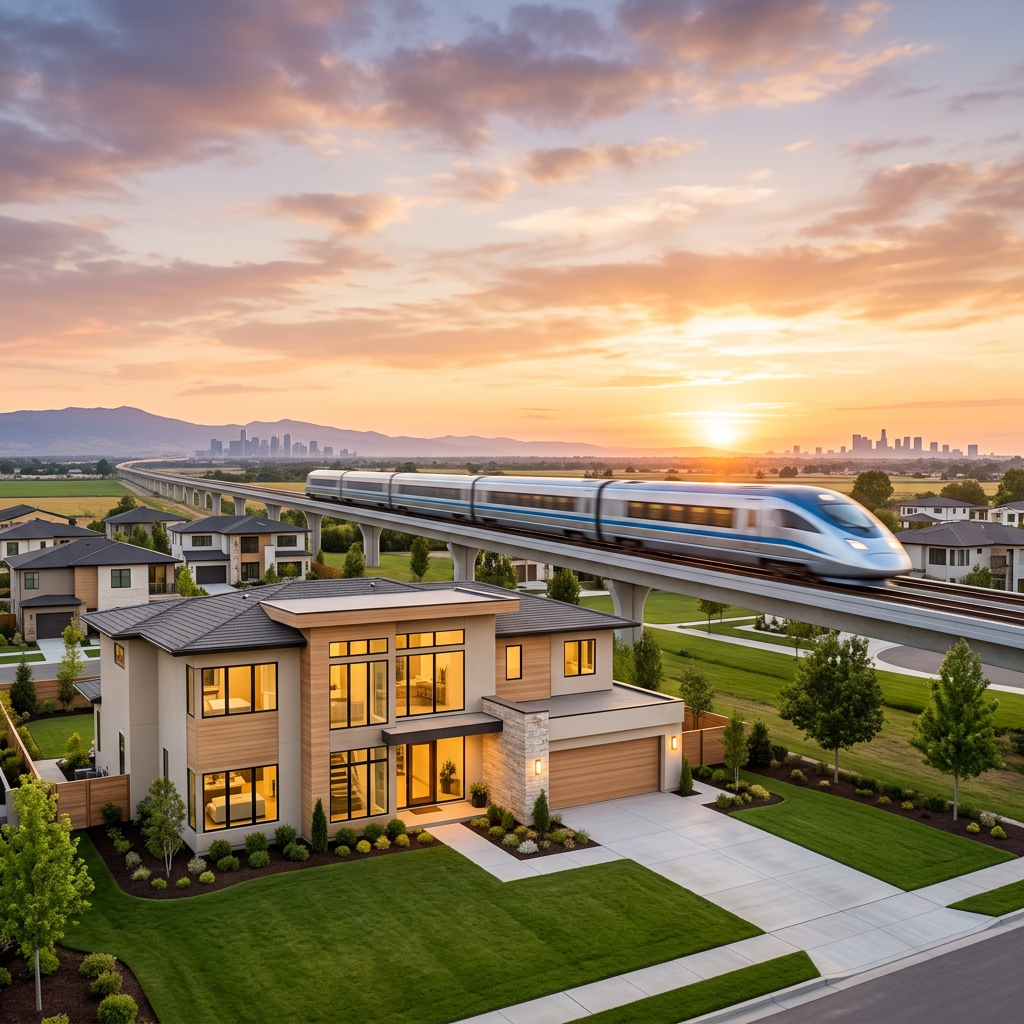
This is no longer a temporary flight from urban density; it is a calculated bet on infrastructure. With the recent completion of the 119-mile segment of the California High-Speed Rail (CAHSR) project and the launch of the 'Valley-to-Valley' testing phase, the Central Valley is transitioning from a rural agricultural corridor into a viable residential extension for the tech-heavy Bay Area.
Infrastructure as an Equity Engine
According to the California Department of Finance, the population of Merced County has grown by 3.2% in the last 14 months alone, outperforming the state average of 0.4%. The driver is the 'Super-Commuter 2.0' model. Unlike the pandemic-era remote work trend, 2026 is seeing the rise of the hybrid-transit professional. These buyers are leveraging improved rail links and regional transit expansions to live in 2,500-square-foot homes in the Central Valley at a median price point of $545,000, while maintaining high-paying roles in coastal ZIP codes where similar homes exceed $1.8 million.
"The connectivity gap is closing," says Marcus Vane, a senior analyst at CBRE. "Investors are shifting capital toward Fresno and Modesto not just because of the price floor, but because the risk-adjusted returns on multifamily developments in these regions are now outpacing the coastal markets for the first time in the post-pandemic era."
Regulatory Shifts Facilitating the Boom
While coastal development remains bogged down by environmental litigation, Central Valley municipalities have been more aggressive in utilizing 2025’s 'Pro-Housing Designation' incentives. New zoning laws in Fresno have streamlined the approval of transit-oriented developments (TODs), allowing for mixed-use projects within a half-mile of the rail stations with zero local parking minimums. This has led to a 15% increase in housing starts in the region compared to this time last year.
Practical Takeaways for Market Participants
- For Buyers: The 'Window of Affordability' in the Central Valley is closing. With institutional buyers now making up 18% of acquisitions in Merced County, individual buyers should focus on properties within a 15-minute radius of planned rail hubs to maximize long-term equity.
- For Sellers: In coastal markets, pricing strategy is paramount. With inventory at a 4-year high elsewhere, the 'aspirational pricing' of 2021 is gone. Focus on 2026's energy-efficiency upgrades to distinguish listings from a growing sea of comparable homes.
- For Investors: Look to the 'Middle-Mile' commercial assets. As residential populations explode in the Valley, there is a severe shortage of high-end retail and medical office space. Converting older industrial lots in downtown Fresno into service-oriented commercial hubs is the high-yield play for the 2026-2027 fiscal year.
As we move into the Q2 2026 buying season, the California market is proving that it is no longer a monolith. The 'Golden State' dream is being recalibrated, moving inland along the tracks of progress.