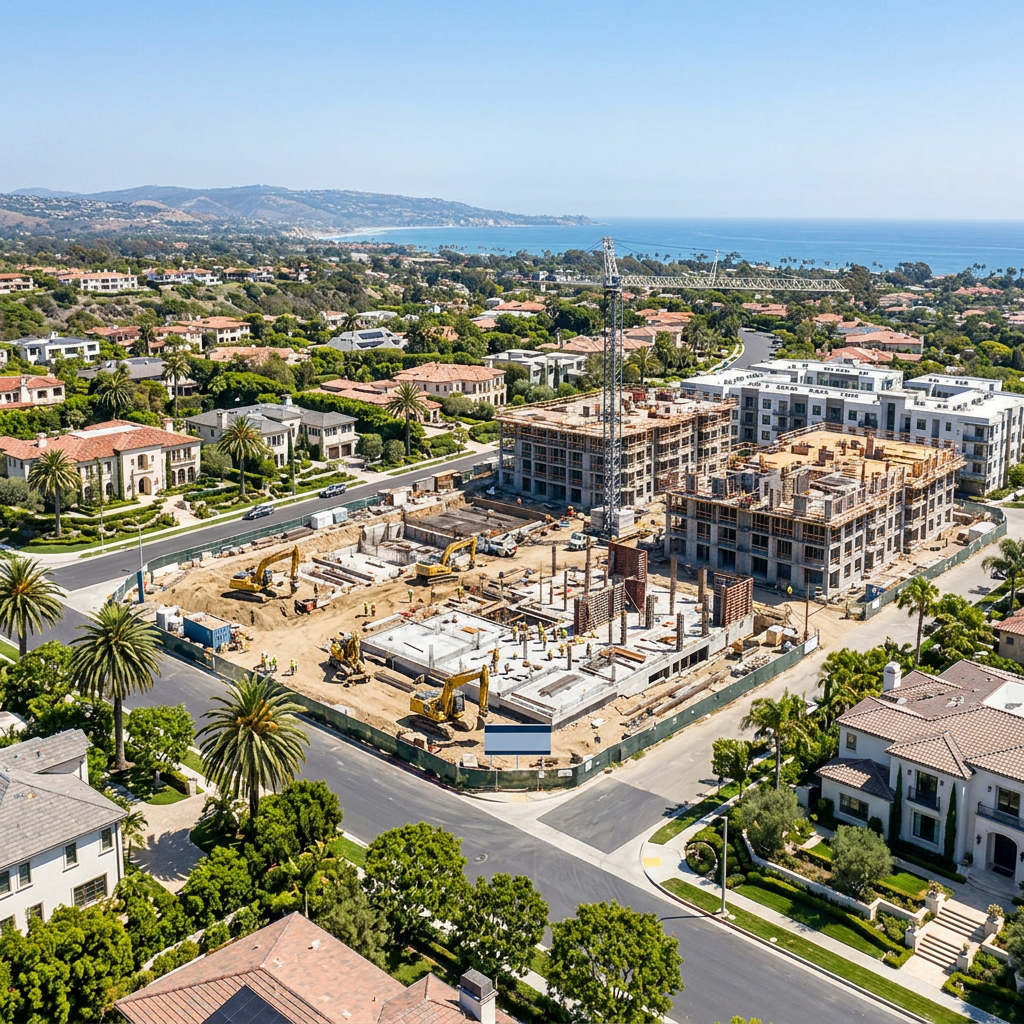
The Transition from Litigation to Construction
For the past three years, the 'Builder’s Remedy' was the most feared phrase in California municipal government. As of April 10, 2026, the era of legal posturing has officially ended, giving way to a massive physical transformation of the state’s most exclusionary housing markets. Following a series of landmark California Supreme Court clearances in late 2025, the first 'Builder's Remedy' mega-projects are breaking ground this month in cities from Santa Monica to Palo Alto.
The Builder’s Remedy—a provision in the 1990 Housing Accountability Act that allows developers to bypass local zoning if a city fails to have a state-certified Housing Element—is no longer a theoretical threat. According to data from the California Department of Housing and Community Development (HCD), there are currently 14,200 units under construction statewide specifically authorized through this mechanism, with 65% of these units located in zip codes where the median home price exceeds $2.5 million.
The Supply Shock in Restricted Markets
The impact on local inventory is unprecedented. In Southern California, the 'South Bay' corridor is seeing a 22% increase in multi-family housing permits compared to this time last year. This influx of supply is beginning to stabilize luxury rental rates which had previously seen double-digit annual growth. Real-time data from the MLS shows that for the first time in a decade, the inventory of 'new construction' in luxury coastal pockets is trending upward, even as traditional single-family starts remain slow due to high labor costs.
For investors, this represents a structural shift. The concentration of high-density housing in areas previously zoned only for single-family homes is creating 'micro-hubs' of density. These projects are often located near transit corridors, benefiting from California’s 2024-2025 transit-oriented development subsidies, further enhancing their long-term valuation prospects.
Market Shifts and Pricing Pressure
While the volume of units is increasing, the 'Builder’s Remedy' projects are required to include a minimum of 20% affordable units or 100% moderate-income units. This is introducing a socio-economic diversity to neighborhoods that have been historically inaccessible. However, market analysts at CBRE suggest that the sheer volume of high-end units bundled into these projects could lead to a 'concession war' among luxury landlords by Q4 2026.
Practical Takeaways for Stakeholders
- For Investors: Focus on 'edge' properties adjacent to large-scale Builder's Remedy sites. The increased density often brings new retail, improved infrastructure, and higher foot traffic, which can boost the value of nearby commercial and residential assets.
- For Buyers: The increase in luxury condo inventory in coastal cities provides a rare window for negotiation. Use the 'pipeline data' from city planning departments to identify where a glut of new units will hit the market in the next 12 months.
- For Sellers: In cities like Huntington Beach or La Cañada Flintridge, the 'exclusivity premium' of single-family homes may face pressure as modern, amenity-rich luxury towers come online. Consider upgrading older properties to compete with the high-tech finishes of the 2026 construction crop.
As the 'Builder’s Remedy' harvest continues, the California real estate landscape is proving that state mandate can indeed override local resistance, fundamentally altering the density profile of the Golden State for the next generation.


