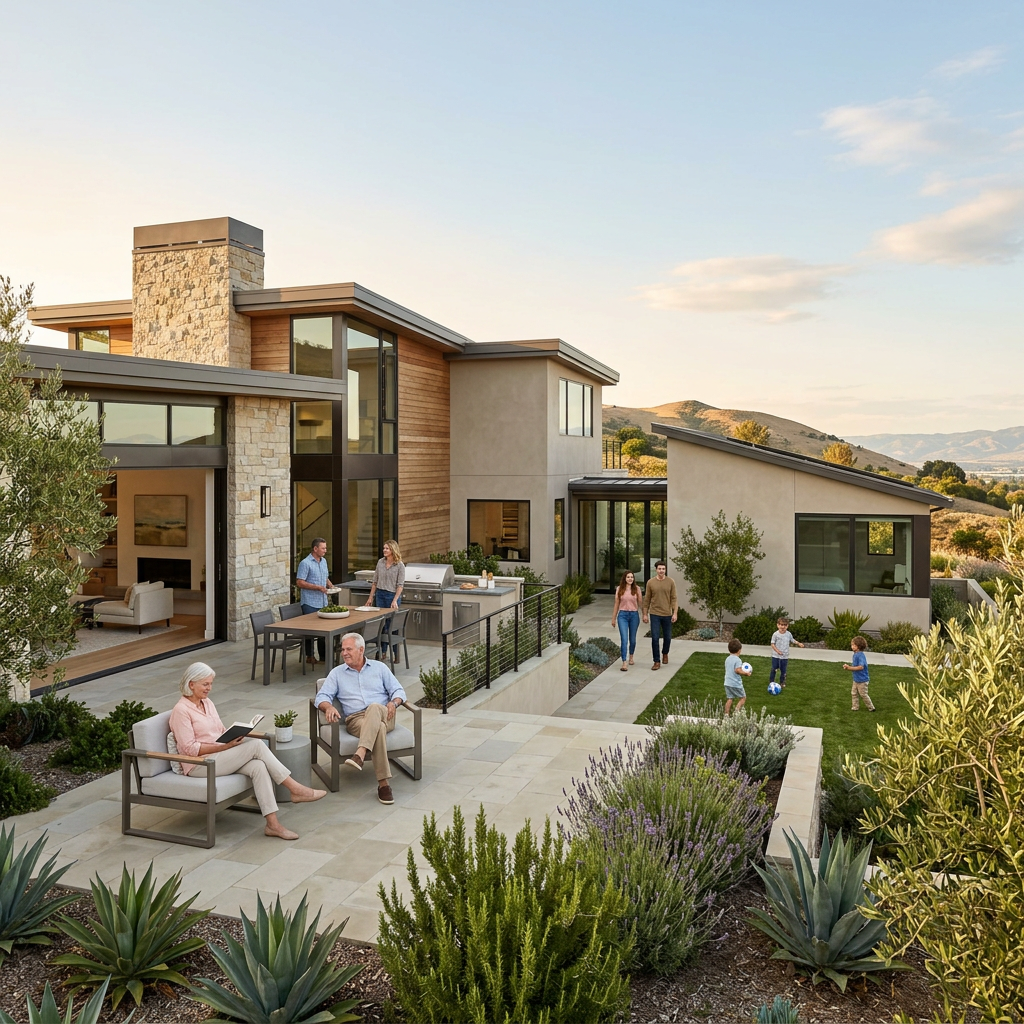
The Structural Shift in California Property Acquisition
As of April 2026, the California real estate landscape has moved beyond the traditional 'inventory thaw' and into a new era of structural acquisition: The Multi-Generational Equity Buffer. With interest rates stabilizing at a 'new normal' and median home prices in coastal hubs remaining resilient, the barrier to entry for individual buyers has catalyzed a significant shift toward co-ownership and shared-asset strategies.
Data Trends: The Rise of Shared Equity
According to recent data from the National Association of Realtors (NAR) and California-specific MLS aggregates, nearly 18% of first-time home purchases in the Golden State now involve co-buyers who are not spouses—a 5% increase from 2024. Furthermore, the U.S. Census Bureau reports that multi-generational households in California have grown by 12% over the last 24 months, driven by the dual pressures of high borrowing costs and the desire to retain family wealth within the state's appreciating markets.
This is no longer a fringe phenomenon; it is a calculated economic response. Investors and families are increasingly utilizing Tenancy in Common (TIC) arrangements, once localized largely to San Francisco, to enter high-value markets like Orange County and San Diego.
The ADU as a Yield Engine
A primary driver of this 2026 trend is the maturation of California’s ADU (Accessory Dwelling Unit) laws. Data from the California Department of Housing and Community Development (HCD) suggests that one in every four building permits issued in the state is now for an ADU. However, the 2026 shift is in the *financing* of these units. Families are now pooling equity from primary residences to fund ADUs for adult children or aging parents, effectively creating a private 'internalized' rental market that shields them from broader economic volatility.
Investment Perspective: The 'Family Fund' Model
Institutional investors are noticing a shift in competition. While the 'Private Investor Renaissance' highlighted a return of individual landlords, 2026 is seeing the rise of the 'Family Fund.' This involves the consolidation of multiple family members' capital to purchase multi-unit properties (2-4 units) rather than competing for single-family residences. This strategy maximizes the California Finance Housing Agency (CalHFA) programs and shared appreciation loans that have become more robust in the current fiscal year.
Practical Takeaways for the 2026 Market
- For Buyers: Explore Tenancy in Common (TIC) legal frameworks. Consult with a real estate attorney to draft robust co-ownership agreements that define exit strategies, maintenance responsibilities, and equity splits.
- For Sellers: Market your property’s 'multi-generational potential.' Highlight ADU-ready lots, separate entrances, or dual-primary-suite configurations, as these features currently command a 7-10% premium in suburban markets.
- For Investors: Focus on 'Value-Add Density.' Look for properties where the existing zoning allows for both an ADU and a Junior ADU (JADU). The ability to generate three income streams from a single residential lot is the hallmark of a high-yield 2026 California portfolio.
Economic Outlook
The 2026 market is defined by a move away from individual risk toward collective security. As California continues to grapple with housing supply, the pooling of equity serves as a vital buffer against inflation and market corrections. This trend suggests that while transaction velocity may fluctuate, the underlying value of California land remains tethered to its utility as a multi-functional, multi-user asset.