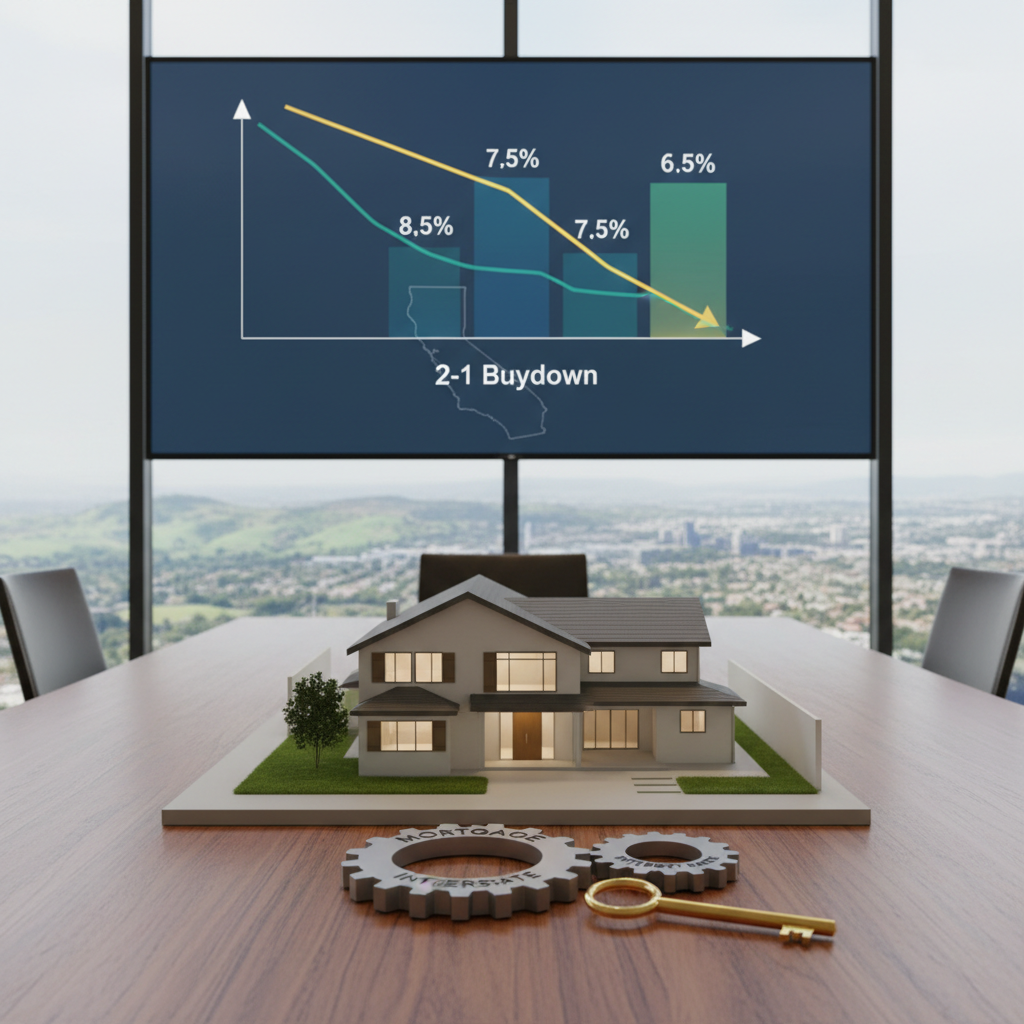
The 2026 Interest Rate Plateau and the California Dilemma
As of April 7, 2026, the mortgage landscape has entered a period of relative stability, with the national average for a 30-year fixed-rate mortgage hovering at 6.45%. While this is a significant improvement from the peaks of 2023, the 'higher-for-longer' stance maintained by the Federal Reserve through late 2025 has created a psychological floor. For California home buyers, where the median home price remains at a staggering $842,000 according to recent California Association of Realtors (CAR) data, the difference between a 6.5% and a 4.5% rate is the difference between a manageable monthly payment and financial overextension.
The Strategic Pivot: The 2-1 Temporary Buydown
Rather than waiting for a market correction that may not arrive, savvy California buyers are increasingly employing the 2-1 buydown. This financing tool allows a buyer to 'buy' a lower interest rate for the first two years of the loan, typically funded by a seller concession. In this structure, the interest rate is 2% lower in the first year and 1% lower in the second year, returning to the note rate in the third year.
For a median-priced California home with a 20% down payment (loan amount of $673,600), the savings are substantial:
- Year 1 (4.45%): Monthly PI payment of $3,394
- Year 2 (5.45%): Monthly PI payment of $3,803
- Year 3+ (6.45%): Monthly PI payment of $4,234
This provides a cumulative savings of over $15,000 in the first 24 months—liquidity that California buyers are using to offset high closing costs or immediate home improvements.
Why Sellers are Funding the Gap
While inventory has risen slightly, the market remains tilted toward sellers in high-demand pockets like the Bay Area and San Diego. However, NAR data shows that 'days on market' have crept up to 34 days in California. Sellers, eager to avoid price cuts that signal weakness, are instead offering 'credits toward recurring and non-recurring closing costs.' By funding a 2-1 buydown (which typically costs about 2.2% of the loan amount), a seller can preserve their high asking price while effectively solving the buyer’s immediate affordability crisis.
The 2027 Refinance Thesis
The primary driver behind the 2026 buydown trend is the consensus among many economists that the Fed will initiate a more aggressive easing cycle in mid-2027 as inflation targets of 2% are finally cemented. Buyers are using the buydown as a bridge, betting that they can refinance into a permanent 5% or 5.5% rate before the third year of their current loan kicks in. If the refinance opportunity doesn't manifest, the buyer is still qualified at the full 6.45% rate, ensuring they are not entering a 'predatory' loan situation.
Practical Takeaways for 2026 Buyers
- Negotiate Concessions First: When bidding on a home that has sat for more than 14 days, prioritize a seller credit for a buydown over a price reduction. The monthly payment impact of a 2% rate drop far outweighs a $20,000 price cut.
- Check Lender Overlays: Ensure your lender allows 'Seller-Funded Temporary Buydowns' on conforming and jumbo products, as some private investors have tightened restrictions on these incentives.
- Stress-Test Year 3: Only utilize this strategy if you can comfortably afford the Year 3 payment. The buydown should be a strategic bridge, not a survival necessity.


