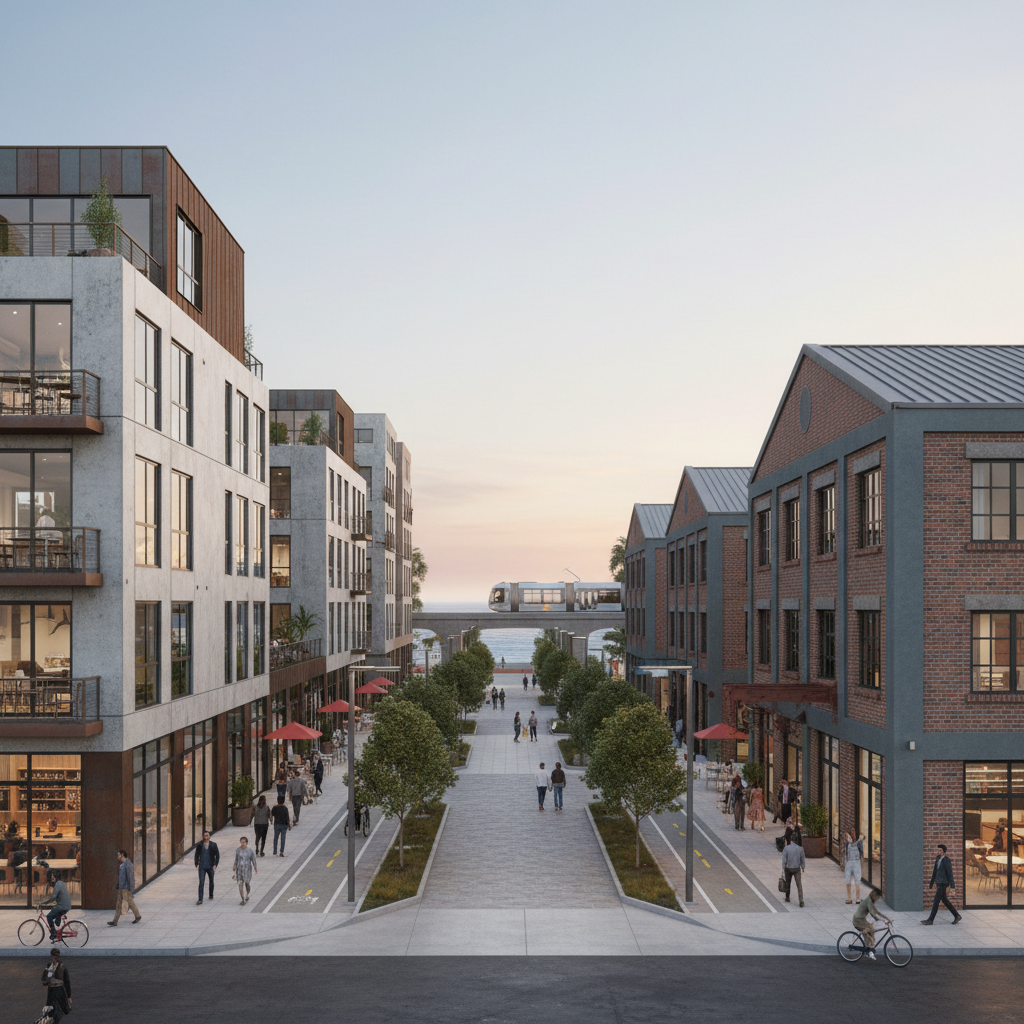
The Evolution of the 'Action Sports' Capital
In the spring of 2026, few Southern California submarkets have navigated the transition from industrial grit to residential gold as effectively as Westside Costa Mesa. Traditionally known as the engine room of the global action sports industry, this neighborhood has successfully pivoted into a high-density, mixed-use ecosystem. Unlike the master-planned homogeneity of south Orange County, Westside Costa Mesa offers a raw, 'coastal industrial' aesthetic that has become the primary target for the region’s creative professional class.
Data-Backed Growth: The Post-Pandemic Premium
According to 2025 MLS year-end data and recent 2026 Q1 reports from the Orange County Association of Realtors, the Westside (specifically zip code 92627) has seen a 14.2% year-over-year increase in median home prices, significantly outpacing the broader California average of 5.8%. This growth is fueled by a scarcity of coastal-adjacent inventory. With 2026 interest rates stabilizing around 5.5%, the demand for 'live-work' detached units—a staple of Westside development—has reached an all-time high.
CBRE’s latest market outlook highlights a 22% increase in adaptive reuse projects in the area, where former warehouses are being converted into luxury lofts and creative studios. This trend is anchored by the neighborhood's proximity to the Pacific Ocean (less than two miles) and its walkability to major hubs like The Camp and The LAB Anti-Mall.
Community Features and Modern Amenities
The Westside’s appeal lies in its unconventional amenities. Rather than traditional gated parks, the area features specialized facilities like the Volcom Skatepark and the revamped Victoria Street corridor, which now includes dedicated 'Class IV' protected bike lanes connecting residents directly to Newport Beach.
- Education: The neighborhood is served by the Newport-Mesa Unified School District (NMUSD). Schools like Victoria Elementary have recently seen a surge in funding via local bonds, focusing on STEM and arts-integrated curriculums that appeal to the incoming demographic of tech-savvy parents.
- Transportation: While Southern California remains car-centric, the Westside benefits from its 'gateway' position. It offers immediate access to the 55 Freeway and the 405, while the 2026 expansion of the OC Streetcar planning phases hints at future light-rail connectivity to the Santa Ana regional hub.
Strategic Takeaways for Real Estate Stakeholders
For those looking to navigate this specific market, the 2026 landscape offers three distinct paths:
- For Investors: Focus on the 'Industrial-to-Residential' pipeline. The city’s updated 2025 General Plan has streamlined zoning for accessory dwelling units (ADUs) and small-lot subdivisions. Acquiring older, R2-zoned lots for multi-generational or rental conversion remains a high-yield strategy.
- For Buyers: Look for 'Infill' developments. The Westside is moving away from traditional single-family sprawl toward high-end, three-story detached condos. These units offer the square footage of a suburban home with the maintenance-free lifestyle of an urban loft.
- For Sellers: Highlight the 'Coastal Proximity without the Coastal Tax.' Position properties as an alternative to Newport Beach, offering comparable ocean breezes and lifestyle perks at a 20-30% lower price-per-square-foot entry point.
The 2026 Outlook
As we move further into 2026, Westside Costa Mesa stands as a case study in how secondary coastal markets can redefine themselves. By leaning into its industrial heritage rather than erasing it, the neighborhood has captured a demographic that values authenticity over polish, ensuring its place as one of the most resilient real estate pockets in the California market.


