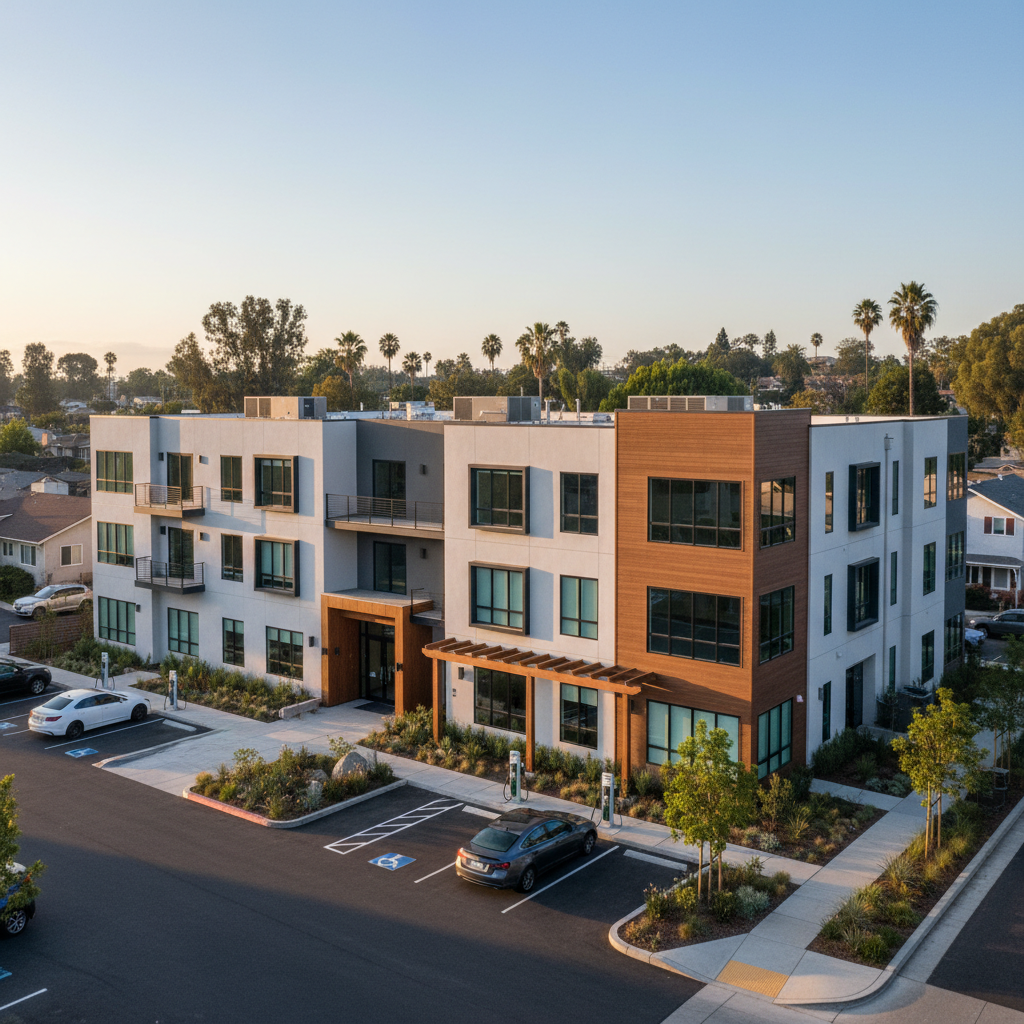
The Rise of the 'Live-Work Village'
As of April 2026, the California real estate landscape is witnessing a structural transformation. The 'Zombie Office Park'—the sprawling, underutilized commercial complexes that defined suburban growth in the late 1990s—is officially being phased out. In their place, a new wave of adaptive re-use projects is delivering thousands of residential units to a market still starved for inventory.
Data: The 2026 Conversion Surge
According to the latest data from the California Department of Housing and Community Development (HCD), adaptive re-use permits for commercial-to-residential conversions have increased by 42% year-over-year. In the first quarter of 2026 alone, over 12,500 units were greenlit across Orange, Santa Clara, and San Diego counties. This surge is largely attributed to the maturity of Senate Bill 6 and Assembly Bill 2011, which streamlined the rezoning process for underperforming retail and office spaces.
The California Association of Realtors (CAR) reports that these 'converted villages' are hitting the market at price points 15% lower than traditional new-construction single-family homes, providing a critical entry point for first-time buyers who were previously priced out of the coastal suburbs.
The Regulatory Catalyst
The acceleration seen today is the result of the 2024-2025 regulatory 'clearing of the pipes.' Local municipalities, once resistant to losing commercial tax bases, have pivoted toward residential development to meet state-mandated Regional Housing Needs Allocation (RHNA) targets. By converting a failing 10-acre office park into a mixed-use residential hub, cities are finding they can generate higher long-term property tax revenue while revitalizing local retail ecosystems.
Practical Takeaways for Stakeholders
For Homebuyers
These developments often offer amenities that traditional suburbs lack, such as integrated co-working spaces, on-site transit hubs, and walkable retail. Buyers should look for 'Phase 1' pricing in these conversions, as values typically appreciate significantly once the full 'village' ecosystem—including grocery stores and parks—is completed.
For Real Estate Investors
The play in 2026 is 'Zoning Arbitrage.' Small to mid-sized investors are increasingly looking at 'Class C' commercial buildings in transit-adjacent zones. With state streamlining, the risk of a project being stalled in discretionary review is at a decade-low, making commercial-to-residential flips a viable institutional and mid-market strategy.
For Current Suburban Homeowners
Proximity to these new hubs is becoming a value driver. While some feared high-density conversions would hurt property values, the opposite is proving true: the influx of new residents and modern retail amenities is creating a 'halo effect,' lifting the values of adjacent 1970s and 80s single-family tracts.
The Bottom Line
California’s housing crisis is being met with architectural ingenuity. The transition from cubicles to condos isn't just a trend; it's the dominant market movement of 2026. As the state continues to prioritize density over sprawl, the 'Zombie' offices of yesterday are providing the inventory relief the Golden State has sought for decades.


