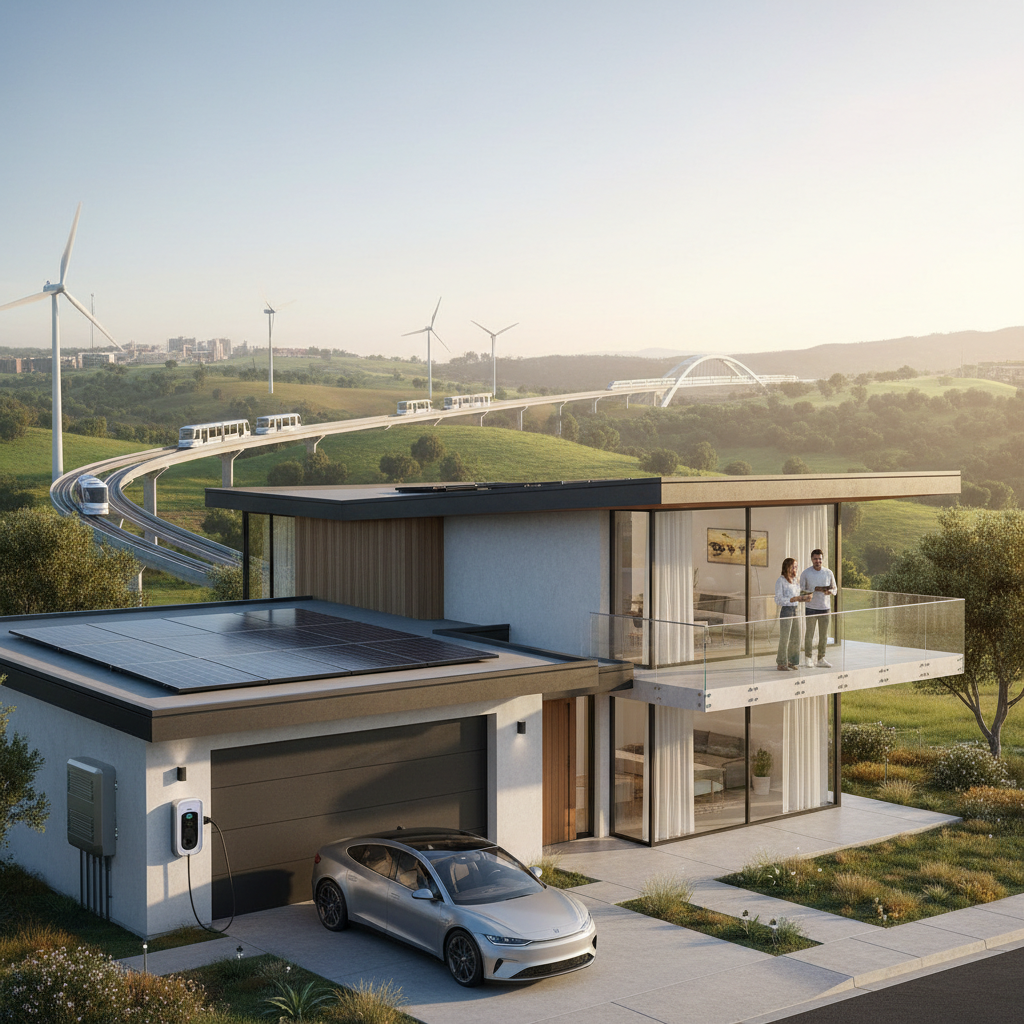
The Shift from Cosmetic to Systemic Value
For decades, California home sellers focused on 'visual liquidity'—the granite countertops and open floor plans that dazzled in listing photos. However, as of April 2026, the California market has reached a tipping point. With utility rates from PG&E and SCE reaching record highs and the state’s 2035 zero-emission vehicle mandate looming closer, buyers are no longer just looking at the kitchen; they are looking at the electrical panel. Today’s high-value sale is driven by systemic modernization.
The EV Mandate: Level 2 Charging is No Longer Optional
According to the California New Car Dealers Association, electric vehicles (EVs) now account for over 25% of new car registrations in the state. For a 2026 home seller, having a dedicated 240V Level 2 charging station in the garage is no longer a luxury—it is a baseline requirement for the tech-heavy buyer pool. Real estate data from the first quarter of 2026 suggests that homes with pre-installed EV infrastructure sell 12% faster than those without, as buyers look to avoid the $2,000 to $5,000 post-purchase cost of panel upgrades and wiring.
Energy Autonomy: The New 'Granite Countertop'
With California’s Net Billing Tariff (NEM 3.0) fully matured, the value proposition of solar has shifted from simple generation to storage. A 2025 study by the Lawrence Berkeley National Laboratory found that homes equipped with paired solar and battery storage systems (such as the Tesla Powerwall 3 or Enphase IQ) command a premium of roughly $15,000 to $20,000 in the California market. Buyers are prioritizing 'energy autonomy'—the ability to island from the grid during peak pricing hours or Public Safety Power Shutoffs (PSPS). Sellers should highlight their system's 'self-consumption' rate in marketing materials to appeal to cost-conscious professionals.
Electrification and the Heat Pump Premium
As municipal gas bans continue to expand across California, the transition to high-efficiency heat pumps for HVAC and water heating has become a value driver. Data from the National Association of Realtors (NAR) indicates that 'green' features are now a top-three priority for Millennial and Gen Z buyers, who comprise the largest segment of the 2026 market. Replacing an aging gas furnace with a multi-zone heat pump system not only improves the home's HERS (Home Energy Rating System) score but also removes the 'deferred maintenance' stigma associated with legacy fossil fuel appliances.
The Digital Backbone: Fiber and Mesh Ready
With remote and hybrid work now a permanent fixture of the California economy, a home’s 'digital infrastructure' is a critical selling point. Sellers should ensure their property is 'Fiber-to-the-Home' (FTTH) ready and includes Category 6e (Cat6e) cabling in primary home office spaces. In a 2026 survey of California buyer agents, 68% reported that 'reliable high-speed connectivity' was a non-negotiable for their clients, often ranking higher than backyard size or school district ratings.
Practical Takeaways for 2026 Sellers
- Audit Your Panel: Ensure your electrical panel is at least 200 amps. If it is 100 or 150 amps, consider an upgrade before listing; this is a common hurdle in the 2026 appraisal and inspection process.
- Document the Tech: Create a 'Systems Manual' for the buyer that outlines the age, warranty, and efficiency ratings of the solar, battery, EV charger, and HVAC systems.
- Market the 'Operating Cost': Instead of just listing the price, provide a comparison of the home’s average monthly utility costs versus a non-modernized equivalent. In California’s 2026 market, low carrying costs are a powerful closing tool.
By shifting focus from superficial upgrades to the underlying infrastructure, California sellers can insulate themselves from market volatility and capture the high-intent, tech-savvy buyers defining the 2026 landscape.