The 2026 Pivot: From Government Hub to Lifestyle Anchor
In the spring of 2026, California’s real estate narrative has shifted. While coastal hubs like San Francisco and Los Angeles grapple with inventory constraints, Midtown Sacramento has emerged as the state’s premier example of 'The Secondary Market Surge.' No longer just a 9-to-5 enclave for state employees, Midtown has matured into a self-sustaining urban ecosystem defined by its 15-minute walkability, historical preservation, and aggressive housing density.
The Data: Sustained Growth in a Cooling Market
While national appreciation slowed to a modest 3.2% in 2025, Sacramento’s Midtown submarket outperformed the region with a 7.4% year-over-year increase in median home values, according to MetroList MLS data for Q1 2026. This growth is driven by a unique supply-demand imbalance: a influx of remote-capable professionals seeking 'Climate-Resilient Urbanism' away from coastal flood zones and fire-prone hillsides.
The Housing Landscape: The 'Missing Middle' Success
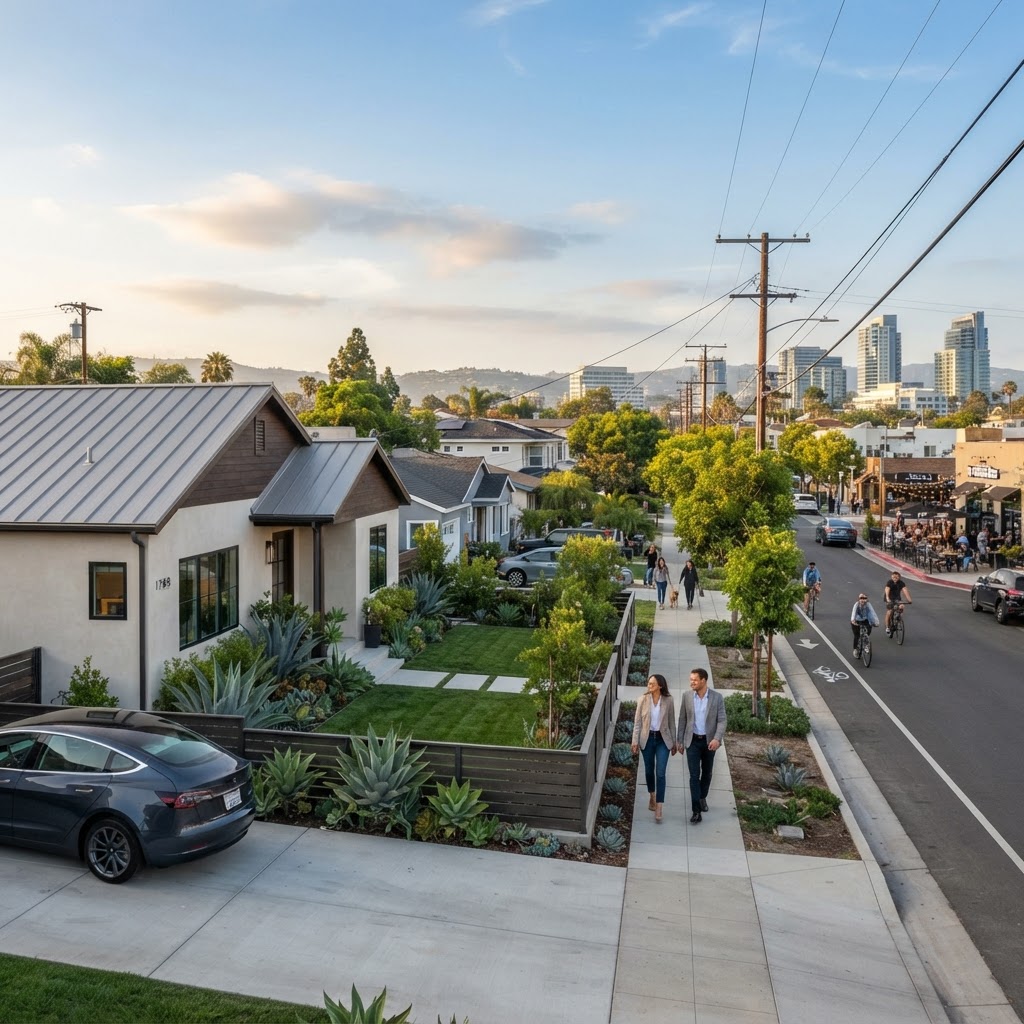
Midtown is the poster child for California’s 2026 housing evolution. Following the full implementation of SB 9 and local zoning reforms, the neighborhood has seen a 22% increase in 'Missing Middle' inventory—duplexes, triplexes, and accessory dwelling units (ADUs)—over the last 24 months. These properties are currently commanding a 15% rental premium over traditional suburban apartments due to their proximity to the 20th Street corridor’s revitalized retail scene.
Community Assets and Infrastructure
The 2026 appeal of Midtown rests on three pillars of infrastructure and amenities:
- Education and Innovation: The neighborhood is bolstered by the 2025 completion of the first phase of Aggie Square, UC Davis’s massive innovation hub. This has brought thousands of high-wage biotech and data science jobs to the immediate periphery, making the area highly attractive to graduate students and researchers.
- Transportation: Sacramento RT’s 2026 'Blue Line' optimization and the expansion of the 'Cycle Track' network have reduced car dependency. CBRE reports that properties within three blocks of the 16th Street Light Rail station have seen a 12% higher valuation than those on the neighborhood’s outskirts.
- Sustainability: The 'Urban Forest' initiative, which protects Midtown’s famous canopy, has been mathematically linked to lower cooling costs during California’s increasingly hot summers, a factor now appearing in Zillow’s 'Climate Risk' disclosures.
Practical Takeaways for Investors and Buyers
For Investors
Focus on multi-generational conversion opportunities. With the 2026 occupancy rates for Midtown ADUs hovering at 96%, purchasing single-family Victorian homes with R-3 zoning allows for high-yield densification. The 'Work-from-Sac' demographic is seeking high-end finishes and fiber-optic connectivity over square footage.
For Buyers
Competition remains fierce for 'Turn-key Historic' properties. MLS data shows that homes priced between $850,000 and $1.1 million are spending an average of just 14 days on the market. Buyers should look toward the 'Sutter District' on the eastern edge, where the proximity to the UC Davis Medical Center ensures long-term equity stability regardless of broader market volatility.
The Verdict
Midtown Sacramento is no longer a 'budget alternative' to the Bay Area. In 2026, it is a primary destination. Its successful blend of historical charm and progressive density policies provides a blueprint for how California’s inland cities can thrive in a post-pandemic, climate-conscious economy.