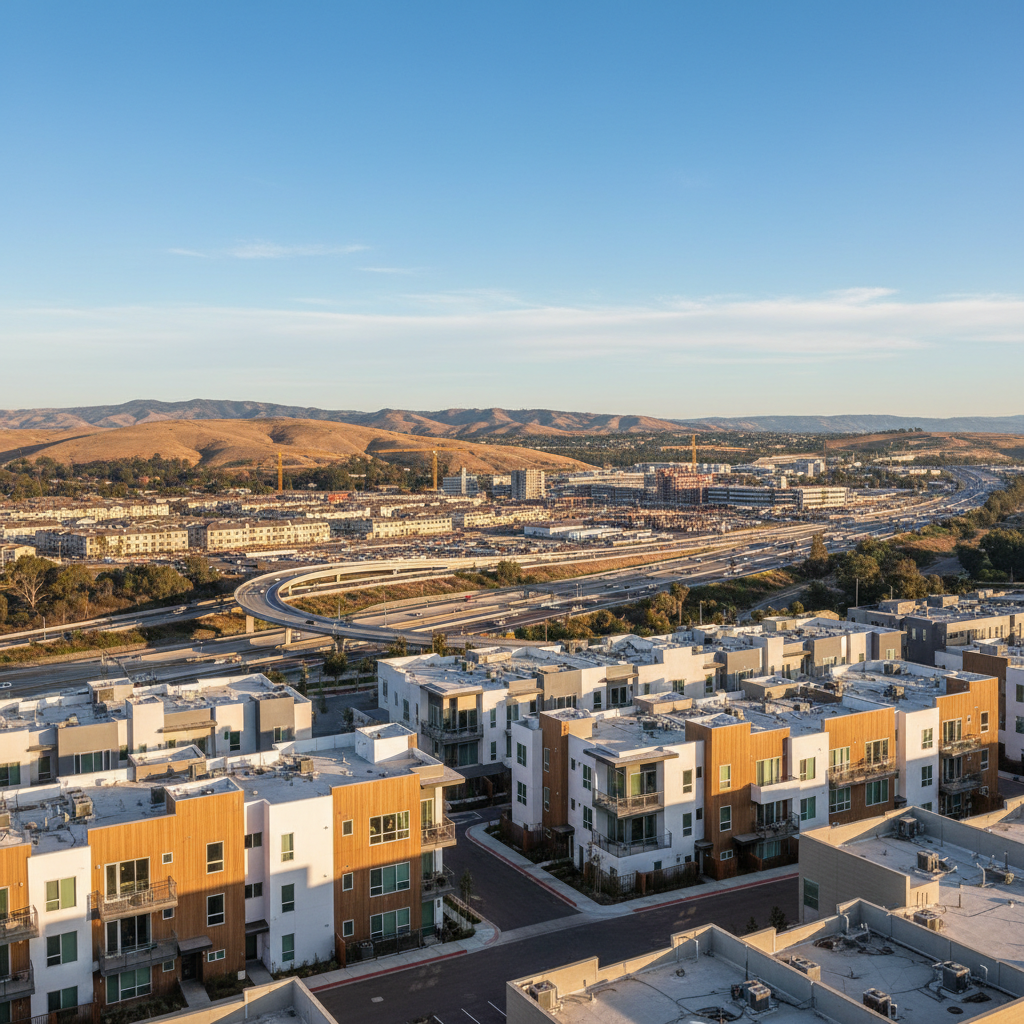
The Era of State-Enforced Urbanism
As we move into the second quarter of 2026, the California real estate landscape is being fundamentally reshaped by a factor far more potent than interest rate fluctuations: the legal enforcement of the Regional Housing Needs Allocation (RHNA). While previous years saw municipal resistance to state-mandated density, 2026 marks the 'Compliance Crunch,' where the California Department of Housing and Community Development (HCD) has effectively neutralized local zoning bottlenecks through aggressive litigation and the 'Builder’s Remedy.'
The Data Behind the Density
Data from the HCD’s 2026 Housing Progress Report indicates that over 85% of jurisdictions in the 6th Cycle are now under strict monitoring. Unlike the 5th Cycle, where quotas were often treated as suggestions, current mandates require the state to produce over 2.5 million units by 2030. According to the California Association of Realtors (CAR), this pressure has led to a 14% year-over-year increase in multi-family permit applications in historically exclusionary coastal enclaves.
Furthermore, MLS data from Q1 2026 shows that land parcels zoned for high-density under newly certified Housing Elements are commanding a 22% premium over traditionally zoned residential lots. This is no longer a speculative trend; it is a structural realignment of California land value.
The 'Builder’s Remedy' Arbitrage
The most significant investment trend in 2026 is the strategic use of the Builder’s Remedy in non-compliant cities. For investors, this represents a unique arbitrage opportunity. When a city fails to have a state-certified Housing Element, developers can bypass local zoning codes for projects that include affordable housing components.
Economic analysis from CBRE suggests that projects initiated under these conditions in 2025 and early 2026 are seeing internal rates of return (IRR) that outperform traditional suburban developments by nearly 400 basis points. The ability to achieve high-density yields in high-demand, low-supply areas like Marin County and coastal Orange County is shifting the institutional capital flow away from the Central Valley and back toward the coast.
Economic Trends and Market Stability
Despite the influx of planned supply, California’s median home price remains resilient, anchored by a 2026 unemployment rate that holds steady at 4.2%. The economic trend is one of 'concentrated growth'—where value is aggregating around infrastructure hubs that have embraced state mandates. The 'Compliance Crunch' is effectively creating a two-tier market: jurisdictions that complied early and are seeing stabilized growth, and those facing 'Builder’s Remedy' incursions, which are seeing rapid, transformative development.
Strategic Takeaways for Stakeholders
- For Developers: Focus on 'By-Right' projects. The 2026 regulatory environment favors developers who utilize Senate Bill 35 and SB 423 to streamline approvals. The time-to-market advantage in compliant cities currently outweighs the risk of litigation in non-compliant ones.
- For Residential Buyers: Monitor the 'Housing Element' status of target municipalities. Purchasing in a city currently under HCD sanction may lead to significant neighborhood densification over the next five years, which can impact long-term views and traffic but significantly increase land value.
- For Investors: Look for 'In-Fill' opportunities within 0.5 miles of major transit but focus on the specific zoning overlays created by the 2026 Housing Element revisions. These areas often allow for accessory dwelling unit (ADU) clusters that were previously prohibited.
The 2026 California market is no longer defined by a lack of will to build, but by a legal mandate to do so. Understanding the intersection of state law and local land use is now the most critical skill for any serious participant in the Golden State’s real estate economy.


