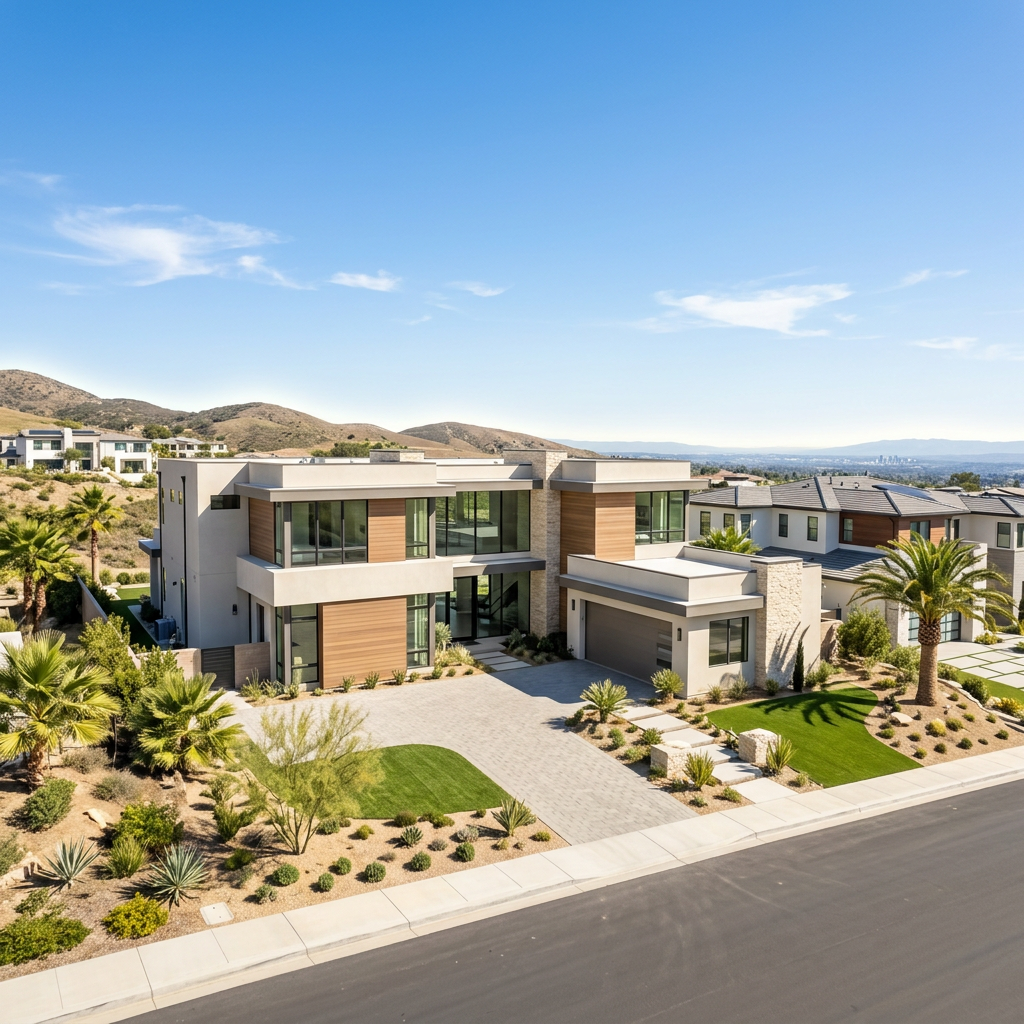
The 2026 Spring Shift: Conforming Limits Meet High-Cost Reality
As of April 3, 2026, the California real estate market is grappling with a unique intersection of stabilizing rates and shifting loan boundaries. While the national 30-year fixed mortgage rate has settled into a 6.1% to 6.3% range, California buyers in the $1 million to $1.3 million bracket are finding relief not from rate cuts, but from the recent expansion of high-cost conforming loan limits.
For the 2026 calendar year, the Federal Housing Finance Agency (FHFA) has adjusted high-cost area limits in counties like Los Angeles, Orange, and Santa Clara to exceed $1.2 million. This shift is critical for the spring buying season, as it moves a significant portion of California’s mid-tier inventory out of the more restrictive 'Jumbo' category and into the 'High-Balance Conforming' bucket.
Why the Conforming Designation Matters Now
In previous cycles, crossing the threshold into Jumbo territory required a minimum of 20% down, cash reserves often exceeding 12 months of PITI (principal, interest, taxes, and insurance), and debt-to-income (DTI) ratios strictly capped at 43%. In today’s market, the 'Conforming Expansion' provides three distinct advantages:
- Lower Reserve Requirements: Many Fannie Mae and Freddie Mac programs now allow for as little as two to six months of reserves, compared to the strict liquidity demands of 2026 portfolio Jumbo lenders.
- DTI Flexibility: High-balance conforming loans often allow DTIs up to 45-50% with compensating factors, a necessity in California where property taxes and insurance premiums have risen by an average of 12% over the last 24 months.
- Appraisal Speed: Desktop and hybrid appraisals are more common for conforming products, allowing buyers to shorten contingency periods in competitive coastal markets.
The Rate Spread Paradox
Data from the California Association of Realtors (CAR) suggests that the spread between Jumbo rates and High-Balance Conforming rates has narrowed to just 15 basis points. However, the real savings aren't in the rate itself, but in the cost of capital. Portfolio lenders are currently pricing Jumbo risk aggressively due to liquidity concerns, while the secondary market for conforming loans remains robust.
According to recent Census and NAR data, California’s median home price has climbed to approximately $890,000, but in coastal hubs, the 'entry-level' price point frequently brushes against the $1.1 million mark. By utilizing the 2026 high-cost limits, buyers can now secure 5% or 10% down payment options on homes that previously required a 20% barrier of entry.
Strategic Takeaways for California Buyers
- Target the 'Jumbo Lite' Zone: If you are looking at homes priced between $1.1M and $1.4M, structure your offer to stay within the conforming high-balance limit. The difference in underwriting ease can make your offer more attractive to sellers who prioritize certainty of closing.
- Audit Your Liquid Reserves: Even if you have the 20% down payment, a high-balance conforming loan may allow you to keep more cash in the bank for renovations or investments, as the reserve requirements are significantly more lenient than Jumbo portfolios.
- Verify County-Specific Caps: Limits vary by county. Ensure your lender is using the specific 2026 ceiling for your target zip code, as several inland counties saw higher-than-average limit increases due to the 2025 migration trends.
As we move through the second quarter of 2026, the ability to leverage these higher loan ceilings will be the primary driver of volume in California’s suburban markets, providing a much-needed pressure valve for the state’s affordability crisis.


