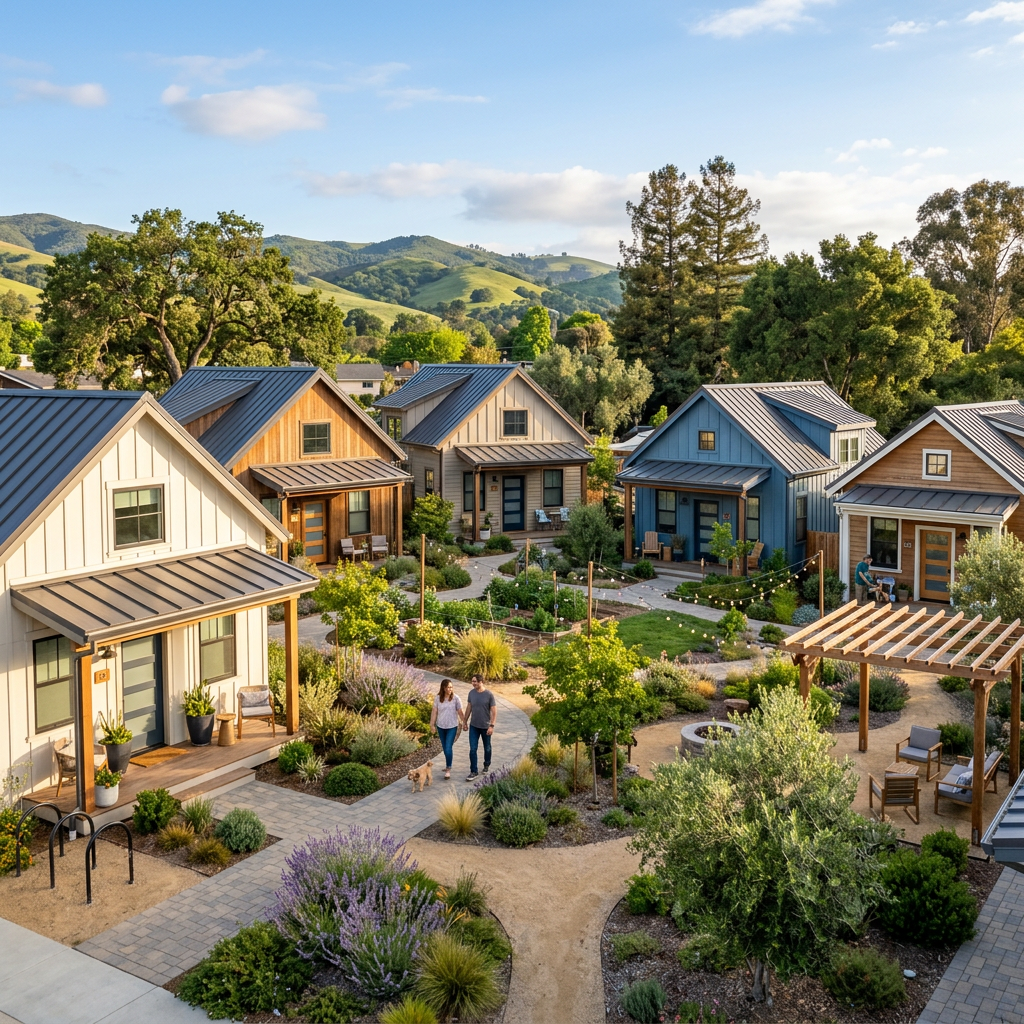
The Rise of 'Cottage Clusters' in the Golden State
For decades, the California starter home was an endangered species, squeezed out by skyrocketing land costs and a preference for luxury square footage. However, as of April 3, 2026, a significant shift in the state's residential landscape is becoming impossible to ignore. A new wave of 'Cottage Clusters'—groups of four to twelve small, detached dwellings centered around a common courtyard—is providing a vital entry point for first-time buyers and a high-yield opportunity for developers.
Legislative Tailwinds and Market Data
The movement has been catalyzed by the 2025 'Neighborhood Infill Act,' which streamlined the permitting process for high-density, small-footprint residential projects on land previously zoned for single-family use. According to the California Association of Realtors (CAR), sales of 'micro-lot' homes (under 1,200 square feet) have surged by 18.4% year-over-year in Q1 2026.
Data from the California Department of Housing and Community Development (HCD) indicates that cities like Santa Rosa, Riverside, and Clovis have seen the highest density of these permits. Unlike the 'ADU boom' of the early 2020s, these clusters are designed as fee-simple ownership opportunities, allowing buyers to build equity in land rather than just renting a backyard unit.
Why the Shift is Happening Now
Several factors have aligned to make 2026 the year of the cottage:
- Affordability Realism: With the median price of a traditional California detached home hovering near $950,000, these clusters—often priced between $500,000 and $650,000—represent the only viable path to ownership for middle-income earners.
- The 'Rightsizing' Trend: Remote work 2.0 has led many to prioritize outdoor community space and high-end finishes over raw square footage.
- Lower Development Costs: By utilizing shared infrastructure (utility lines, parking pods, and drainage), developers are reporting profit margins 12% higher than traditional subdivisions.
Regional Spotlight: The Inland Empire and Central Coast
While coastal metros remain constrained, the Inland Empire is leading the state in cottage cluster delivery. In Riverside County, three major projects totaling 140 units reached 90% pre-sale capacity this March. Meanwhile, on the Central Coast, cities like San Luis Obispo are using cottage clusters to bridge the housing gap for healthcare workers and educators, often utilizing local tax credits to lower the barrier for essential personnel.
Practical Takeaways for Stakeholders
For Buyers:
- Verify CC&Rs: Cottage clusters often involve Homeowners Associations (HOAs) to manage shared courtyards. Scrutinize the CC&Rs for maintenance responsibilities and long-term assessment projections.
- Check Resale Comps: Because this is a newer asset class, ensure your lender is comfortable using other cluster homes as comparables to avoid appraisal gaps.
For Investors and Developers:
- Identify 'Transit-Adjacent' Infill: The most aggressive tax incentives apply to clusters within 0.5 miles of major bus lines or rail stations.
- Focus on Design: High ceilings and 'indoor-outdoor' flow are essential for making 1,000 square feet feel expansive and command top-tier pricing.
For Sellers:
- Lot-Splitting Potential: If you own an oversized lot in a Tier-2 city, your land may now be worth more to a developer looking to build a cluster than to a single-family buyer. Consult a land-use attorney to evaluate your subdivision rights under current 2026 mandates.
As the 'Missing Middle' finally finds its footing, the California real estate market is proving that it can evolve. The cottage cluster isn't just a trend; it's a necessary recalibration of the California Dream for a more dense, sustainable future.


