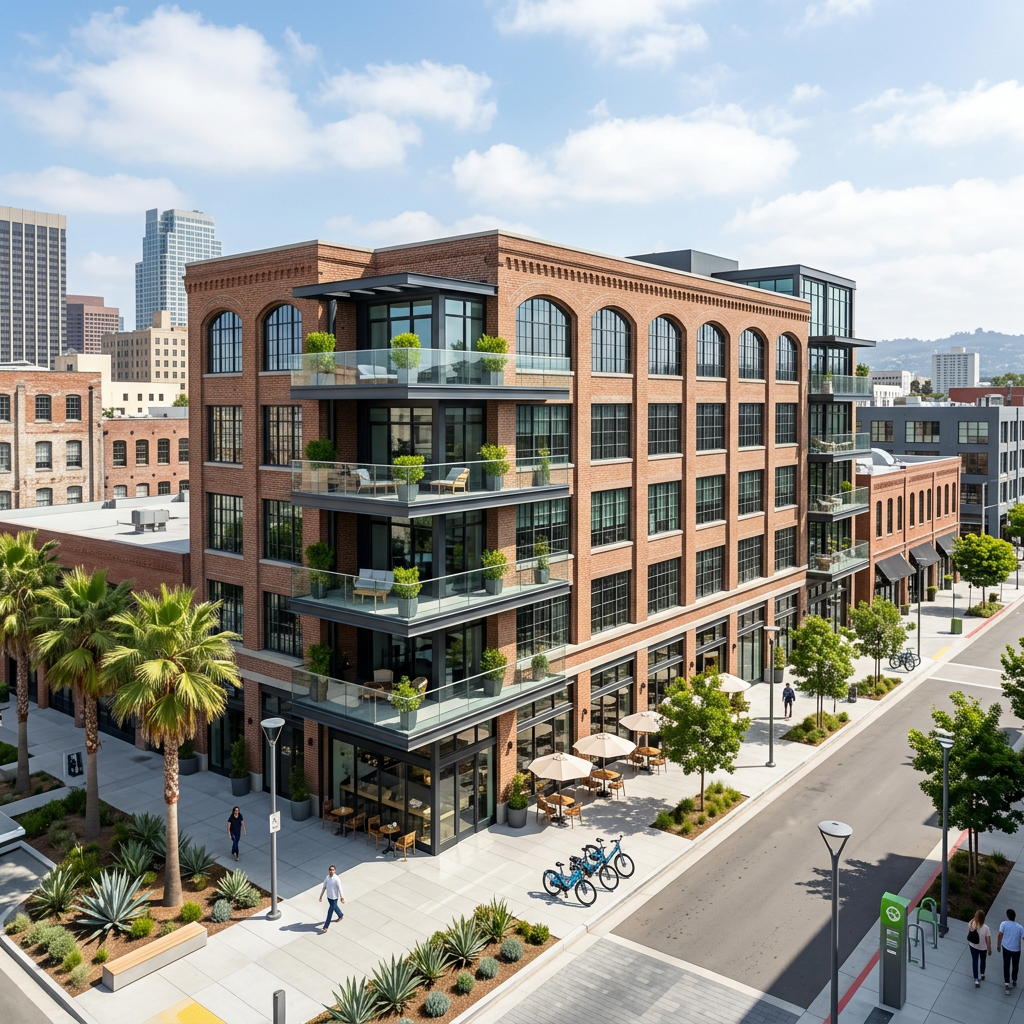
The Structural Shift in California’s Metropolitan Landscapes
As of April 2026, the California real estate landscape is witnessing a historic pivot. While suburban inventory has seen a 'thaw' through micro-density and Prop 19 maturation, the state’s urban cores—specifically in San Francisco, Los Angeles, and San Diego—are undergoing a radical metamorphosis. The 'Adaptive Reuse Inflexion Point' has arrived, driven by the convergence of peak office vacancies and the fruition of 2023-2024 legislative incentives.
According to recent CBRE data, office vacancy rates in San Francisco’s Financial District remained stubborn at 31% in Q1 2026. However, for the first time in a decade, the conversion pipeline has begun to outpace traditional office leases. This trend represents a fundamental shift in how California views its urban assets: no longer as monolithic commercial hubs, but as versatile, mixed-use ecosystems.
The Legislative Catalyst: SB 6 and AB 2011 Come of Age
The current surge in urban inventory can be traced back to the delayed impact of Senate Bill 6 and Assembly Bill 2011. These 'Middle Class Housing Acts' allowed for residential development on land previously zoned for office, retail, and parking without requiring a local rezoning process. By April 2026, the first major wave of these projects has reached completion.
Data from the California Department of Housing and Community Development (HCD) indicates that over 12,000 units derived from converted commercial space have entered the market in the last twelve months. This influx is critical for a state that has historically struggled with a 3-million-unit housing deficit. By bypassing the traditional multi-year entitlement process, developers have been able to bring high-density housing to market 30% faster than traditional ground-up construction.
The Economics of Conversion: A New Yield Frontier
From an investment perspective, the 2026 market favors those who understand the 'Basis Reset.' Institutional investors who acquired distressed Class B and C office assets at 40-60% below their 2019 valuations are now reaping the rewards. The cost to convert these structures typically ranges from $300 to $450 per square foot, which, when combined with the low acquisition basis, allows for a market-rate product that still offers competitive cap rates in the 5.8% to 6.4% range.
- Tax Credits: The 2026 fiscal year has seen a spike in the utilization of the 'Work-Live Tax Credit,' a state-level incentive specifically for projects that maintain a 15% affordable housing threshold within converted structures.
- Seismic Retrofitting: A significant portion of conversion costs in California is dedicated to structural upgrades. Investors are increasingly looking at post-1980s steel-frame buildings which require less intensive seismic work compared to older masonry structures.
Practical Takeaways for the 2026 Market
For buyers, sellers, and investors, the urban core now offers a different value proposition than it did five years ago. Understanding this shift is vital for capital allocation.
- For Investors: Focus on 'Transit Adjacent' commercial assets. While the transit-induced premium is well-documented, the specific opportunity lies in converting small-footprint commercial buildings into boutique residential lofts, which currently command a 12% rent premium over standard apartments due to their unique architectural character.
- For Urban Buyers: The 2026 market offers a 'New Construction' feel in historic footprints. These units often feature higher ceilings and larger windows than traditional condos, providing a distinct lifestyle advantage in a competitive resale market.
- For Policy-Watchers: Monitor the 'Ground-Floor Retail Mandate.' Many cities are now relaxing the requirement for ground-floor retail in conversion projects, allowing for 'Street-Level Residential' with enhanced privacy features—a move that significantly de-risks the developer’s vacancy exposure.
The Path Forward
The 2026 adaptive reuse trend is not merely a response to a surplus of office space; it is a permanent realignment of California’s urban planning. As we look toward the second half of the decade, the integration of residential life into formerly sterile business districts is expected to stabilize municipal tax bases and create a more resilient, 24/7 urban economy. For the savvy real estate participant, the conversion of 'dead space' into 'living space' represents the most significant value-add opportunity of the era.