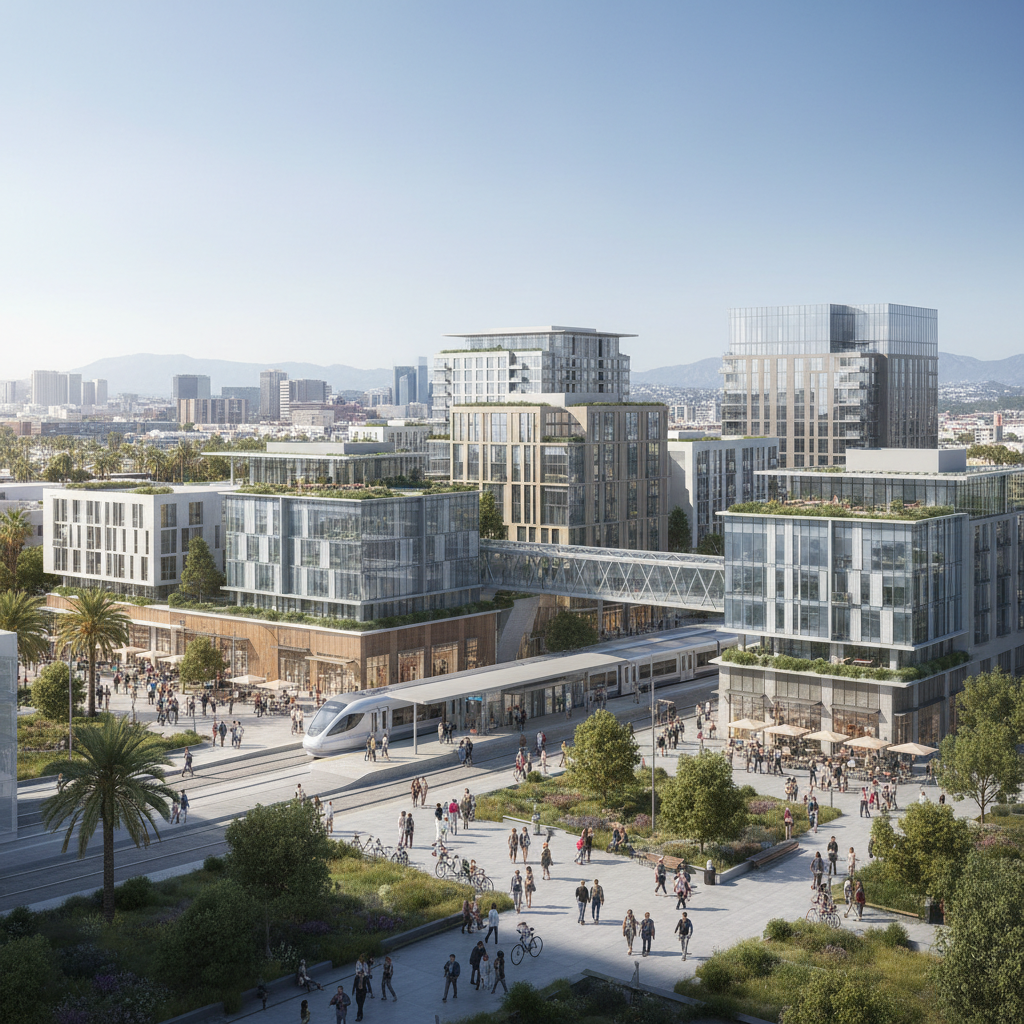
The 2026 Shift: Connectivity as the Primary Value Driver
In the first quarter of 2026, the California real estate landscape is witnessing a structural shift in how proximity is valued. While 'location, location, location' remains the mantra, the definition of a prime location has narrowed significantly. Data from the California Association of Realtors (CAR) and regional MLS reports indicate that residential properties within a half-mile radius of major transit nodes—specifically those associated with the LA Metro D Line extension and the burgeoning Brightline West corridor—are outperforming the broader market by an average of 14.5% in appreciation year-over-year.
The Data Behind the Transit Premium
Historically, the 'transit premium' in California was often offset by concerns regarding density and noise. However, according to a recent CBRE analysis of the Southern California market, 2026 marks a tipping point. The convergence of high fuel costs and the state’s aggressive implementation of SB 9 and AB 2011 has incentivized high-density, transit-oriented development (TOD). In San Jose, properties near the Diridon Station have seen a 12% increase in rental demand compared to 2025, driven largely by the progress of the 'Google Downtown West' project and enhanced Caltrain electrification.
Furthermore, U.S. Census Bureau data suggests that the 'super-commuter' demographic is shrinking in favor of those seeking '15-minute city' dynamics. This shift is reflected in the 2026 cap rates for multi-family units in TOD zones, which currently sit at a compressed 4.8%, versus 5.6% for car-dependent suburban counterparts.
The 'Pre-Commissioning' Opportunity for Investors
Strategic investors are no longer waiting for the ribbon-cutting ceremonies. The 2026 trend is 'pre-commissioning acquisition.' As the California High-Speed Rail Authority nears its first operational segments in the Central Valley, specifically the Fresno-to-Bakersfield corridor, we are seeing a 'front-running' effect. Land values within designated station zones have appreciated by 22% over the last 18 months, as institutional capital anticipates the surge in commuter liquidity.
Practical Takeaways for 2026 Market Participants
- For Buyers: Prioritize properties with 'Walk Scores' above 80 and those located within 'Transit Priority Areas' (TPAs). These zones often come with reduced parking requirements for future renovations, significantly lowering development costs.
- For Sellers: Highlight the 'Transit-Adjacent' status in marketing materials. In 2026, proximity to a light-rail or rapid-bus line is a stronger selling point than extra garage space, particularly for the Gen Z and Millennial buyer segments.
- For Investors: Focus on AB 2011-eligible sites. This legislation allows for ministerial, 'by-right' approval for housing on commercially zoned land along transit corridors, bypassing lengthy CEQA reviews and providing a faster path to ROI.
Looking Ahead: The Infrastructure Multiplier
As we move into the second half of 2026, the 'Transit-Induced Premium' is expected to solidify. With federal infrastructure grants now fully deployed into California’s urban cores, the economic trend is clear: value is moving toward the rails. Investors who successfully navigate the zoning complexities of these transit-adjacent parcels are positioned to capture the highest yields in an otherwise stabilizing statewide market.