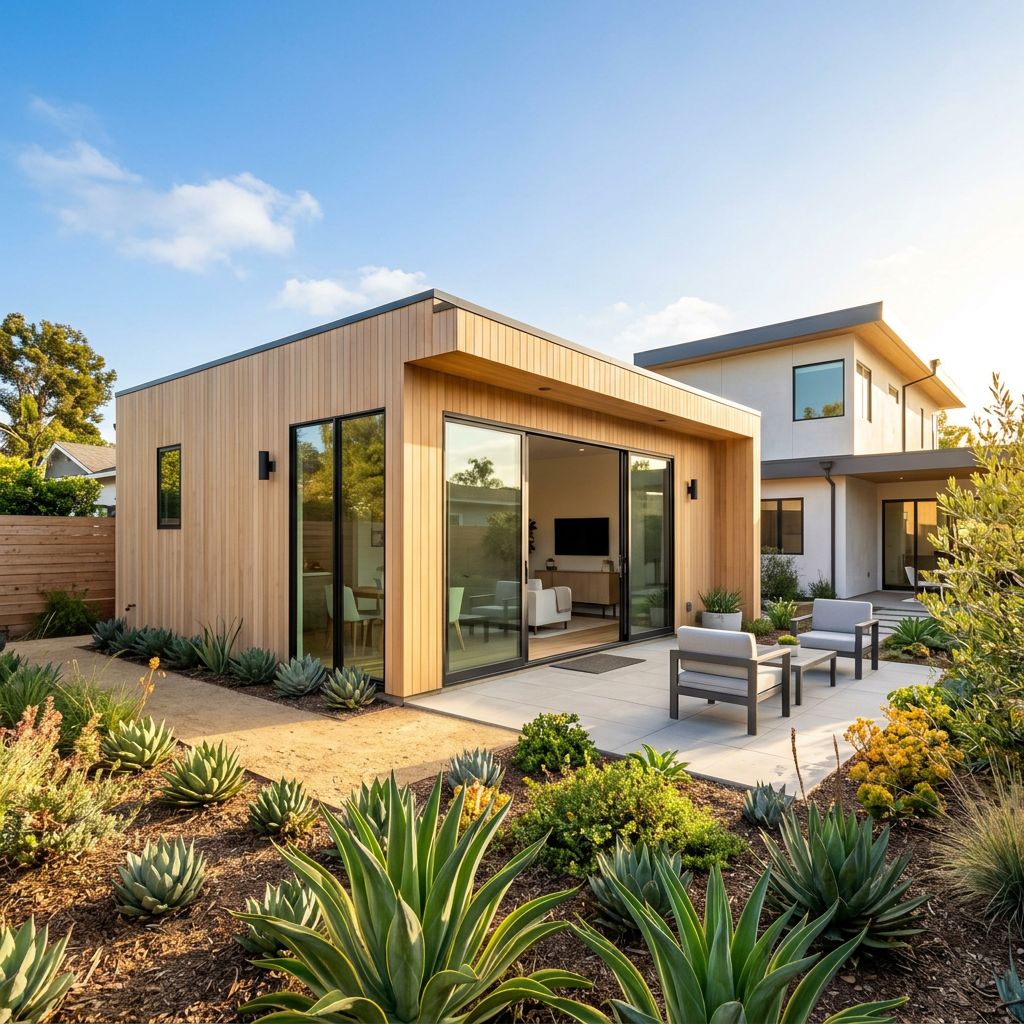
The Evolution of the California Backyard
In the spring 2026 market, the California real estate landscape has fundamentally shifted from valuing square footage alone to prioritizing functional density. As the California Department of Housing and Community Development (HCD) reports that ADU permits now account for nearly 20% of all housing production in the state, sellers are no longer viewing secondary units as 'extra space' but as primary equity drivers. For the modern California seller, an Accessory Dwelling Unit (ADU) is the ultimate hedge against market volatility.
The 'Income-Producing' Premium
Data from the National Association of Realtors (NAR) and regional California MLS services indicates that properties with legal, permitted ADUs are fetching a 15% to 22% premium over comparable single-family homes without them. In high-density markets like Los Angeles, San Diego, and the Bay Area, this 'ADU Premium' is driven by the rise of multi-generational living and the buyer’s desire to offset high mortgage rates with rental income.
Strategic Preparation: Converting Utility to Value
To maximize value, sellers must treat the ADU as a distinct asset. Here is how to prepare for a 2026 listing:
- The 'Separate Lives' Audit: Ensure the ADU has a dedicated entrance and, if possible, separate utility metering. According to 2025 appraisal trends, units with independent privacy controls see a significantly higher valuation than 'attached' guest rooms.
- Permit Transparency: California’s 'Mandatory Disclosure' laws are strict, but for ADUs, you must go further. Compile a 'Permit Packet' including the final certificate of occupancy and approved floor plans. Buyers in 2026 are wary of 'unpermitted' structures due to stricter insurance underwriting.
- Tech Integration: Equip the ADU with independent high-speed fiber and smart locks. As remote work persists, many buyers view these units as premium executive suites.
Marketing the Multi-Generational Narrative
When listing, the marketing strategy should target specific buyer personas. Rather than just listing 'guest house,' use data-backed descriptors:
- The 'House Hacker': Highlight the potential monthly rental income based on local market rates (e.g., 'Potential for $2,500/mo rental offset').
- The Multi-Gen Family: Focus on the 'Aging in Place' capability, a major trend as 20% of the U.S. population is now 65 or older.
- The Remote Professional: Market the space as a 'Distraction-Free Productivity Zone' with professional-grade acoustics.
Navigating the 2026 Financing Landscape
Recent changes in FHA and Freddie Mac guidelines now allow lenders to count 75% of the projected rental income from an ADU toward a buyer’s qualifying income. As a seller, your marketing should explicitly mention this. By educating the buyer’s agent on these financing flexibilities, you effectively lower the 'barrier to entry' for your property, expanding your pool of qualified candidates.
The Practical Takeaway
If you are selling a home with an ADU in California today, do not settle for a standard valuation. Demand an appraiser with 'ADU Competency' certification and ensure your listing highlights the unit's legal status, income potential, and separate utility infrastructure. In 2026, you aren't just selling a home; you are selling a financial engine.