The 2026 Reality: Navigating the 6.5% Plateau
As of late March 2026, the California real estate market has reached an uneasy equilibrium. With the 10-year Treasury yield hovering around 4.2%, 30-year fixed mortgage rates have settled into a range between 6.3% and 6.7%. While this is a significant improvement from the peaks of previous years, the California Association of Realtors (CAR) reports a median home price of approximately $860,000, creating a persistent monthly payment challenge for even high-income earners.
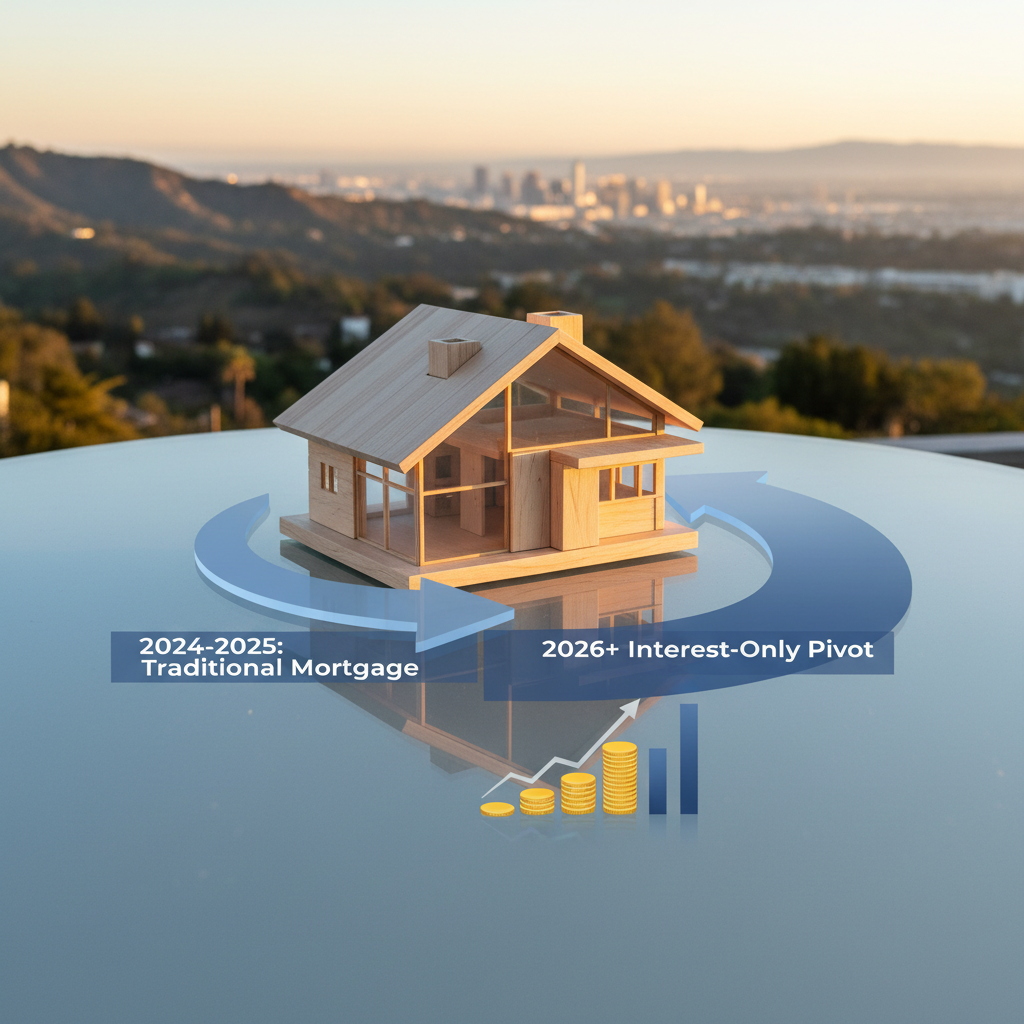
In response, a sophisticated financing trend is re-emerging across the Golden State: the modern Interest-Only (I.O.) mortgage. Unlike the predatory structures of the mid-2000s, today’s I.O. products are tailored for well-qualified borrowers looking to prioritize monthly cash flow over immediate equity build-up.
Why Interest-Only is Making a Comeback in California
The resurgence of I.O. loans in 2026 is driven by the divergence between income growth and housing costs. In markets like the Bay Area and Orange County, a standard 30-year fixed loan on a $1.2 million property can result in a principal and interest payment that consumes a disproportionate share of take-home pay. By selecting an I.O. period—typically the first 7 to 10 years of a 30-year term—borrowers can reduce their monthly obligation by 20% to 30%.
- Increased Liquidity: High-net-worth buyers are opting to keep capital in diversified portfolios yielding 8-10% rather than tying it up in 6.5% home equity.
- Tax Efficiency: For those in California’s highest tax brackets, the ability to deduct mortgage interest (up to federal limits) while maintaining low non-deductible principal payments remains a core strategy.
- Bridge to Refinancing: Many 2026 buyers view the I.O. period as a holding pattern, betting on a future rate cycle dip to pivot back into a traditional 15- or 30-year fixed product.
The Data Behind the Shift
According to recent MLS data and lending surveys, I.O. applications in California have risen by 14% year-over-year. This is particularly prevalent in the 'Super Jumbo' category (loans over $1.5 million), where the monthly savings can exceed $2,500. Furthermore, Census data indicates that the 'lock-in effect' is slowly thawing as buyers realize that 6% is likely the long-term floor, prompting a shift from waiting for lower rates to managing the rates that exist.
Risk Mitigation and Qualified Mortgage (QM) Standards
It is vital to distinguish 2026 interest-only loans from their pre-Great Recession predecessors. Today’s I.O. loans are largely 'Qualified Mortgages' or follow strict internal bank guidelines that require:
- Full Documentation: Verification of income, assets, and employment is mandatory.
- Higher Reserve Requirements: Lenders often require 12 to 24 months of PITI (Principal, Interest, Taxes, and Insurance) in liquid reserves.
- Stricter DTI Ratios: Debt-to-income ratios are usually calculated based on the fully amortized payment, not the initial interest-only payment, ensuring the borrower can afford the jump in costs later.
Practical Takeaways for Buyers
If you are entering the California market this spring, consider the following tactical moves:
- Calculate the Opportunity Cost: Work with a financial advisor to see if the monthly savings from an I.O. loan outperform the equity growth of a standard mortgage when invested elsewhere.
- Plan for the Reset: Ensure your exit strategy (selling, refinancing, or recasting) is viable before the interest-only period ends and the loan begins to amortize.
- Check Portfolio Lenders: Large national banks and California-based private wealth lenders are currently more aggressive with I.O. pricing than wholesale channels.
The 2026 California buyer isn't just looking for a house; they are looking for a manageable monthly liability. In an era of 'higher-for-longer' rates, the strategic use of interest-only periods is no longer a sign of overextension, but a hallmark of sophisticated cash-flow management.