The Decoupling of the East Bay
For decades, Walnut Creek was defined by its status as a premier 'bedroom community' for San Francisco’s executive class. However, by March 2026, the narrative has shifted fundamentally. No longer just a transit point, Walnut Creek has achieved 'autonomous' status—a self-sustaining urban ecosystem where residents live, work, and recreate without the necessity of a transbay commute. According to recent 2026 data from the California Association of Realtors (CAR), Walnut Creek has maintained a 4.2% year-over-year appreciation in property values, significantly outpacing the broader Contra Costa County average.
The 15-Minute Suburban Core
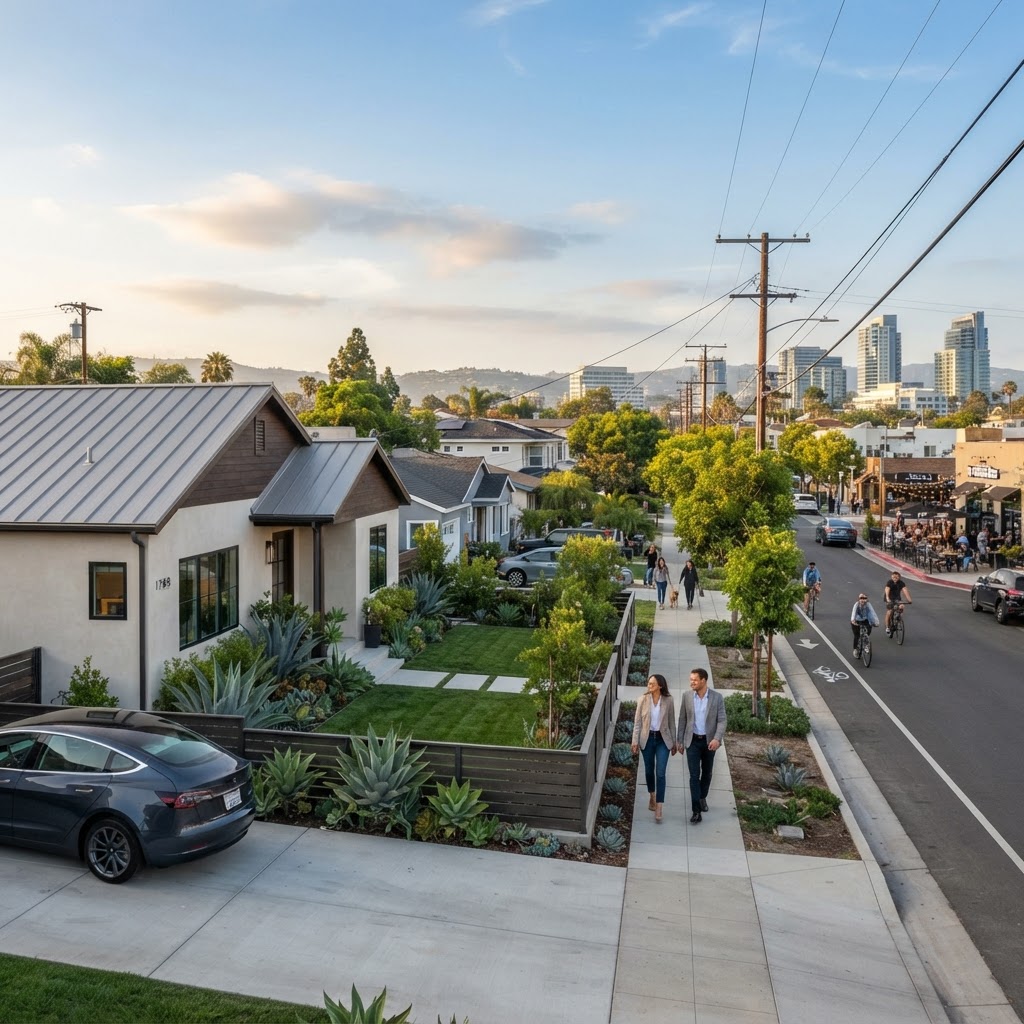
The epicenter of this transformation is the Downtown/Olympic Boulevard corridor. Unlike traditional suburban sprawls, this neighborhood functions as a '15-minute city.' CBRE’s Q1 2026 report highlights a vacancy rate of just 8.5% for Class A office space in Walnut Creek, driven by mid-sized tech firms and professional services fleeing the high overhead of San Francisco and Oakland. This commercial density supports high-end amenities that rival metropolitan cores.
- Retail and Dining: Broadway Plaza remains the regional gold standard, now integrated with luxury residential units. The culinary scene features Michelin-recognized outposts that cater to a local demographic with a median household income exceeding $165,000 (Census 2024 inflation-adjusted).
- Green Infrastructure: The Iron Horse Regional Trail serves as the neighborhood’s 'highway' for micro-mobility, connecting residents to the BART station and neighboring towns via electric bikes and scooters.
Educational Excellence and Demographic Shifts
A primary driver for the neighborhood’s inventory squeeze is the performance of the Walnut Creek School District and the Acalanes Union High School District. Las Lomas High School continues to rank in the top 5% statewide. MLS data from early 2026 shows that homes within walking distance of these schools command a 12% premium over comparable properties in the periphery. We are seeing a 'demographic lock-in' effect where families are moving in earlier and staying through retirement, facilitated by the increase in luxury single-level condos and townhomes designed for aging in place.
Transportation: The Reverse Commute Hub
While Walnut Creek is less dependent on San Francisco, its connectivity remains a strategic asset. BART ridership data for 2026 indicates a 15% increase in 'reverse commuting'—workers living in Oakland or Berkeley and commuting into Walnut Creek’s expanding North Main office district. For residents, the proximity to the I-680/SR-24 interchange provides a gateway to both Silicon Valley and the Tri-Valley tech corridors, making it a strategic hedge for multi-career households.
Practical Takeaways for Stakeholders
For Buyers
Inventory remains at historic lows (less than 1.5 months of supply). Buyers should look toward the 'Westside' of the freeway near the Iron Horse Trail for the best balance of appreciation potential and walkability. Be prepared for non-contingent offers in the $1.5M to $2.2M range for single-family residences.
For Investors
Multi-family assets near the Walnut Creek BART station are seeing record-low cap rates (sub-4%) as institutional investors bet on long-term rental demand from professionals who value the hybrid work-from-home/office lifestyle. ADU (Accessory Dwelling Unit) development is also a high-yield play here, given the large lot sizes in older neighborhoods like Saranap.
For Sellers
The 'flight to quality' is the dominant trend of 2026. Sellers who invest in energy-efficient upgrades—specifically heat pumps and EV charging stations—are seeing a 3x return on those investments at closing, as the local buyer pool is increasingly focused on long-term sustainability and lower utility overhead.