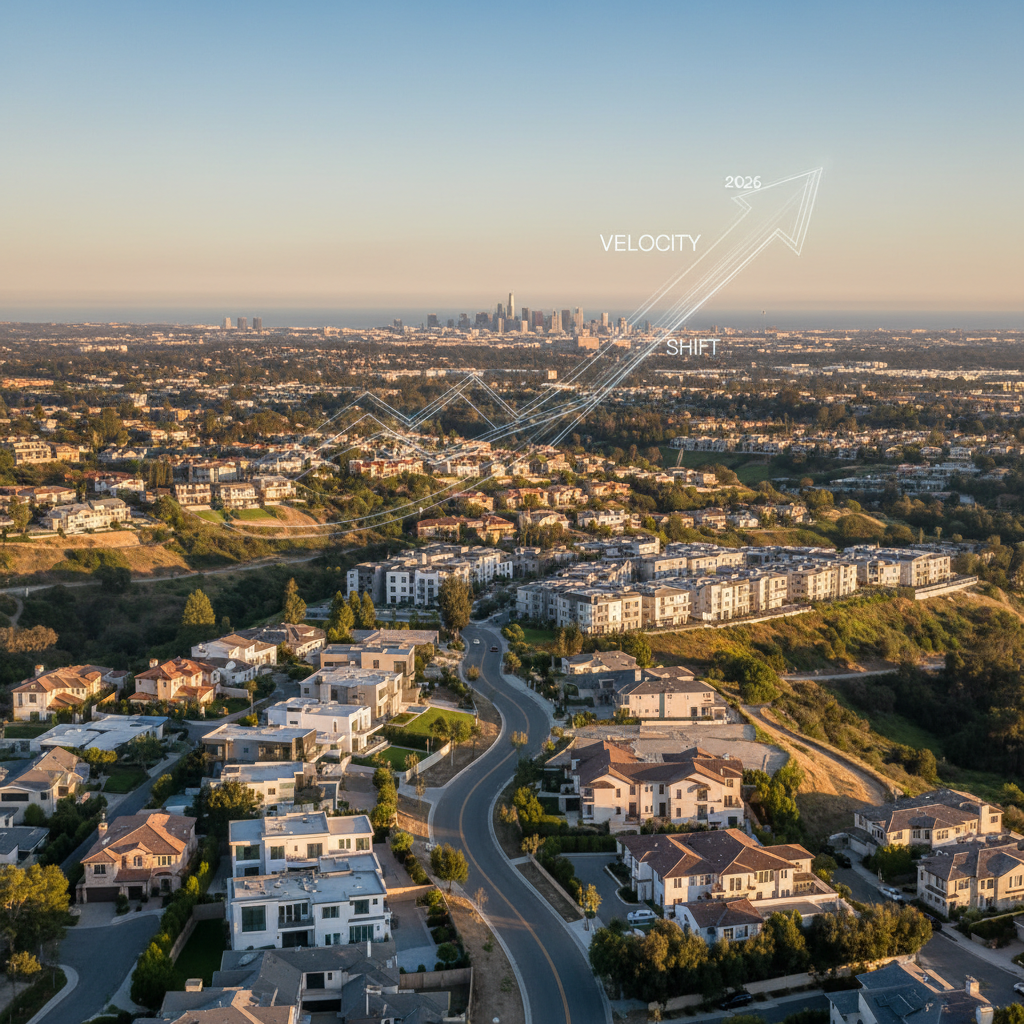
The End of the Golden Handcuffs
For the past three years, the California residential market was defined by a singular phenomenon: the 'lock-in effect.' Homeowners anchored by 3% mortgage rates from the early 2020s refused to sell, creating a supply desert that kept prices artificially high despite rising interest rates. However, as of March 30, 2026, the narrative has fundamentally shifted. With the Federal Reserve maintaining a stabilized benchmark and average 30-year fixed mortgages hovering between 5.1% and 5.4%, the psychological and financial gap has narrowed enough to trigger 'The Great Thaw.'
Data-Backed Market Expansion
According to recent data from the California Association of Realtors (CAR), new listings in the first quarter of 2026 have increased by 18.4% year-over-year. This represents the most significant surge in inventory since 2019. Unlike the panic selling of previous cycles, this is a calculated move by 'move-up' buyers who can no longer delay life transitions—downsizing retirees, expanding families, and professional relocations.
Economic indicators from the California Department of Finance suggest that while median prices remain robust—currently sitting at $842,000 statewide—the rate of appreciation has decelerated to a sustainable 3.2%. This cooling of price growth, coupled with increased supply, is transitioning many California metros from a 'crisis of scarcity' to a 'market of selection.'
Regional Performance: Coastal vs. Inland Velocity
The thaw is not uniform across the Golden State. Analysis of MLS data shows distinct trends:
- Coastal Enclaves: San Diego and Orange County have seen a 22% spike in inventory, as high-equity homeowners leverage their gains to relocate to lower-tax jurisdictions or luxury retirement communities.
- The Bay Area: Inventory remains tighter than the state average, but Days on Market (DOM) has crept up to 24 days, giving buyers more leverage in inspections and contingencies than they have seen in half a decade.
- Inland Empire: This region is seeing the highest volume of new construction completions, adding further downward pressure on the prices of existing mid-market homes.
Investment Perspective: From Appreciation to Quality
For real estate investors, the 2026 shift necessitates a change in strategy. The era of 'buying anything because it will appreciate 10% next year' is over. Capital is now flowing toward Value-Add Quality. With more options on the market, buyers are becoming discerning. Properties with deferred maintenance or poor layouts are seeing significant price cuts, whereas 'turn-key plus' homes—those with modern energy retrofits and ADU (Accessory Dwelling Unit) potential—continue to command multiple offers.
Practical Takeaways for 2026 Participants
For Sellers: The days of 'aspirational pricing' are gone. With 18% more competition on the market, your home must be priced within 2% of recent comparables to avoid becoming stagnant. Focus on 'curb-appeal 2.0,' which in 2026 includes visible smart-home integration and drought-tolerant landscaping.
For Buyers: Leverage the increased Days on Market. In 2024, asking for a repair credit was a deal-breaker; in 2026, it is a standard negotiation tool. Target properties that have been active for more than 30 days, as these sellers are often highly motivated by their next 'thaw-driven' purchase.
For Investors: Focus on the 'Missing Middle.' The increase in inventory is most pronounced in the $700,000 to $1.1 million range. Look for properties where slight cosmetic upgrades can bridge the gap to the luxury tier, as the buyer pool for high-end, renovated homes remains deep.