The New Math of California Real Estate
As of March 30, 2026, the average 30-year fixed mortgage rate in California has settled into a rhythmic fluctuation between 6.1% and 6.3%. While this is a significant improvement from the peaks of previous years, the state’s median home price—now exceeding $840,000 according to recent California Association of Realtors (CAR) data—continues to stress the traditional Debt-to-Income (DTI) limits for the average buyer. However, a silent revolution in underwriting is changing the landscape: the standardized inclusion of projected Accessory Dwelling Unit (ADU) income.
Counting Rent Before the First Lease
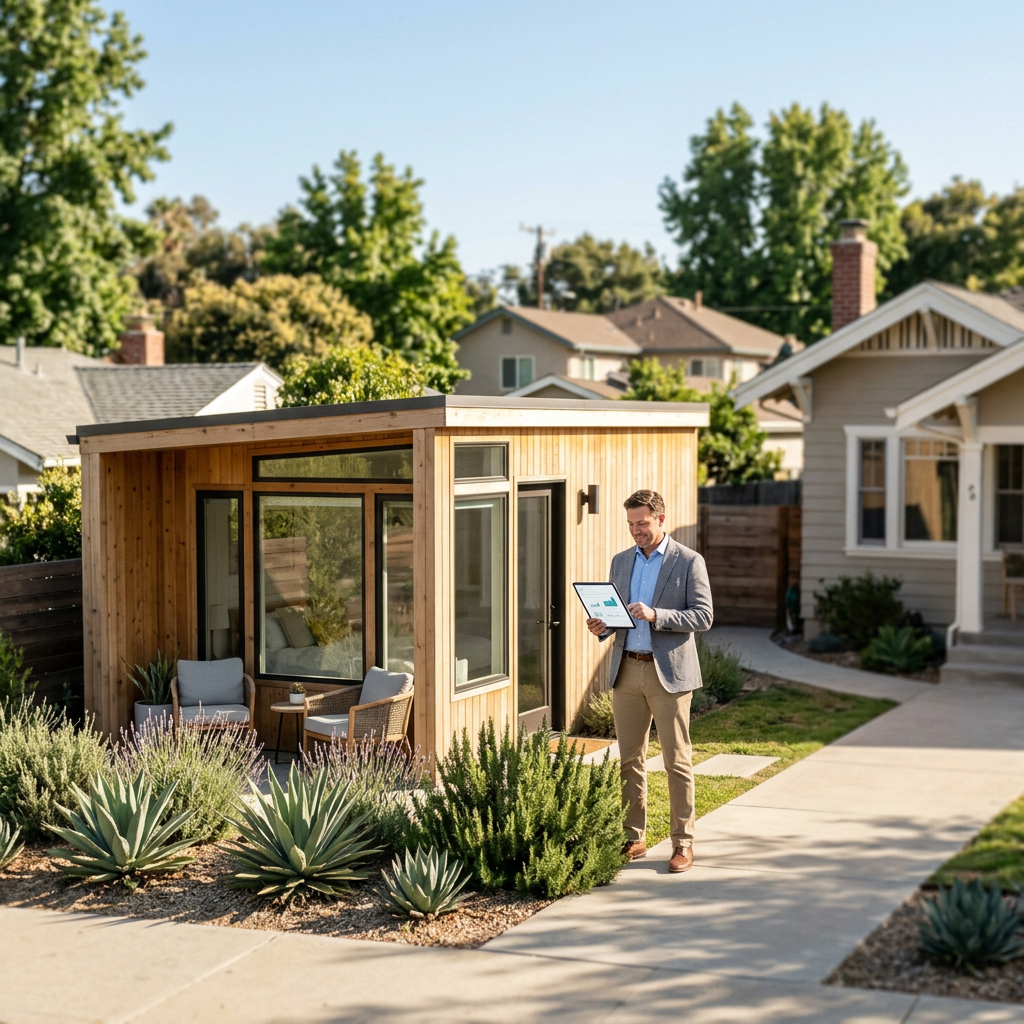
Historically, lenders were hesitant to count potential rental income from an ADU toward a borrower's qualifying income unless there was a two-year history of tax returns. In 2026, spurred by updated Fannie Mae and Freddie Mac guidelines tailored for high-cost markets, California lenders are increasingly utilizing 'subject to' appraisals. This allows buyers to use up to 75% of the projected rental income from an existing or even a planned ADU to qualify for a higher mortgage amount.
For a buyer in Los Angeles or the Bay Area, this shift is transformative. According to MLS data from Q1 2026, homes with ADU potential are seeing 14% more bid activity than single-unit peers. By factoring in a projected $2,000 monthly rent from a studio ADU, a household can effectively offset the 'rate shock' of a 6.2% mortgage, increasing their purchasing power by roughly $150,000 to $200,000.
The Policy Tailwinds
The lending shift is supported by California’s aggressive legislative stance on housing density. With the maturation of SB 9 and recent grants from the California Housing Finance Agency (CalHFA) that provide up to $40,000 for ADU pre-development costs, the risk profile for these properties has dropped. Lenders now view the 'ADU-plus-Primary' model as a more stable asset class, noting that properties with diversified income streams have lower default rates in high-cost coastal counties.
Practical Takeaways for 2026 Buyers
- Seek 'ADU-Ready' Appraisers: Not all appraisers are experienced in valuing the income potential of unpermitted or 'junior' ADUs. Ensure your lender uses a panel familiar with California’s specific ADU valuation standards.
- Analyze the Net Effective Rate: When the projected rental income is subtracted from the monthly mortgage payment, many California buyers find their 'net effective' interest rate drops into the 4% range, making the 6.2% market rate much more manageable.
- Leverage Renovation Loans: Products like the HomeStyle Renovation mortgage allow buyers to purchase a property and fund the ADU construction with a single closing, using the future value of the completed ADU to satisfy LTV requirements.
The Long-View Perspective
The 2026 market has proven that 6% is the new floor for the foreseeable future. Rather than waiting for a rate drop that may never come, California buyers are adapting by changing the definition of a single-family home. By treating the primary residence as a multi-revenue asset, the 'ADU Bridge' is becoming the primary tool for maintaining California’s homeownership rate in a high-cost environment.


