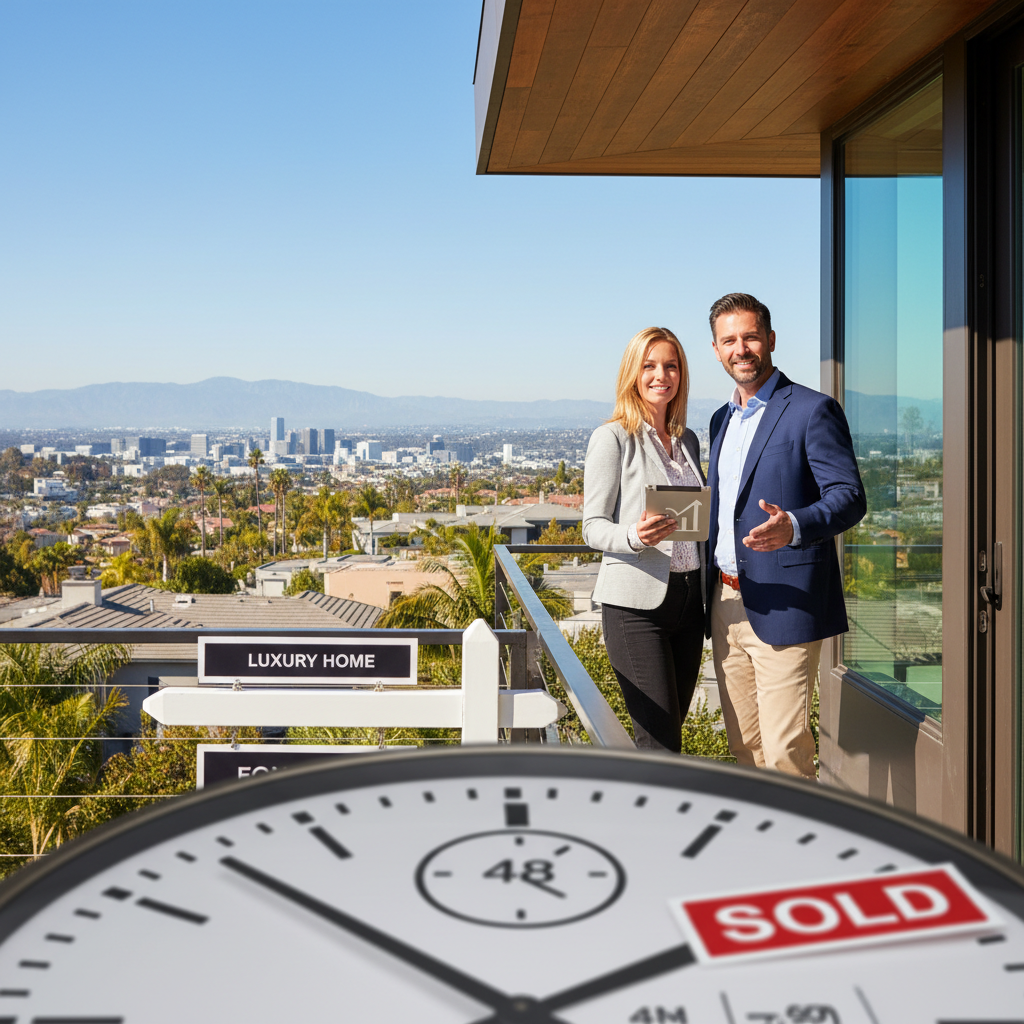
As we move into the second quarter of 2026, the California real estate market has shifted from the inventory-starved frenzy of years past into a high-tech, high-velocity environment. According to the California Association of Realtors (CAR) February 2026 report, while the median home price has stabilized at approximately $875,000, the 'Time on Market' for premium listings has plummeted to a mere 9 days. In this climate, the traditional 'weekend tour' is often too late. Success now requires a 48-hour offensive strategy rooted in digital due diligence.
The Pre-Listing Intelligence Sprint
In 2026, the most successful buyers aren't just watching Zillow; they are utilizing predictive analytics tools integrated into modern MLS feeds. By the time a property hits the 'Active' status, 60% of serious buyers have already reviewed the property's 'Digital Twin' or 3D structural scan. To compete, you must have your 'Verified Buyer Portfolio' ready—a 2026 standard that includes a fully underwritten (not just pre-approved) mortgage commitment and a verified proof-of-funds digital certificate.
1. The Preliminary Title and Permit Audit
Don't wait for the inspection period to uncover deal-breakers. In the first 48 hours of a listing's life, savvy California buyers now pull a 'Comprehensive Property History Report.' With California’s strict building codes and the 2025 'Right to Repair' updates, checking for unpermitted work—especially electrical upgrades for EV charging and heat pumps—is mandatory. If a property lists on a Tuesday, your agent should have the permit history and preliminary title report in your inbox by Wednesday morning.
2. Navigating the 2026 'Transparency Lockbox'
California’s newer disclosure laws require sellers to provide a 'Pre-Market Inspection Bundle' in many metro areas like the Bay Area and Greater Los Angeles. Instead of ordering your own inspections as a first step, your 48-hour window should be spent with a professional 'Disclosure Auditor.' This specialist reviews the seller-provided reports to identify 'latent defects' that could impact your long-term equity, specifically looking for seismic retrofitting compliance which became a major valuation driver in early 2026.
Data-Backed Negotiation in a Stabilized Market
Data from the National Association of Realtors (NAR) indicates that in Q1 2026, 42% of California homes sold above asking price, but the 'over-bid' margin has narrowed to 3-5% compared to the 10-15% seen in the early 2020s. This means precision matters more than brute force. Use 'Comps Velocity Data'—which measures not just what nearby homes sold for, but how many offers they received in their first 48 hours—to calibrate your bid.
Practical Takeaways for the 2026 Buyer:
- Get Fully Underwritten: In 2026, a 'Pre-Approval' is considered a secondary-tier offer. Ensure your lender has completed full manual underwriting before you start your search.
- The Tuesday-Thursday Strategy: With many listings now utilizing 'Offer Deadlines' on Thursdays to avoid weekend bidding wars, your peak activity days should be mid-week, not Saturday.
- Digital Permit Check: Use municipal portals (like LADBS for Los Angeles or SFDBI for San Francisco) to verify that the 'modernized' kitchen was actually permitted; unpermitted work is currently the #1 reason 2026 appraisals fall short.
- Seismic and Electrification Clauses: Ensure your offer includes specific language regarding California’s 2026 electrification mandates to ensure the seller covers any outstanding compliance fines.
The Bottom Line
The 2026 California home buyer cannot afford to be reactive. By front-loading your due diligence into the first 48 hours of a listing, you transform from a hopeful bidder into a 'certainty-of-close' candidate—the most valuable asset in any California seller's eyes.